




As Thanksgiving approaches, there is a lot of talk about “going home for the holidays.” But the hard truth is that “home” remains out of reach for far too many New Yorkers.
Over the past several years, homelessness in New York City has reached the highest level since the Great Depression, with more than 115,000 people sleeping in shelters and untold thousands more on the streets, in parks, and in the subway system.
It doesn’t have to be this way. The city’s success in combatting homelessness among veterans, who have a higher risk of being homeless than the general population, has shown a clear path forward.
In the last decade, New York City has made remarkable progress: a more than 98% reduction in veteran street homelessness, and certification in 2015 as the largest city in America to effectively end chronic homelessness among veterans. Today, the city is nearing the point where every veteran who enters the system can be moved into permanent housing within a short, predictable timeframe.
This progress did not happen by accident. It required political will at every level of the government: sustained funding, coordination and alignment between federal and city agencies, and deep partnership with nonprofits like ours. That same level of commitment must now be applied to other vulnerable populations.
Yet the federal government’s recent proposal to overhaul homelessness funding would move us in the opposite direction, threatening programs that keep people stably housed and putting as many as 170,000 formerly homeless people at risk of returning to the streets. Congress must reject these cuts.
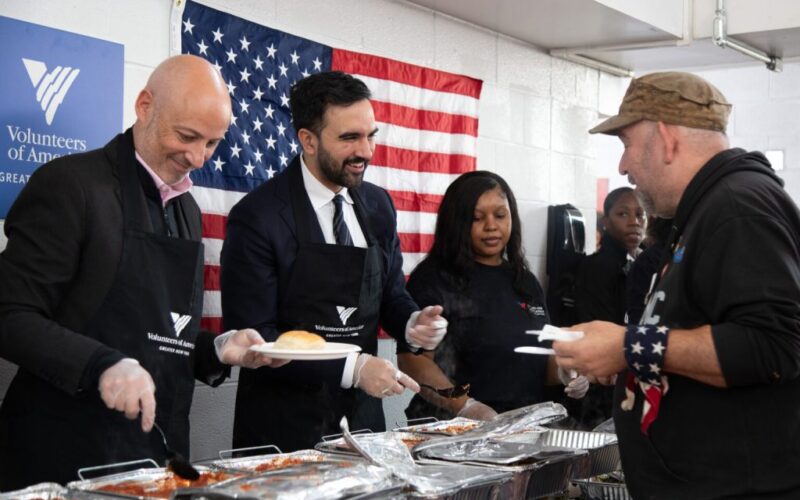
This month, during a Veterans Day visit to our Commonwealth Residence in the Bronx, Zohran Mamdani met with veterans who once lived in shelters or on the street and who are now thriving in permanent homes. Their stories illustrate what is possible when a city commits to a shared goal and follows through.
Central to this progress was adherence to a shared goal across agencies which historically had different priorities: ending homelessness for veterans was the only metric that mattered. Putting the client at the center and aligning practices around their needs shifted the way of thinking away from navigating a person through various systems to aligning systems to solve problems for people.
This meant streamlining access to rental assistance, fast tracking leasing in affordable housing developments, and providing on-site services such as mental health and substance use counseling as soon as a veteran settled into their new home. The result was shorter shelter stays and more efficient placement into homes.
These strategies worked because every agency responsible for housing people had joint accountability and were given the tools and resources necessary to get people into homes. That coordination matched with client centered program design that treated housing not as a reward after stability, but as the starting point that makes stability possible, meant that placements stuck and people were truly able to thrive and permanently end their homelessness.
Every veteran’s needs are different, requiring flexible tools and close coordination across agencies and service providers.
At VOA-GNY, we see the results of this approach every day. We support nearly 700 veterans each year, providing a continuum of services for those who are homeless or at risk.
This progress reflects a recipe New York City has perfected: clear prioritization, coordination across every level of government, and accountability for outcomes.
Now it is time to apply that same recipe to every New Yorker who needs a home.
We can expand the strategies that helped veterans: moving people into permanent housing more quickly; offering targeted financial assistance to prevent homelessness before it starts; building and opening more supportive housing; and ensuring that all New Yorkers can access services tailored to their needs.
New York City already holds the blueprint for significant, lasting progress. We have the expertise. We have the partnerships. And we have recent, real-world proof that determined, coordinated efforts can change lives.
The work ahead is substantial, but it is far from insurmountable. We are closing in on ending chronic veteran homelessness for veterans by design, not by chance. With the same level of focus, funding, collaboration, and compassion, we can ensure that every New Yorker has a safe, stable home, on Thanksgiving and every day.
Ginsburg serves as president and CEO of Volunteers of America-Greater New York.