


The mayoral election was not a wave of enthusiasm for democratic socialism. It was actually a cry from Black New York about the crushing cost of living that threatens to push families out of the city that our communities built. That pressure shaped the outcome far more than ideology ever could.
Voters in Black neighborhoods responded to immediate, lived realities. They supported the candidate they believed might offer some relief from the economic pain that has been growing for years. But that should not be misread as an embrace of the DSA’s agenda or penchant for divisiveness.
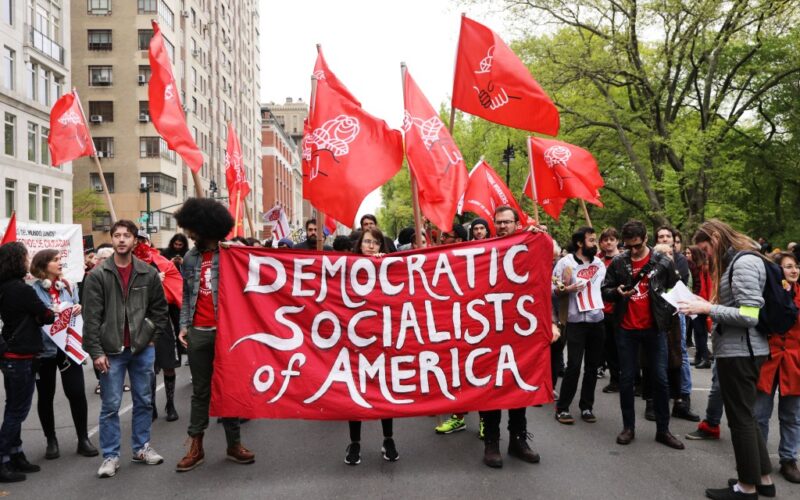
This distinction is critical. Because while Zohran Mamdani won the mayoralty, the platform of the Democratic Socialists of America did not. And that is where the next chapter begins.
The question now is whether Mamdani will govern with the independence required to serve the entire city, especially the Black neighborhoods that cast ballots out of economic urgency rather than ideological alignment. Or whether he will drift back toward an organization whose policy vision has consistently clashed with the needs and dismissed the interests of the very Black and Brown communities that are most affected by the outcomes of City Hall.
If Mamdani intends to keep the trust of Black New Yorkers, he must create clear separation between his administration and the DSA. For years the DSA has promoted ideas that sound righteous in theory but unravel when applied to the communities that bear the brunt of policy failures. They borrow the language of justice and liberation from our history while pushing proposals that rarely account for our safety, our schools, our daily lives, or our economic reality.
Black New Yorkers know this pattern well, and have been treated as the staging ground for ideological experiments conceived far from the pressures the community faces. There’s no interest in becoming test subjects again.
Public safety is where the divide shows most clearly. Alongside affordability, it remains the top concern in Black neighborhoods. Mamdani has publicly distanced himself from the DSA’s calls to abolish police and prisons. But the DSA still champions that agenda. Our communities need reforms that deliver fairness without sacrificing safety. The DSA offers neither. Their proposals come from activists who do not live with the consequences of their own ideas.
Defund the police may sound compelling in areas insulated from violence. In neighborhoods like Brownsville or South Jamaica, it sounds like abandonment. It is the law of unintended consequences playing out in real time.
The same applies to drugs and prostitution. The DSA’s push to legalize heroin, fentanyl, and decriminalize sex work is framed as harm reduction. For communities still dealing with the trauma of the crack era and the devastation of the opioid crisis, this is not harm reduction. It is harm multiplication. Legalization does not make exploitation safer. It makes it easier to hide.
Their hostility to charter schools sends an equally troubling signal. Charter schools serve about 130,000 mostly Black and Brown students. Families choose them because they offer what too many traditional schools have failed to provide. The DSA’s desire to defund charters and remove them from public buildings would strip children of one of the few ladders many families have. That is not equity. That is erasure.
Even the NYPD’s gang database becomes a flashpoint. The DSA calls it discriminatory. Many parents and neighborhood leaders see it as a tool that can prevent violence before it reaches their block. Reforms may be necessary, but dismantling it outright would be reckless.
These positions are not aligned with the priorities of Black New Yorkers. They reflect a worldview rooted in enclaves untouched by the consequences of their policies. They come from the same gentrifier class whose arrival has helped push Black families out of our long-standing neighborhoods.
That is why independence matters. Mamdani can set a new course. He can choose to govern with clarity, pragmatism, and respect for the communities that face the steepest challenges. Or he can allow the DSA to shape a city that will leave those same communities behind.
Black New York will continue to speak for itself. The only question is whether the new mayor will hear what we are saying.
Jones is president of the National Black Empowerment Action Fund.