


New York City’s Department of Buildings has concluded a two-year probe into a catastrophic 2023 Manhattan crane collapse that injured 12, including three firefighters, finding that a disconnected hydraulic fuel hose was behind the massive construction breakdown.
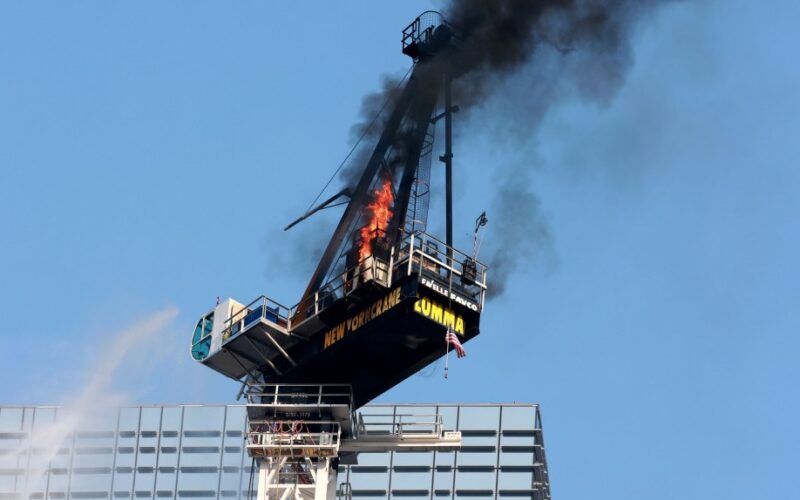
The disconnected hydraulic fluid hose, which was connected to the crane’s engine compartment, spewed out a flammable mist of hydraulic fuel oil that sparked a raging nearly 1,700-degree fire after it came in contact with the crane’s hot deck. The crane operator vainly tried to put out the inferno with a fire extinguisher before fleeing to safety. The blaze burned through the heavy-duty wire luffing rope holding up the crane boom, leading to its collapse, officials said.
The construction crane for the building project at 550 10th Ave. was lifting 14,000 pounds of concrete 500 feet above Hudson Yards on July 26, 2023, around 7:25 a.m., when the fire broke out and the crane’s 165-foot-long boom went crashing down to the street.
Nine civilians and three firefighters were injured in the collapse. It took five hours to bring the fire fully under control, according to the FDNY.
“This crane collapse in the heart of Midtown Manhattan was truly a singular nightmare scenario for the construction industry, and it is a miracle that no one was seriously hurt,” D.O.B. Commissioner James Oddo said.
After the shocking accident, D.O.B. issued multiple violations to the project’s general contractor, Monadnock Construction Incorporate, and the crane equipment user, Cross Country Construction LLC, for their failure to safeguard the construction site, failure to maintain adequate housekeeping, and failure to implement adequate safety measures. Cross Country Construction LLC also was issued a violation for inadequate safety measures.
D.O.B. said required safety regulations for maintaining the crane were not followed.
Following the investigation, D.O.B. mandated new fire safety requirements for diesel-powered tower cranes, which have been implemented citywide. Diesel-powered tower cranes now must be equipped with recommended fire-suppression and fire-detection systems, new registration requirements and experience qualifications are required for lift directors, and a construction professional must be on site in a supervisory role whenever the crane is moved, raised, lowered, taken out of service or used for lifting operations, officials said.
“The investigation’s findings already have resulted in improved crane safety protocols to better protect operators and the public,” said Jocelyn Strauber, commissioner of the Department of Investigation. “Thankfully, no one was seriously injured in the fire and the collapse, but these events highlight the importance of compliance with robust safety protocols. DOI will continue to work in partnership with DOB to enhance construction safety in New York City.”
At the time of the collapse, a source told the Daily News the preliminary cause of the construction fire and crane collapse was a hydraulic fluid leak from the engine compartment onto a heated metal plate, sparking the blaze on the deck atop the building under construction.
The five-alarm blaze brought 50 FDNY units with 220 firefighters to the chaotic scene, with fire officials deploying drones to ensure the towering fire was fully extinguished.
Firefighters evacuated neighboring buildings, including at least one hotel, and closed streets to cars and pedestrian traffic as they battled the blaze.
A construction worker who witnessed the fire break out from the 44th floor of 550 10th Ave. witnessed the crane operator frantically try to put out the blaze.
“I was on the deck when it started smoking,” Marco Araujo told The News after the incident. “He tried to put it out. But he had a little fire extinguisher and it didn’t work.
“It didn’t work because the flames were so fast,” added Araujo, a 44-year-old carpenter who was laying concrete at the time. “It was crazy.”