


New York is a city built on movement. Every day, millions of us rush for buses, descend into subways, bike over bridges, or board ferries with the belief that the city will carry us where our lives demand we go. Riders want a transportation system that honors their time and reflects their needs. To deliver what New Yorkers are crying out for, the next four years must be about urgency, equity, and results.
Transit is not an abstract policy issue. It defines daily life for millions. A sluggish bus isn’t just an inconvenience; it’s a missed paycheck. A route that doesn’t reach your neighborhood isn’t just a gap on a map; it’s a wall between you and opportunity. Communities like the one I represent in Southeast Queens have lived with these barriers for decades. This moment demands more than promises. It demands delivery.
Our buses tell the story of a system in crisis. The average bus speed in 2024 was just 8.17 mph, a number that hasn’t improved meaningfully in 10 years. Riders feel that stagnation every day.
Despite clear mandates, the city has allowed critical bus investments to wither. The New York City Department of Transportation (NYC DOT) installed only 5.5 miles of new bus lanes in FY 2025 — a drop from 15.7 miles the year before, and nowhere near the 30 miles per year required under the Streets Plan. The result is predictable: slower buses, longer commutes, dwindling trust.
We need a fully staffed, fully empowered NYC DOT capable of rapid deployment, enforcement, and performance monitoring. We must be smart by targeting the highest-need corridors. Riders deserve speed backed by strategy.
But a world-class transit system must be one people can afford. Thanks to persistent advocacy from the City Council, Fair Fares now covers New Yorkers earning up to 150% of the federal poverty level. That was an essential step — but we can’t stop there.
Expanding Fair Fares to 200% of the federal poverty line would reach 1.6 million New Yorkers, nearly doubling access to discounted transit. This isn’t merely a budget choice; it’s an anti-poverty strategy. Affordable transit connects workers to jobs, parents to childcare, students to opportunity. It is one of the simplest, strongest levers we have to increase economic mobility. Let’s use it.
Transportation equity also means safer streets and healthier neighborhoods. In Southeast Queens and other outer-borough communities, truck congestion, illegal parking, and constant idling undermine public health and everyday quality of life. The Council has prioritized off-street truck parking and a comprehensive redesign of truck routes. The next administration must accelerate this work.
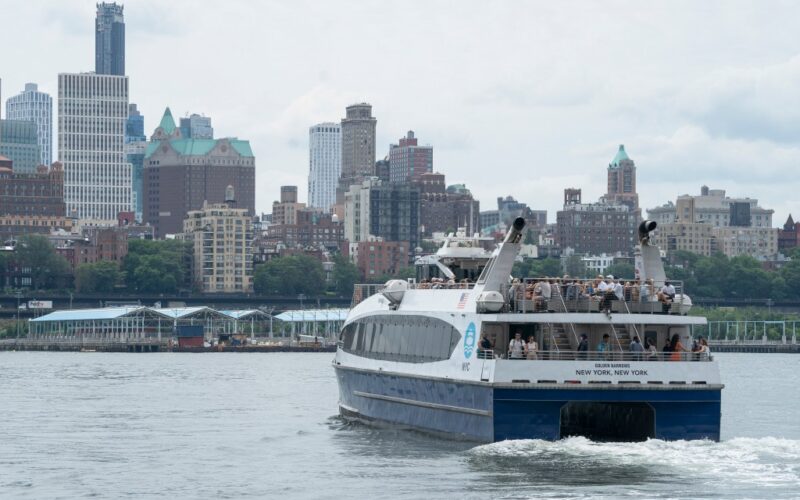
Our future cannot depend on any single mode. Ferries, bike lanes, and walkable corridors all play essential roles in a resilient, equitable network. New Yorkers living near the waterfront deserve reliable ferry service that connects seamlessly to buses, with integrated fares and real last-mile solutions. We must improve coordination with partners like the NYC Economic Development Corp., whose stewardship of the city’s ferry system must center equity and reliability for riders who depend on the water as their commute.
With the MTA advancing the Interborough Express and evaluating proposals like QueensLink, we are standing at a hinge moment for true outer-borough connectivity. QueensLink alone could serve 47,000 daily riders, create up to 150,000 jobs, boost personal income by $13 billion, and generate $75 billion in property value along the corridor. These are not marginal improvements; they are structural game-changers.
But big projects require consistent political will, long-term investment, and agencies with the capacity to deliver. Vision is only as strong as our ability to follow through.
Today, the inequities are stark. Black New Yorkers face average commutes of 46 minutes, Latino New Yorkers 40 minutes, while White New Yorkers average 34 minutes. These disparities reflect decades of underinvestment and misplaced priorities.
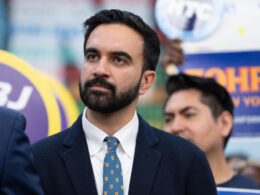
We can do better. The next four years will determine whether New York finally builds a system worthy of its people. I intend to work with Mayor-elect Zohran Mamdani and my colleagues in the Council to deliver a transportation network that is faster, fairer, more reliable, and more just. A system that moves every New Yorker forward — together.
Brooks-Powers represents Southeast Queens and the eastern Rockaways in the City Council and chairs the Committee on Transportation and Infrastructure.