




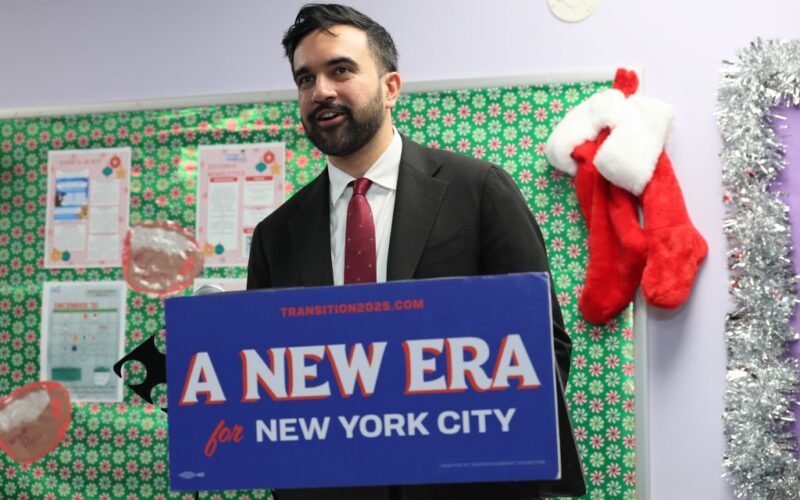
When Mayor-elect Zohran Mamdani takes office in January, he will inherit a city full of potential, and a City Hall weighed down by public distrust.
Mayor Adams administration’s tenure suffered from an unprecedented wave of ethical scandals. Twice as many senior city officials were indicted or forced to resign amid ethical scandals under Adams than under the past four New York mayors combined. From federal investigations into campaign fundraising and contracting to the misuse of public resources for political gain, the cumulative effect has been devastating to public confidence in our government.
Mamdani could prove to be a compelling force for reform. He ran for office as a long-shot political establishment outsider, and he will enter City Hall with fewer ties to traditional power players and big money interests than perhaps any mayor in modern history. That dynamic presents a real opportunity to shift the balance of access and influence in city government.
But after years of headlines about unethical behavior and mismanagement, restoring trust will require not just new leadership or compelling rhetoric but a concrete new commitment to honest, ethical and accountable standards in city government.
A recent Citizens Union report offers a blueprint for a new era of reform in New York. We focus on five festering areas exposed by recent scandals: cronyism in appointments, lax lobbying oversight, weakened watchdog agencies, eroding transparency standards, and partisan power plays that put self-interest before the public good.
To start, top city officials should be selected based on merit, not political loyalty. The next administration should require safeguards for appointees with private-sector ties in order to help close the revolving door between public service and private gain, and bar the use of city legal resources for personal matters.
Mamdani’s willingness to retain capable officials from the Adams administration, like Police Commissioner Jessica Tisch, is an encouraging sign that experience and effectiveness will guide decision-making in City Hall going forward.
Lobbying in the city has become increasingly supercharged and underregulated, allowing those with access and money to exert outsized influence. Disclosure of meetings with lobbyists should be restored, bundling and revolving-door practices restricted, and oversight transferred to the Conflicts of Interest Board, an independent body better equipped to enforce accountability.
Just as important is strengthening the city’s internal watchdogs. Oversight agencies like the Department of Investigation, the Conflicts of Interest Board, and the Civilian Complaint Review Board have been chronically underfunded and politically sidelined. These institutions exist to protect the public from corruption, yet budget cuts and pressure from City Hall often hinder their work.
The new administration should guarantee the independence of these monitors, fully fund their operations, and create a Procurement Ethics Task Force to ensure city contracts are awarded fairly and transparently. A robust oversight infrastructure is essential to preventing the kinds of abuses that have undermined City Hall’s credibility.
Transparency must also be restored. In recent years, Freedom of Information Law (FOIL) requests have been ignored or delayed, and access to city officials has been sharply limited. A democracy cannot function in darkness. Mamdani should recommit to full FOIL compliance, ensure that information is readily accessible to the public, and restore regular press briefings to keep New Yorkers informed about how their city is being run. A more open government is a more effective and trustworthy one.
Finally, the new administration must ensure that power is exercised in service of the public, not partisan politics. That means committing not to block ballot questions or manipulate the democratic process for personal advantage. It also means cracking down on the use of public resources for campaign purposes, which became an urgent priority this year when the City Council used public funds to oppose Charter Revision Commission proposals aimed at expanding affordable housing. And finally, after Adams’ scandals, New York must establish a clear process to remove a mayor guilty of serious misconduct.
The Adams era revealed deep weaknesses in New York’s ethics and accountability systems, but also sparked a renewed demand for reform. The new mayor has the opportunity to restore honesty, transparency, and ethics to City Hall.
On election night, Mamdani promised that his administration’s legacy “will be felt when New Yorkers open their newspapers in the morning and read headlines of success, not scandal.”
These words capture what voters clearly deserve: a clean break from a culture of corruption.
Avlon is the chairman of Citizens Union, fighting for reform in New York for more than a century. Rauh is the executive director of Citizens Union.