




For more than 150 years, football has been an energizing and enduring part of the American experience.
At USA Football — the sport’s first-ever national governing body — we’ve had a front-row seat to what this game means to players, families and communities. We’ve seen it light up small-town fields and big-city stadiums. We’ve watched it inspire teamwork in schoolyards, bring out the best in college athletes, and — with the rise of flag football — welcome more kids into the fold than ever before.
When considering football’s real importance — whether tackle or flag — we shouldn’t focus solely on the scores. The true measure of football is found in the lessons it teaches and the people it shapes.
That’s why expanding access to football matters. Every child should have a chance to participate in the ultimate team sport, gaining life skills that last long after the final whistle, such as character, confidence and resilience.
Teamwork is the heartbeat of football and one of the most important lessons any young person can learn. It teaches kids to communicate, compromise and find common ground. It proves that the fundamentals contribute just as much to success as the highlight reel. That understanding — doing your job so the team can succeed — builds humility, accountability and a sense of purpose.
Football also teaches leadership through action. When a young player rallies their teammates after a setback, or sets the tone through hard work, they’re learning how to lead. Accountability pays big dividends between the lines. It also turns into responsibility beyond the hash marks — in classrooms, careers and community volunteerism.
And then there’s resilience. Football teaches you to get back up when life knocks you down. As a former college athlete — and as the parent of two collegiate athletes — I can say that it’s one of the most valuable things our young players can learn. Our sport instills the fortitude to face adversity, manage setbacks and keep striving toward goals.
I’ve lived it firsthand. It wasn’t easy quarterbacking a high school team that lost nearly all our games in back-to-back seasons, but those experiences shaped who I am today, as a parent and an executive. I’m better for it.
These lessons come to life through efforts like the USA Football Heart of a Giant Award, presented each year in partnership with the New York Giants and Hospital for Special Surgery. It recognizes high school students from New York, New Jersey, and Connecticut who demonstrate unparalleled work ethic, character and passion for football. Their stories are proof that football’s victories are also measured in the strength and spirit of our children.
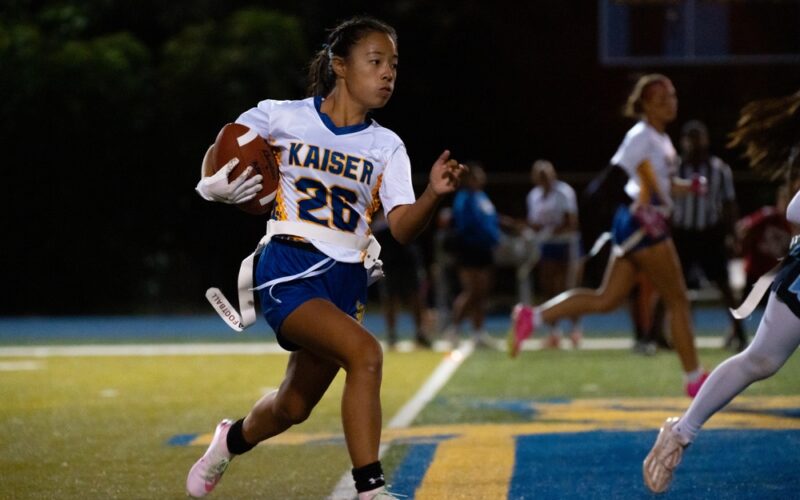
Every year, these finalists — boys and girls, representing tackle and flag — inspire us to continue reducing barriers to participation. As a football community, we’ve had tremendous success, particularly among girls, who have become the driving force behind the growth of flag football.
USA Football is offering youth football grants to help leagues launch and sustain their operations. The NFL and its clubs have been front and center in the movement, too. Nearly 20 states — including New York — have now approved girls’ flag football as a varsity sport, enabling female student-athletes to get in game in astounding numbers. Today, it’s one of the fastest growing girls’ high school sports, with a 60% increase in participation from last year alone.
Similarly, we’ve evolved our approach to contact football in a way that meets kids and parents where they are, creating new pathways for leadership and belonging.
USA Football’s Football Development Model (FDM) reduces contact, provides multiple entry points into the sport — from flag to limited contact to tackle — and supports whole-person development. Pop Warner was the first national organization to adopt the FDM, and we’re proud to have extended our partnership just this month.
We’re raising the bar by requiring all Pop Warner tackle and flag coaches to complete USA Football’s Youth Coach Course. This will improve fundamentals for hundreds of thousands of young players. Just as important, by setting a higher standard, we’re encouraging more young people and their parents to consider football.
With flag football’s debut in the Olympics set for 2028, we’ll soon have a chance to expose these teachings to the world.
As we develop new pathways to competition, let’s not lose sight of the big picture. Every run, catch or punt passes along something greater: the lessons that shape capable and courageous people.
Hallenbeck is the chief executive officer of USA Football, a nonprofit organization certified by the U.S. Olympic & Paralympic Committee (USOPC) as American football’s national governing body, bearing responsibility to select, train and lead Team USA Football’s men’s and women’s teams for the 2028 Olympics.