


Volkswagen is ending vehicle production at its Dresden factory — the first time in the automaker’s 88-year history that it has closed a plant in its home country — as weakening demand and punishing US tariffs squeeze the German car giant.
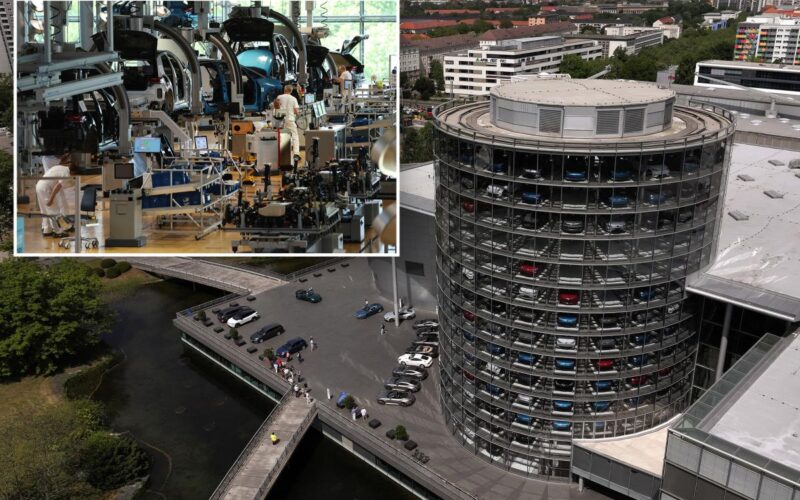
The last vehicle rolled off the line Tuesday at the Dresden site, known as the “Transparent Factory” because of its glass-walled design, capping 24 years of production that began in 2001.
Volkswagen had warned last year that production cuts were coming as sales softened in Europe and China and tariffs hammered results in the US, one of its most important export markets.
The automaker said the Dresden facility will be converted into a technology research hub focused on artificial intelligence, robotics and chip design, ending its role as a vehicle assembly site.
“We did not take the decision to end vehicle production at the Transparent Factory after more than 20 years lightly,” Volkswagen brand CEO Thomas Schäfer said in a statement.
“From an economic perspective, however, it was absolutely necessary.”
Volkswagen said it reached an agreement with its works council covering the plant’s remaining 230 employees.
Workers will be offered severance packages, early retirement options or transfers to other company locations in Germany.
The Dresden factory has produced several of Volkswagen’s flagship models over the years, starting with the luxury Phaeton sedan before shifting to the e-Golf hatchback and later the ID.3 electric vehicle.
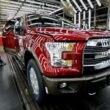
Factory workers attached their signature to the final car built at the site — a red ID.3 GTX electric car — will be signed by workers and remain on display at the site.
The closure shows the mounting pressure on Germany’s largest automaker, which has struggled with high energy and labor costs at home while navigating turbulence across its global markets.
Volkswagen has been hit particularly hard by President Trump’s tariffs, which the company blamed in part for a $1.5 billion loss last quarter.
The automaker said tariff-related costs are expected to exceed $5 billion within the next 12 months, a hit that has forced executives to reassess production footprints and future investments.
Volkswagen’s struggles mirror broader weakness in the German economy, which shrank in 2023 and 2024 and has remained stagnant this year.