




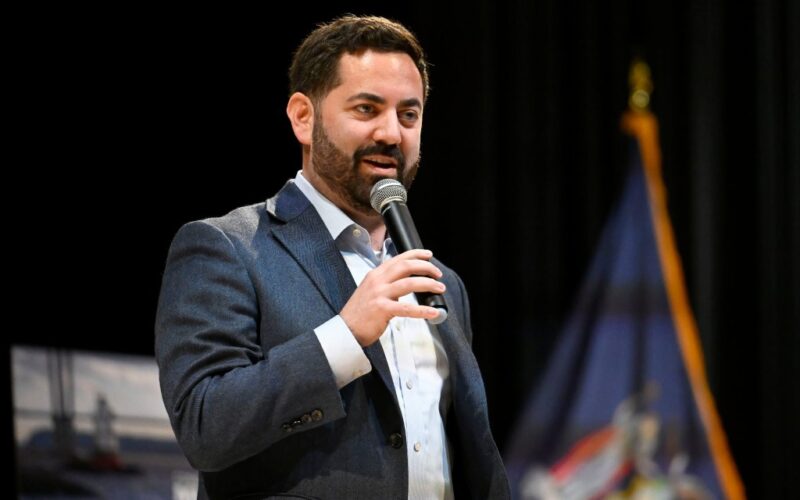
Bravo to four GOP congressmen, New Yorker Mike Lawler and Pennsylvanians Brian Fitzpatrick, Ryan Mackenzie and Rob Bresnahan, who broke with their weak Republican Speaker Mike Johnson and joined with the minority Democrats to bring Affordable Care Act subsidies up for a full vote.
The move by Lawler and his Keystone State colleagues is being framed as a rebellion against Johnson, but isn’t it really just a move to potentially safeguard vulnerable constituents, those same people that sent these folks to Washington as their representatives? More than 20 million Americans will see their Obamacare health insurance premiums double in price in 2026 without the subsidies.
Are these four taking this action because they are politically vulnerable to challenge from irate constituents? Perhaps, but who cares? That’s politics for you; motivations range from deeply moral and ideological to purely practical and transactional, but at the end of the day, what matters are outcomes, and in this case, the outcome is of dire importance to millions of people nationwide.
Unfortunately, this effort has not come fast enough to avoid the catastrophic scenario of the subsidies expiring, which will have consequences even if the aid is reinstated at a later time. People around the country might disenroll from insurance upon seeing their premiums climb multiples of two or three, and they might not come back even if the subsidies return.
That’s the thing about unpredictability and instability in government: it makes people write it off altogether. Even for those who will resume coverage if and when the subsidies are reinstated, what happens if they get sick during that interim? What if they require emergency care, or stop treatment for chronic conditions? Not only will their health suffer, but we will all end up paying for it anyway via extraordinarily inefficient stopgaps like emergency room visits.
This is all assuming that these efforts are successful and the subsidies are in fact brought back. That’s far from certain, though. Even if these defections successfully force a vote, will a full floor vote result in passage? Even if it does, will the Senate, which Republicans also control by a slim margin, take up the bill and pass it itself? These are the questions that people with Republican senators and congressmembers around the country should be asking.
What is their representatives’ answer to these looming spikes in health care costs, which will impact not only those using the Obamacare exchanges but everyone else on private health insurance, who’ll likely see their own premiums rise as the insurers attempt to recoup lost revenues? What is their answer to health care providers, particularly those in more suburban or rural areas, who will be forced to treat more uninsured patients and may have to shut down specialties or close their doors entirely?
So far, we haven’t really seen anything resembling a cogent plan from the Trump wing and their enablers, who had a decade-plus to try to come up with alternatives to a plan that, by the way, began as a Republican-led proposal under Mitt Romney? “We’ll figure it out” is not an acceptable response when the health and safety of constituents who trusted them are on the line.
If they really feel like they have a better idea, that’s wonderful. They’re welcome to introduce it and debate it vigorously in Congress next year, but only after they’ve signed off on the subsidies that the public needs now.