



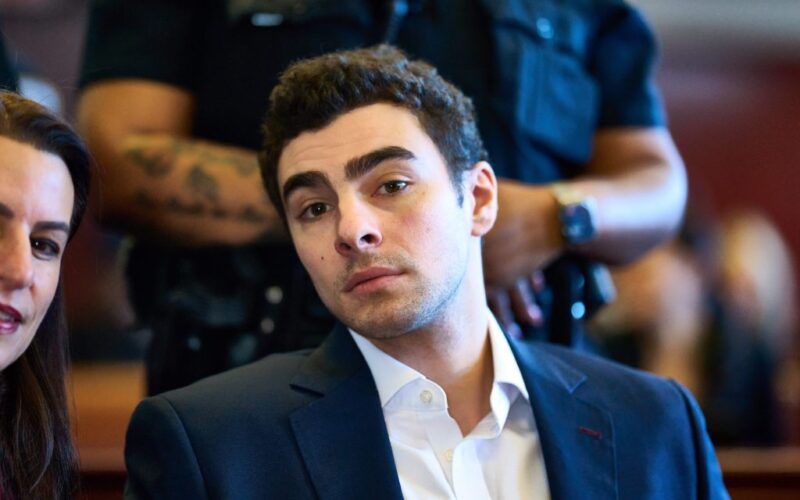
Lawyers for Luigi Mangione are arguing that Attorney General Pam Bondi has a conflict of interest in the case, claiming her distant ties to the victim, UnitedHealthcare CEO Brian Thompson, could be fueling her fight for the death penalty.
Bondi was previously a partner at Ballard Partners, a firm that represented UnitedHealthcare’s parent company, UnitedHealth Group.
Mangione’s attorneys contend that her work created a “profound conflict of interest” that violated their client’s due process rights, according to court documents filed late Friday as part of a renewed effort to block the death penalty and to get several charges in the case tossed.
Bondi also continues to enjoy financial benefits through Ballard’s profit-sharing plan, his lawyers said, emphasizing that she should have long ago recused herself from any decision in the case.
The “very person” empowered to seek Mangione’s death “has a financial stake in the case she is prosecuting,” his attorneys wrote.
Mangione, a 27-year-old Ivy League graduate, is facing federal and state murder charges in connection with Thompson’s assassination. The CEO was gunned down in Midtown Manhattan on the morning of Dec. 4, 2024 in what authorities have called a “premeditated, preplanned, targeted attack.”
Thompson had been visiting the city from Minnesota for an investor conference sponsored by UnitedHealthcare at The Residences by Hilton Club, where he was slated to give a speech later in the day.

Police said Thompson was walking from his hotel toward the venue on West 54th St. near Sixth Ave., when he was ambushed by a masked gunman around 6:45 a.m. After a dayslong manhunt, Mangione was arrested at a McDonald’s in Atloona, Pa., some 230 miles west of Manhattan.
In April, Bondi publicly announced she would direct Manhattan federal prosecutors to seek the death penalty, proclaiming even before Mangione was formally indicted that capital punishment was warranted for a “premeditated, cold-blooded assassination that shocked America.”
His attorneys responded with a court filing in September, arguing that her death penalty declaration — which she followed with Instagram posts and a TV appearance — was “based on politics, not merit.” They also said her remarks tainted the grand jury process that resulted in his indictment a few weeks later.
Federal prosecutors have previously argued that “pretrial publicity, even when intense, is not itself a constitutional defect.”
With News Wire Services