



CBS News editor in chief Bari Weiss defended her recent decision to spike a “60 Minutes” segment about a notorious Salvadoran prison — telling staffers in a Christmas Eve memo the move was part of her efforts to restore trust in the press.
The Post obtained a copy of the holiday email, which was co-signed by CBS News president Tom Cibrowski and two of Weiss’s newly installed deputies — former Wall Street Journal deputy editor Charles Forelle and former New York Times opinion editor Adam Rubenstein.
In the missive, Weiss told staff that ensuring stories are “comprehensive and fair” may feel “radical” in today’s media environment, but is essential to the network’s mission.
“Right now, the majority of Americans say they do not trust the press. It isn’t because they’re crazy,” Weiss wrote in the email sent Wednesday.
“To win back their trust, we have to work hard … And sometimes it means holding a piece about an important subject to make sure it is comprehensive and fair.”
Weiss acknowledged that such decisions could “cause a firestorm, particularly on a slow news week” and would “surely feel controversial to those used to doing things one way.”
She also made a declaration of independence from political pressure.
“No amount of outrage — whether from activist organizations or the White House — will derail us,” Weiss wrote staffers.
“We are not out to score points with one side of the political spectrum or to win followers on social media. We are out to inform the American public and to get the story right.”
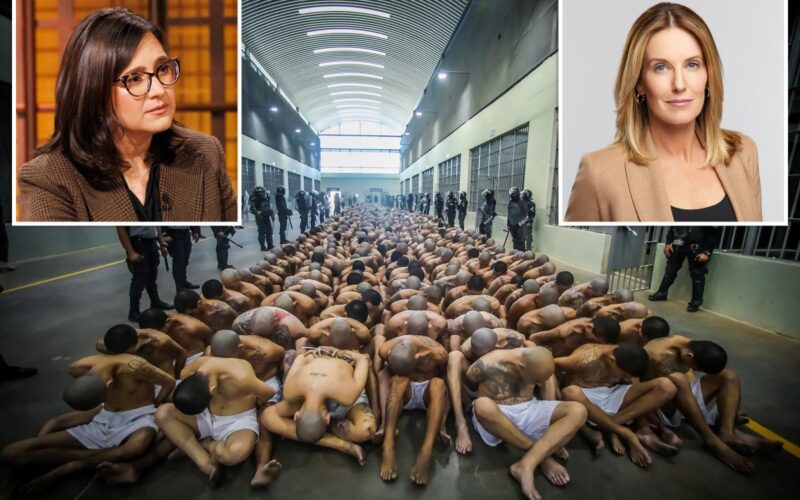
Weiss’s attempt at damage control follows internal backlash that erupted after she ordered a “60 Minutes” segment on El Salvador’s notorious CECOT mega-prison pulled just hours before its scheduled broadcast Sunday night.
The investigation, reported by correspondent Sharyn Alfonsi, examined the Trump administration’s deportation of hundreds of Venezuelan men to the site.
CBS said at the time that the segment needed additional reporting and would air at a later date.
But the decision sparked a furor inside the newsroom, and accusations from critics that the network was bowing to political pressure.
Alfonsi told colleagues in an email that the segment had been thoroughly vetted and cleared by CBS attorneys and standards editors, arguing that pulling it at the last minute was a political decision rather than an editorial one.
Her position was later echoed by “60 Minutes” executive producer Tanya Simon, who told staff she stood by the piece and had pushed back against Weiss’s late-stage demands before ultimately complying.
Weiss has denied Alfonsi’s claim that the decision to delay the airing of the segment was politically motivated.
She laid out her specific objections to the “Inside CECOT” report in a memo that was first obtained by Axios.
Weiss argued the segment lacked sufficient context, failed to fully present the Trump administration’s legal rationale for the deportations and did not adequately pursue on-camera responses from senior officials.
Weiss also raised concerns about how the piece characterized the criminal histories of the deportees, questioned its handling of Homeland Security Secretary Kristi Noem’s March visit to the prison and urged producers to explain the legal debate surrounding the administration’s actions rather than reducing it to shorthand references.
The controversy intensified further this week when the unaired segment appeared to stream on Canada’s Global TV app, allowing clips of the report to circulate online despite never airing in the US.
CBS later said the Canadian release was the result of a distribution error and that efforts were underway to remove unauthorized copies.
The Post has sought comment from CBS News and Weiss.