



The affordability crisis gripping our city does not fall equally on New Yorkers, and solutions to it must confront the economic and racial inequities that shape who can afford to live, work, and raise a family here.
In neighborhoods long harmed by redlining, gentrification, and under-investment, Black and Brown families face economic
In New York City, the median Black and Latino households earn just 53 and 49 cents, respectively, for every dollar earned by a white household. These New Yorkers experience the highest rates of poverty and face
As affordability dominates
The incoming mayor and Council cannot fall back to class- and race-neutral policymaking and expect it to close these divides. That approach has failed our communities for generations.
Ensuring that policies are grounded in economic and racial justice requires building equity into the mechanics of government. Data analysis by race, ethnicity, and neighborhood must shape priorities and budget choices. Communities most affected by disparities need to be engaged, and their lived experiences must be incorporated into program design.
When government uses evidence, partnership, and accountability, justice becomes a core function — not an add-on.
In 2021, the Racial Justice Commission advanced reforms to address how structural racism is embedded in city government. As a result, New York City is now required to examine how its policies, services, and investments affect different racial and ethnic communities, and develop long-term racial
While Mayor Adams has failed to release these required plans
In recent years, we have also seen what racial justice in government can look like. Since 2022, our most diverse, women-majority City Council has put equity and justice at the heart of its work.
We advanced legislation, policy, and budget investments to address stark racial disparities in maternal health, including launching the first
We prioritized expanding full-
This Council established our state’
And by launching CUNY Reconnect, we made it possible for more than 62,000 adults — mostly women and people of color — to return to college for degrees that
It’s no accident that the most diverse Council in history was also the most pro-housing in generations,
These are the types of equity-centered solutions needed.
Racial equity must be a driving force in how we address affordability and opportunity, because the
The incoming mayor and City Council’s success in making the city more affordable depends on them directly confronting
Racial justice is not an ancillary issue to advancing affordability. It is at its core.
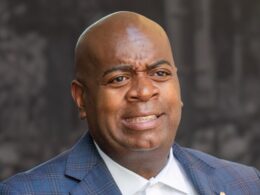
Adams is the outgoing City Council speaker from District 28 in Southeast Queens. Jones Austin is the CEO and executive director of the Federation of the Protestant Welfare Agencies.