




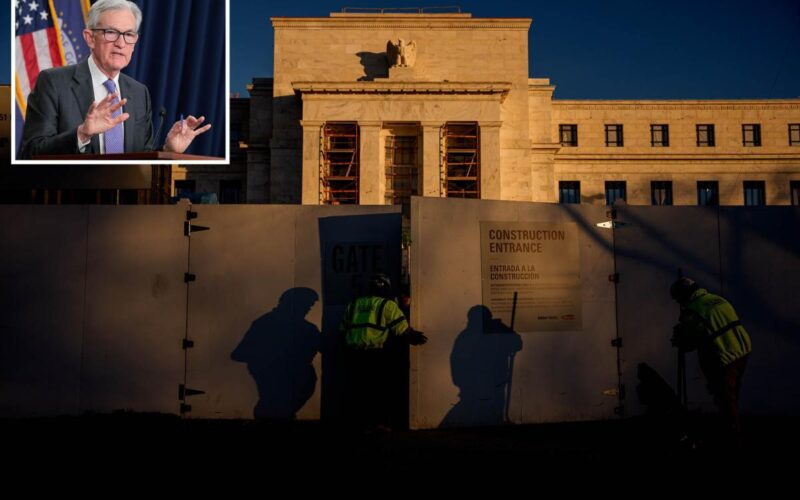
Most Fed officials believe additional interest rate cuts are appropriate as long as inflation continues to cool, according to minutes from the Federal Reserve’s meeting of Dec. 9 and 10.
Policymakers slashed interest rates earlier this month to a target range of 3.5% to 3.75% in a 9-3 vote – the most dissents since 2019 as officials debated whether to prioritize inflation fears or concerns around the labor market.
Fed Governor Stephen Miran dissented in favor of a more aggressive half-point cut, while Chicago Fed President Austan Goolsbee and Kansas City Fed President Jeff Schmid voted against the decision in favor of keeping rates on hold.
The minutes revealed an even deeper split among officials.
Six of the larger group of 19 central bankers – 12 of whom vote on rates – recommended the benchmark rate should end 2025 at 3.75% to 4%, or the range that was in place prior to December’s cut.
While projections varied greatly between individuals, the median forecast was one interest rate cut for all of 2026.
“A few of those who supported lowering the policy rate at this meeting indicated that the decision was finely balanced or that they could have supported keeping the target range unchanged,” the minutes stated.
“Several participants pointed to the risk of higher inflation becoming entrenched and suggested that lowering the policy rate further in the context of elevated inflation readings could be misinterpreted as implying diminished policymaker commitment to the 2% inflation objective.”
This year’s record-breaking government shutdown also threw a wrench into hopes for a faster rate-cut path in 2026.
Fed officials made their interest-rate decision in December without the complete economic picture.
And while the release of inflation and jobs reports have resumed since the shutdown ended, Fed Chairman Jerome Powell warned these figures could be distorted – potentially overstating job creation by as many as 60,000 jobs monthly.

“Several participants noted that there could be swings in measures of economic activity associated with the government shutdown, which could make it more difficult over coming months to determine the underlying trend in growth,” the minutes recorded.
In November, in the first full report following the shutdown, unemployment jumped to 4.6% — the highest level since 2021. The Consumer Price Index, meanwhile, unexpectedly cooled to 2.7%.
Last week, the GDP report showed the US economy grew at a robust 4.3% pace – the fastest in two years, but a potential cause for concern when it comes to inflation.
Moving into 2026, the Federal Open Market Committee is poised to see several changes with four new regional presidents moving into voting roles.
These include Cleveland President Beth Hammack, Philadelphia President Anna Paulson, Dallas President Lorie Logan and Minneapolis President Neel Kashkari, all of whom have signaled caution around cutting.