




Nonprofit organizations keep millions of New Yorkers housed, fed, safe, and supported. They shelter survivors of domestic violence, represent families facing eviction, run after-school programs, shelter survivors and deliver meals — often as the sole providers of these services. They are the safety net that holds communities together. Yet when it comes time for New York State to pay nonprofits on time for the services it contracts them to deliver, the state too often fails to meet its own obligations.
For nonprofits, reimbursement delays regularly stretch for months, even years. Agencies issue “stop-the-clock” notices over trivial issues. The work begins in practice long before payment is made. And nonprofits — unlike state agencies — cannot simply absorb delays. They are forced to take out high-interest loans, drain reserves, lay off staff or cut services, all while continuing to perform work they are contracted to deliver.
The consequences are not abstract. They are daily emergencies.
Recently, nonprofit service providers experienced a worst-case scenario that laid bare just how fragile the system has become. The Office of Victim Services awarded contracts to organizations serving some of the most vulnerable New Yorkers — survivors of domestic violence and sexual assault. The governor publicly celebrated the investment, and organizations did what the state routinely expects them to do: they began work immediately, hired staff, and expanded services, knowing that official contracting would lag far behind program start dates. Then, abruptly, the state rescinded the contracts. Overnight, the field was thrown into chaos.
While steps are now being taken to address the immediate fallout by extending contracts, much damage has been done. This episode compounded already delayed payments and underscored a hard truth: If nonprofits were paid timely and predictably, many would be better positioned to withstand sudden shocks, such as the federal contract terminations we saw over the past year. Instead, chronic delays leave organizations operating on a razor’s edge, with no margin for error when delays occur the government changes course.
This is not mismanagement by nonprofits. This is the state shifting the financial burden of its own delays and reversals onto the very organizations tasked with delivering public services. It is, effectively, an invisible and unjust tax on the safety net. A recent community survey found the state owes New York nonprofits at least $650 million in funding. Funding that was already appropriated through the budget process.
Last year, the Legislature unanimously passed legislation (S.7001/A.7616) that included long-overdue reforms to the contracting process. The bill would have standardized contracting rules across agencies, required clear written directives when services must begin before contracts are executed, mandated advances so nonprofits are not forced to front costs, and required interest payments that reflect real borrowing costs. These are not radical demands; they are basic, good-government practices that align state expectations with state behavior.
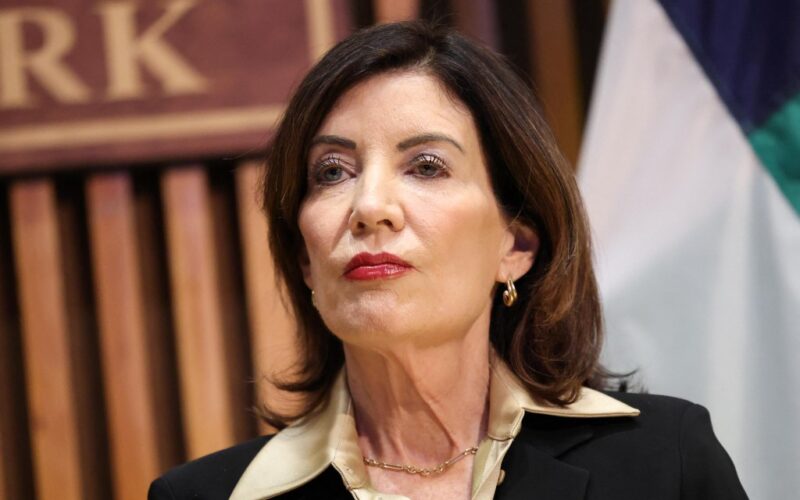
Gov. Hochul vetoed the bill despite its unanimous bipartisan support, leaving in place a contracting system she herself acknowledges is broken. She did not deny the harm — she promised instead to fix it administratively. That promise carries real weight, because the crisis facing nonprofits is accelerating. Federal cuts and threats to core programs are driving up demand, a slowing economy is drying up charitable dollars, and two out of three New York nonprofits now fear they cannot fund basic operations next year.
In this context, a veto without immediate, concrete solutions is not just disappointing — it is destabilizing. Thousands of community-based organizations have been left in limbo. They, and the New Yorkers they serve, need her to swiftly make good on her promise. They are looking to her to implement real, workable solutions that will end chronic delays, create transparent and uniform contracting rules, ensure timely advances, and stop forcing nonprofits to bankroll the state.
Nonprofits do not need another study or task force. They need a functional system that pays them on time for the services New York relies on them to deliver. They need the state to act with the same urgency they bring to preventing evictions, protecting survivors, feeding families, and weatherizing homes in the dead of winter.
The governor committed to fixing this system. In her upcoming state of the state address, we look to see her plan to do so. Nonprofits — and the millions of New Yorkers who depend on them — cannot wait.
Brown is the president and CEO of Empire Justice Center in Albany. She is also president of the board of directors for the New York Legal Services Coalition.