



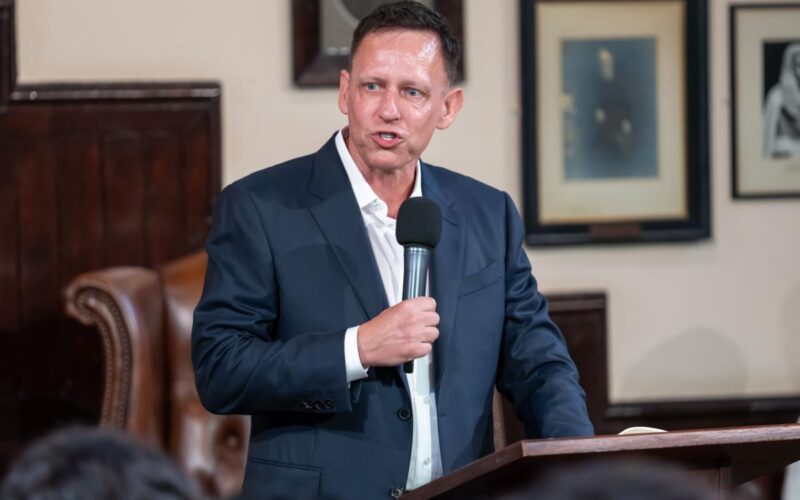
Peter Thiel is putting his money where his mouth is — donating $3 million to a lobbying firm seeking to block the controversial wealth tax in California.
The Palantir co-founder made the donation on December 29 to the California Business Roundtable, the New York Times reported citing a new financial disclosure.
The ballot measure dubbed the “2026 Billionaire Tax Act” would impose a one-time time 5% wealth tax on California residents worth more than $1 billion, and has already prompted a handful of ultra-wealthy tech moguls to cut ties with the state.
While the seven-figure sum is not specifically geared toward fighting the ballot measure, the Times noted it will help the lobbying group in its overall efforts to push back on policies that it deems anti-business.
“The California Business Roundtable will continue to be actively engaged in ballot measures that affect the business community and the cost of living for all Californians,” Rob Lapsley, president of the California Business Roundtable told the Post.
“That includes opposing proposals like a dangerous wealth tax that would undermine our economy, decimate the state budget, drive investment out of the state, and ultimately make everyday life more expensive for working families.”
Last month, billionaire hedge fund manager Bill Ackman warned a wealth tax would be “catastrophic to California.”
“Every successful founder, entrepreneur would leave. Literally no one would stay,” he added.
At least six billionaires have already left the Golden State, according to Bloomberg News. David Lesperance, a tax adviser for the ultra-wealthy told the outlet he personally helped four billionaires end their California Residency before the proposal’s January 1 cutoff date.
Thiel, who has been a vocal critic of wealth taxes in the past, announced his investment firm, Thiel Capital, had opened an office in Miami. The Post reached out to Thiel for comment, but did not get a response.
Google co-founder Larry Page also quietly shifted his home base to Florida, purchasing a $101.5 million estate in December, followed days later by a $71.9 million mansion less than a mile away.
Supporters of the measure say the tax would only impact 200 residents, and the money would go toward offsetting the loss from federal cuts in the state’s education and healthcare system.
But, collecting the nearly 900,000 signatures needed to make it on the November ballot could be an uphill battle, according to a new poll obtained exclusively by The Post.
The survey conducted by David Binder Researcher found that support for the measure slipped from 55% down to just 41% of voters, while those opposed surged to 53%.
Governor Gavin Newsom has said opposes the measure.