



New Yorkers do not need to imagine what could go wrong if driverless cars are unleashed on our streets. We just watched it happen in San Francisco.
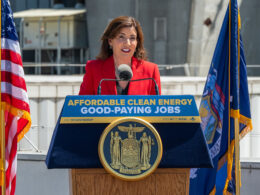
That reality matters now more than ever, as Gov. Hochul proposed in her State of the State address opening the door to commercial, for-hire autonomous vehicle testing outside New York City. Supporters may argue that this proposal stops at the city line. But history tells us otherwise. Testing outside NYC is just the first step toward expansion everywhere, including onto the most complex and congested streets in the country.
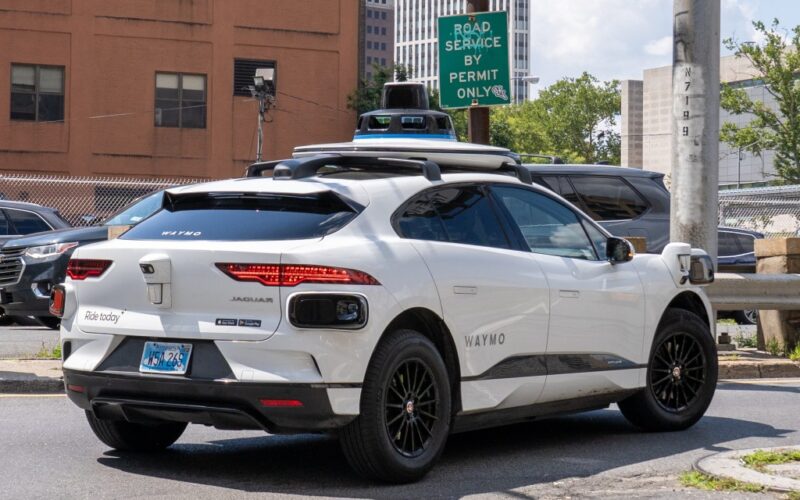
On Dec. 20, a power outage knocked out traffic signals across parts of San Francisco. What followed was a real-world stress test that Waymo’s technology failed.
Dozens of Waymo robotaxis froze in place, stalled in active intersections and traffic lanes, unable to proceed without confirmation from remote human supervisors. As traffic backed up, emergency vehicles struggled to get through. That surge of requests overwhelmed Waymo’s system and forced the company to suspend service altogether. Videos showed immobilized vehicles clogging streets, turning chaos into gridlock.
That alone should give New York pause. But what happened next should stop us cold.
This month, during a California Public Utilities Commission proceeding, a judge asked Waymo a basic question: how many of its vehicles stalled during the outage?
Waymo refused to answer.
The company claimed the number was a trade secret. The judge was openly skeptical. So were members of the public in the room, including labor leaders, safety advocates, transportation experts, and residents, who had gathered to hear whether autonomous vehicle companies could be trusted with public streets.
If a company cannot tell a judge how many cars failed during a known public safety incident, why should New Yorkers expect transparency when something goes wrong here?
This is not a hypothetical concern. Even outside New York City, our roads face extreme weather, power outages, and emergency disruptions every year. Allowing autonomous for-hire vehicles to operate commercially anywhere in New York means accepting those risks statewide — and setting a precedent that will inevitably be used to justify expansion into denser urban environments.
When traffic lights went dark in San Francisco, Waymo’s cars stopped and waited for guidance from remote human operators. When too many vehicles asked for help at once, the system broke down. That may be inconvenient elsewhere. In New York, it could be dangerous.
And this is not just about Waymo.
Across the autonomous vehicle industry, companies are racing ahead of the technology and ahead of regulators. Elon Musk is the clearest example: even as Tesla pushes toward robotaxis in markets like New York, he admits its cars still need roughly 10 billion more miles of data before they can safely operate without human supervision.
That contradiction matters. On the one hand, industry leaders push for faster rollouts and weaker rules. On the other, they admit the technology is not ready for unsupervised use. New Yorkers have seen this playbook before: move fast, loosen oversight, and let the public absorb the consequences.
Waymo insists that most of its vehicles navigated the San Francisco blackout without incident. But it still will not give crucial details. The public is left piecing together the truth from viral videos and carefully worded statements.
That is not accountability. It is damage control.
New York should not allow itself to become the next test case — whether upstate, downstate or anywhere in between.
If a power outage can paralyze an entire fleet in San Francisco, imagine what a similar failure could do here: blocking a hospital corridor, a bridge approach, or a major artery during an emergency. In New York, gridlock is not just frustrating. It can delay ambulances, strand workers and put lives at risk.
Before any expansion of autonomous, for-hire vehicles is considered — anywhere in the state — New Yorkers deserve clear answers. How do these systems fail? How often? Under what conditions? And who is accountable when they do?
Hochul should hear directly from those who would live with the consequences of this decision. New Yorkers who value safety, transparency and accountability should speak up now and make clear that they do not want our state to become a proving ground for unready technology.
If Waymo, or any autonomous vehicle company, cannot answer basic safety questions in a public forum, then it has no business asking for access to New York’s streets.
If this is how driverless cars perform in a blackout, New York should hit the brakes.
Goldstein is the executive director of the Black Car Fund.