




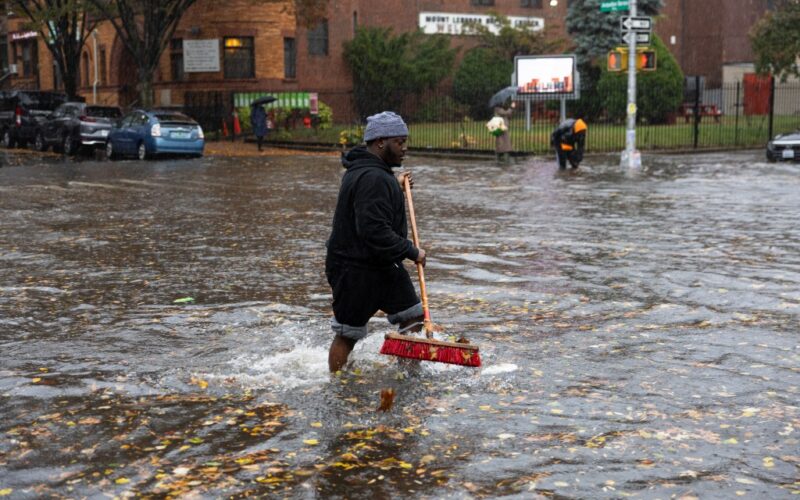
During Mayor Mamdani’s tenure, New York City is certain to experience another record-breaking rainfall event. In just the past few months, there have been storms that left more than 100 commuters stranded in Bayside, dumped 3 feet of floodwater into a children arts studio in Clinton Hill, and devastatingly drowned our neighbors in Flatbush and Washington Heights. The question isn’t if it will happen again, but how prepared we’ll be when it does.
Mamdani has already correctly characterized a central challenge: “the infrastructure of the city has shown itself unable to keep up with rainfall that dwarfs the amount that our sewage system was built for more than 100 years ago,” he said after the record-breaking flooding on Oct. 30.
Climate resilience is inseparable from the affordability platform that propelled Mamdani to victory. Flooding is New York City’s most frequent and costly climate threat, and its impacts fall hardest on the very New Yorkers who are already stretched thin by the city’s affordability crisis. Bringing resilience to the forefront is not a distraction from the new administration’s agenda: it is essential to deliver it.
In 2012, Superstorm Sandy left devastating impacts on more than 400 buildings across 35 New York City Housing Authority (NYCHA) developments throughout the city. Tens of thousands of NYCHA residents were impacted by losing power, heat, and hot water. The city can’t afford to let those who have the greatest financial risk carry even greater burdens.
This is not just an issue throughout NYCHA developments, but in any community where we have affordable housing for renters and homeowners.
The climate crisis has already drained the bank accounts of working-class New Yorkers in communities with higher average rates of homeownership, such as Jamaica, Co-op City, and Stapleton, who are absorbing the costs of growing flood damages. Renters in Corona, East Harlem, and Far Rockaway fare no better. Landlords facing rising flood insurance, maintenance, and utility costs often pass these expenses onto tenants. In the worst cases, renters living in ground floor and basement apartments risk losing everything, including their lives.
We’re encouraged that the mayor appointed Waterfront Alliance’s director of resilience, Tyler Taba, to his transition committee on transportation, climate, & infrastructure, and resilience champion Louise Yeung as his chief climate officer, which will help ensure the administration treats resilience with the urgency it deserves. A staffing, budget, and planning commitment in the first 100 days would signal that a “New Era for New York City” means a proactive and intersectional approach to climate change.
In short order, here is what the mayor can do right away:
- Appoint a Department of Environmental Protection (DEP) commissioner who views climate change as central to the agency’s operations.
- Dedicate $100 million in capital funding to a Resilience Infrastructure Fund for coastal and inland projects, like floodable parks and the Cloudburst program. Additionally, dedicate $10 million to staff the Bureau of Coastal Resilience within DEP, which is currently underfunded and understaffed for its mandate to operate and maintain new flood gates at East Side Coastal Resiliency (ESCR) and Brooklyn Bridge-Montgomery Coastal Resilience (BMCR). This poses a life-threatening risk in the event of a coastal storm.
- Direct the Mayor’s Office of Climate and Environmental Justice (MOCEJ) to launch a Climate Adaptation Working Group to support the city’s first Adaptation Plan as part of PlaNYC.
- Fund New York City Emergency Management (NYCEM)’s Strengthening Communities Program with $2 million to scale the program across neighborhood networks.
This is just the groundwork. More ideas for actionable items with immediate impacts can be found in the Waterfront Alliance’s “Embracing the Waterfront: First 100 Day Priorities for the Next Mayoral Administration of New York City.” Climate adaptation offers an opportunity to match the creativity and imagination that defined Mamdani’s campaign, with bold governance. The potential for investment is endless.
Under Mamdani’s umbrella, there is an opportunity to shape a stronger future for climate resilience and getting the right start will put New York City on the right path to get there.
Raskin is president and CEO of Waterfront Alliance. Washington is a board member of Waterfront Alliance and vice president & chief of staff of Phipps Houses.