




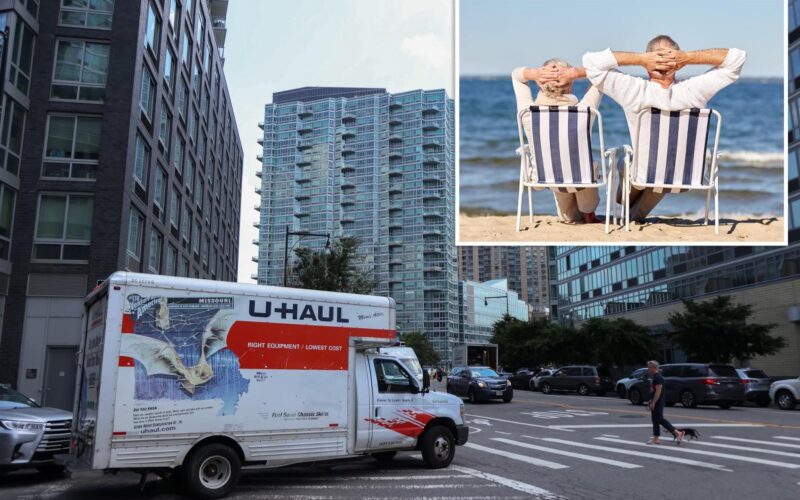
There’s seemingly no escape from New York – the New York tax man, that is.
The Empire State is “extremely aggressive” in chasing down wealthy people who attempt to escape high taxes with moves to Florida and beyond – and that could escalate as New York City Mayor Zohran Mamdani works to increase taxes on top earners, experts told The Post.
Many New Yorkers who mull a move believe it’s enough to follow the “six-months-and-a-day” rule, which maintains you’re a resident if you spend 184 days or more in New York, not including airport layovers and hospital stays.
In reality, New York State law requires people to go a lot further to establish their domicile elsewhere, according to experts. That entails updating their driver’s license, voter registration, bank accounts and mailing subscriptions to their new address, whether that’s in Florida or another state. On top of that each state has its own requirements, too.
“New York is an extremely aggressive state when it comes to state income taxes. They do not like people leaving and they will do whatever they can to trap you back into the New York tax net,” Christine Concepcion, an attorney who advises on international and domestic tax matters, told The Post.
“This isn’t something that you do overnight.”
Meanwhile, Mamdani’s push for a 2% city income tax hike on millionaires — which would raise the rate to 5.9%, on top of federal and state taxes — lies at the heart of his socialist agenda. At least some of the increased revenue will likely be funneled back into auditing and tax enforcement, experts told The Post.
“The way it’s done in a socialist country like Belarus, where I’m from originally, you increase the taxes and you also allocate more money to enforcement,” said Tatiana Tsoir, an accountant and chief executive of Linza Advisors.
New York auditors are already exacting – which Jon Hoff and his wife, Kathleen Ocorr-Hoff, found out the hard way when they were left on the hook for a $60,000 New York tax bill after they bought a $1 million Naples condo.
They registered their vehicles, updated their voting registrations, started a business, held bank accounts, owned hunting and fishing licenses and moved their ski equipment and crystal collection to Florida.
But they kept cashing their paychecks in New York and didn’t give up their local country club memberships – enough evidence to leave them subject to New York taxes.
The couple challenged the tax bill, then appealed a ruling that the Hoffs had to pay up — but that court decision was ultimately upheld. The couple’s attorneys did not immediately respond to The Post’s request for comment.
New York even chases after people living in other states who work remotely for New York-headquartered companies – known as the “convenience of the employer” rule – especially as more people switched to remote work and moved out of state during the pandemic.
“Our organization represented someone who lived and worked in Missouri and tried to file a discrimination claim against his New York-based employer, and New York said that they weren’t responsible for that…but then New York also said he still owed them income tax,” said Andrew Wilford, senior policy analyst at National Taxpayers Union Foundation.
The client ultimately avoided forking over New York state taxes because he didn’t spend a single day at the office that year. Just one trip to the building for a holiday party would’ve meant he owed taxes, Wilford told The Post.
“If I were to move to Florida, what I would also do is get a reciprocal license in Florida,” Tsoir said of her CPA license. “Because if you’re not licensed in Florida and you claim to live there, it’s kind of strange.”
Proving residency in a new state could entail buying a cemetery plot, opening a safety deposit box, obtaining a fishing license, finding a new local place of worship or moving artwork, jewelry and sentimental items like wedding photos to your new residence, whether that’s in Florida or any other state.
“An easy case is if somebody runs a construction company in New York but then also has a home in Florida,” said Randall Fox, partner at Kirby McInerney, a New York law firm. “A construction company is very site-specific, right? So you got to actually be there to do the work.”
For people with school-aged children, auditors will also often check where their kids are enrolled in school.
The state Department of Taxation and Finance did not immediately answer a request for comment.
While New York auditors are especially dogged, it’s also true that many so-called Florida residents aren’t truly moving to the Sunshine State — they’re just trying to skirt tax rules.
“If they’re New Yorkers, they have to pay the taxes like the rest of us and pay for the same services we all have to pay for, and I’m not trying to subsidize the people who decide to spend half the year in Florida,” Fox told The Post.
When combined with statewide rates as high as 10.9%, Mamdani’s 2% tax hike could see New York’s wealthiest residents facing state and local income taxes as high as 16.8% even before federal taxes, according to Wilford.
Higher taxes could speed up the rate at which New Yorkers have been fleeing the state. New York already loses a resident on net every 2 minutes and 23 seconds, according to Wilford’s research.
That poses a serious threat to the New York state budget, which will have $3.8 billion less 2025 tax revenue to work with because of outmigration, the National Taxpayers Union Foundation estimated.
“Everything we’ve seen so far from Mayor Mamdani suggests that he is not concerned with the trends that we’re seeing with New York state broadly and New York City as well, where people are headed out because they’re sick and tired of being overtaxed,” Wilford told The Post.
The mayor’s office did not respond to The Post’s request for comment.
Despite high taxes, New York’s millionaire population has continued to grow. But the state’s share of income millionaires has plummeted from a high of 12.7% of the national total in 2010 to 8.7% in 2022, according to Empire Center, a fiscally conservative think tank.
“Whatever you think about what tax rates people should pay, high earners are disproportionately sensitive to tax increases,” Wilford said. “They pay more tax, so they notice an increase of 1% in their tax bill is a lot more money if you’re making a lot more money.”
Wealthier individuals also have more resources, so it’s easier for them to sell their house, buy another one and move across state lines, he added.
Nearly 900,000 people total left New York state between 2021 and 2024, according to an Empire Center analysis of US Census Bureau data.
From 2018 to 2022, more than 125,000 New Yorkers abandoned the Big Apple for Florida from 2018 to 2022 – taking nearly $14 billion worth of income out of the state, according to a report last May from the Citizens Budget Commission, a fiscally conservative watchdog.
About a third of those New Yorkers moved to Miami-Dade, Palm Beach and Broward Counties, accounting for a $10 billion reduction in New York City’s adjusted gross income, the report found.
“There’s so much money down there now, it’s insane,” luxury publicist Melanie Holland told The Post. “People that grew up on the island of Palm Beach can’t afford to live over there anymore, it’s so expensive.”
Experts urged high-income New Yorkers to hire a lawyer to help with the move, even though it might be costly – or risk getting hit with eye-popping costs in unexpected New York state taxes.
Florida “has been a place where wealthy New Yorkers have always gone,” Holland said. “[Auditors have] always had their eyes on it. I think what’s happened is that the people who are moving down there aren’t doing it correctly.”