




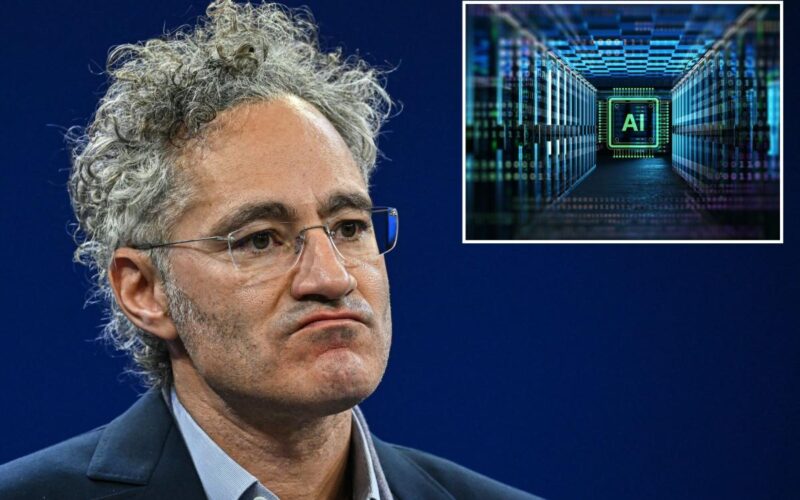
Palantir CEO Alex Karp suggested Tuesday that usage of artificial intelligence “bolsters civil liberties,” while also warning Europe that its adoption of technology is falling behind the U.S. and China.
In a wide-ranging conversation with Blackrock CEO Larry Fink at the World Economic Forum in Davos, Switzerland, Karp said his company powers “tons and tons of hospitals,” but that they all have an “intake problem” and a “shortage of doctors and nurses.”
“They are working in a low-margin environment, but every single one has a different way of processing their patients, according to what their specialty is and the kind of patients they don’t do well with, and how do you manage that? And so the intake flow and into your enterprise in a way that you can actually process these things 10, 15 times faster than you could before,” Karp said.
“It saves a lot of lives.”
“Despite what people may want to believe, it also bolsters civil liberties, because now you can see, well, I mean, just simple questions — Was someone processed based on economic considerations, or were they processed based on their background? Like those things are impossible to see, unless you have, like, there’s a huge civil liberties betterment side of this that typically people don’t believe we care about or, but it’s actually exactly the opposite,” he continued.
“We do care, and you know, showing is caring. It’s like we can granularly show why someone came in, why they were taken, why they were rejected, and we can do it in a way that makes business sense for the business itself,” Karp said.
When asked by Fink if AI is going to create a greater imbalance in the world in terms of growth, Karp said, “Well, I think the obvious first imbalance is, it seems like America and China understand versions of making this work, and they’re different, but they both work, and they work at scale, and I think that is very likely to accelerate way beyond what most people believe is possible.”
“Like the discount rate, I think, not in the short term, but in the long term is way too high on what will be done and how this will impact every aspect of our society,” Karp added.
He also said: “The tech adoption in Europe is a serious and very, very structural problem, and what scares me the most is, I haven’t seen any political leader just stand up and say we have a serious and structural problem that we are going to fix.”

When asked if he thought AI was going to create or destroy jobs overall, Karp said, “I think one of the unfortunate things of the narrative in the West is, it will destroy humanities jobs.”
“But like technicians. If you are a vocational technician. Or, like, we’re building batteries for a battery company and the people who are doing it in America are doing roughly the same job that Japanese engineers are doing, and they went to high school,” he continued. “And now, they’re very valuable, if not irreplaceable, because we can make them into something different than what they were, very rapidly. And those jobs are going to become more valuable.”
“Not to diverge into my usual political screeds, but there will be more than enough jobs for the citizens of your nation, especially those with vocational training,” Karp also said.
“I do think these trends really do make it hard to imagine why we should have large-scale immigration unless you have a very specialized skill.”