


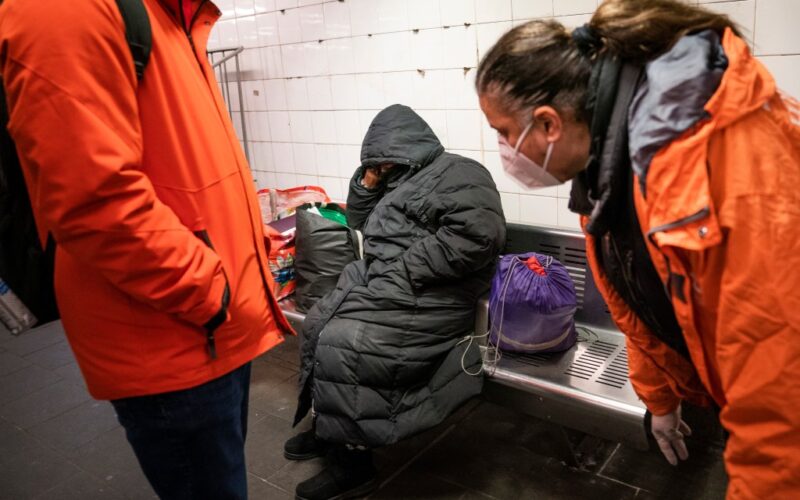
Last November, the New York State comptroller delivered an audit report with a very concerning message: despite years of warnings and new administrative guidance, Kendra’s Law remains deeply flawed and ineffective when it comes to helping people with mental health diagnoses.
While the state Office of Mental Health made some improvements since the law’s expansion last year, the audit finds persistent systemic weaknesses in oversight, monitoring, and implementation that leave people subject to court-ordered mental health services at risk of lapses in services, coercion, and inadequate accountability. For a law purportedly designed to help people treat their mental health conditions, this is an inexcusable outcome. New York must do better.
Kendra’s Law, which took effect in November 1999, authorizes a court to order people with mental illness to accept outpatient “treatment” for their illnesses, even over their objection. While this may seem like a humane way to get help to people in need on its face, research has shown that involuntary commitment is frequently ineffective in treating mental illness.
In fact, a reliance on forced treatment can undermine patients’ long-term independence and sour them on voluntary treatment once the court-ordered treatment expires. While new oversight and policy sought to remedy some of these issues, these plans have routinely come up short.
According to the recent Kendra’s Law audit, only a portion of the comptroller’s prior recommendations have been implemented. The audit identifies ongoing delays in investigations, problems with renewals of orders that can interrupt services, and failure to improve “significant event” reporting. Implementation also remains uneven across counties; New York City continues to operate outside the new reporting system; and the state often cannot confirm whether services continued when court orders expired.
None of this is new. Earlier this year, New York Lawyers for the Public Interest reported that Kendra’s Law is severely biased and falls well short of its mission. The comptroller’s findings now confirm the prevalence of these issues.
This audit comes at a significant moment for New York City as it welcomes Zohran Mamdani to City Hall and public safety remains a top priority for New Yorkers. Coercive mental health interventions are often defended as necessary for safety, yet decades of experience — and now the state’s in-depth investigation — demonstrate that they are unreliable and no more effective than voluntary services.
True safety is rooted in stable housing, voluntary treatment, culturally appropriate care, and health-centered crisis responses. We need a change, and the new mayor’s plan is poised to deliver such a change.
Mayor Mamdani can improve mental health care by prioritizing voluntary, community-based services, rather than relying on police intervention or forced hospitalization. Traumatizing arrests and involuntary commitments do not provide the long-term treatment, stability, or support that people with mental health disabilities need, nor do they make the city safer.
New York should invest in mental health urgent-care centers, supportive housing, and respite centers, all of which give people accessible, non-coercive places to receive care. Strengthening basic social services, such as access to food, clothing, and employment training, would also address the underlying conditions that often lead to crisis, reducing the need for emergency room visits, incarceration, and hospitalization.
The new mayor’s mental health plan aims to do just that — now it’s time to fund and implement that plan. The Department of Community Safety (DCS) that Mamdani has proposed must be established to replace a fragmented, underfunded, and often harmful status quo with a coordinated, health-driven safety system that actually meets New Yorkers’ needs.
The DCS would bring mental health, homelessness outreach, crisis response, violence prevention, and victim services under one roof, creating a whole-of-government approach that addresses the root causes of instability rather than relying on police to manage social failures they were never trained — and cannot be trained — to solve.
By investing in mental health care which heavily engages peers (individuals with lived mental health experiences), “clubhouses,” and a dramatically strengthened non-police crisis response system, rather than ineffective forced treatment, the DCS would ensure every New Yorker has someone to call, someone to respond, and somewhere to go in moments of emotional distress.
With real investment and follow-through, New York City can finally move from a mental health system that prioritizes forced commitments and police-driven responses to one that provides accessible care, meaningful prevention, and lasting support in every community.
Trice is a senior staff attorney in New York Lawyers for the Public Interest’s Disability Justice program, where she focuses on mental health advocacy.