




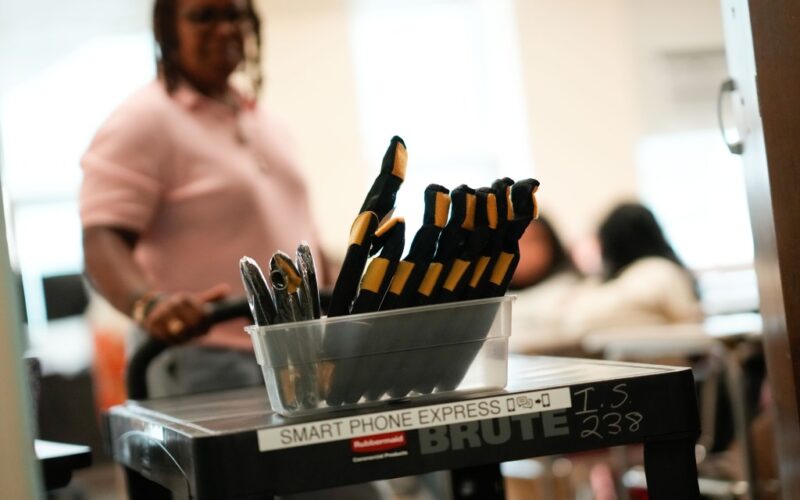
When New York State banned cell phones during the public school day this past September, the intention was clear: protect students’ mental health, reduce distractions, and give kids a better chance to learn and connect in real life. One semester in, it’s worth asking whether this ban, and similar approaches to controlling youth engagement on phones and social media, can truly address the well-documented increases in depression and isolation among kids and teens.
I’m a youth development and education researcher at The Boys’ Club of New York, working closely with boys and young men across the city, many of whom attend New York City public schools. I support them through anxiety, grief, academic struggles, and social isolation. Across that work, one message comes through clearly: kids feel misunderstood and ignored.
Instead of adults making a conscious effort to understand, we often default to control — with rules, restrictions, and punishment. My concern is that blanket bans, without a concerted effort to replace that outlet with meaningful in-person experiences, will prove to be ineffective in shaping positive behaviors and habits.
We’ve seen versions of this before. When adults ban something outright without addressing the underlying reasons kids are drawn to it, we often get the opposite of the intended outcome. Kids feel more frustrated and more defiant because instead of being listened to and consulted, they are receiving restrictions and punishments. We don’t need to keep policing kids into submission; we need to ask them earnestly, without judgment, why they’re making certain choices.
To be clear, the concern driving these policies is real. Anxiety, depression, loneliness, and bullying are affecting kids at alarming rates. Globally, governments are responding. Australia recently passed a ban on social media for children under 16. France is considering a law to ban social media for those under 15 and implement a ban of cell phones in high schools. New York’s phone ban is part of the same wave of urgency.
But bans miss the bigger picture.
Phones and social media are not the root cause of bullying, stigma, or isolation. They are amplifiers of a culture we’ve already built — one that favors competition and academic achievement over social and emotional intelligence — while offering too few spaces for kids to feel safe, seen, and valued.
At the same time, it’s important to acknowledge what gets lost in the rush to ban. For many of the kids I work with, especially those in under-resourced or disadvantaged communities, phones are not just distractions. They are tools for self-expression, creativity, connection, and maintaining relationships when home is chaotic. They are a place for youth to organize, amplify their voices, and work towards social change. They are a lifeline of peers who understand them, and sometimes the only place they feel a sense of belonging.
Taking phones away without offering alternatives for connection leaves youth needs unmet. If we truly want to protect kids’ mental health, we must engage kids in meaningful, honest, and open discussions around their usage of social media and phones. We must create alternative opportunities for connection that feel engaging and developmentally appropriate.
If kids are constantly turning to their phones in spaces that you facilitate, don’t think “What is wrong with these kids? Why can’t they focus?” Instead, think: “What am I doing that leaves kids reaching for their phones for entertainment, connection, and fun?”
If we want healthier behavior from young people, we have to show them what that looks like. We can’t tell kids to put their phones away while we scroll through meetings, dinners, and conversations. We can’t blame social media for toxicity while modeling polarization, bullying, and outrage ourselves.
This moment calls for nuance, humility, and shared responsibility. Phones didn’t create the problems our kids are facing — and getting rid of them isn’t going to solve them. But a future of healthy, joyful childhood and adolescence is in plain sight: it just takes the adults in the room to foster positive environments that kids want to be a part of.
Van Hare is the director of program enhancement at The Boy’s Club of New York. Previously, she worked as director of the Listening Project to design connection and community focused programming for youth. She has taught in public, charter, and private schools in New York City.