



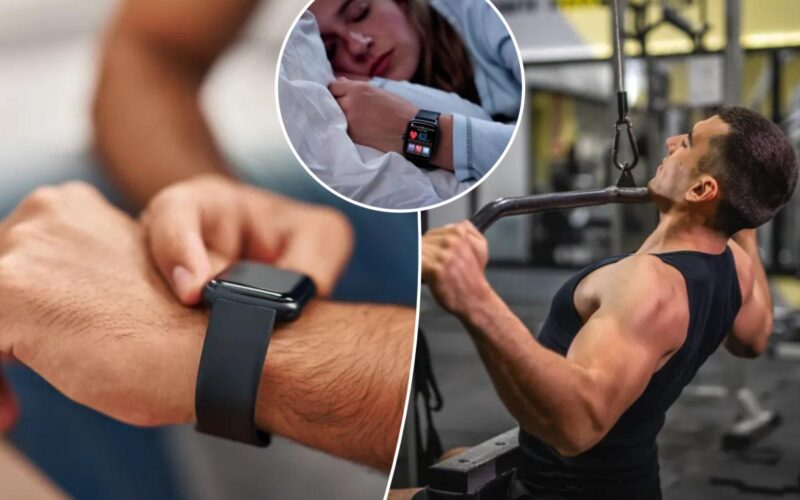
It might be time to start listening to your heart.
In recent years, millions of Americans have incorporated wearable health trackers like smartwatches and Oura rings into their lives, with studies showing that at least 1 in 3 US adults are actively using them.
While metrics such as blood pressure, sleep duration and daily step counts are familiar, the rise of wearable technology has also cast a spotlight on a lesser-known data point: heart rate variability, or HRV.
Doctors typically don’t assess it during routine check-ups, but tracking HRV can offer valuable insights into several critical bodily systems, according to Dr. Adam Auerbach, medical director of the Northwell Health Sandra Atlas Bass Heart Hospital.
It can offer a window into how well your body handles stress and how quickly you recover after a tough workout or a demanding day, among other indicators.
To unpack the details, The Post tapped Auerbach to explain everything you need to know about HRV.
What is HRV?
“HRV is measuring the small variations in time between consecutive heartbeats,” Auerbach said.
Those tiny fluctuations are controlled by the autonomic nervous system — the body’s behind-the-scenes network that regulates unconscious tasks like breathing, blood pressure, digestion and heart rate.
HRV reflects the balance between the sympathetic “fight-or-flight” response and the parasympathetic “rest-and-digest” response, offering a peek into your stress levels and your ability to adapt to pressure.
What is a typical HRV?
“There is no ‘normal’ range — it’s more important to know your own HRV and track it over time,” Auerbach said.
In other words, what’s typical for one person may not be for another, since there is no universal HRV benchmark. However, Auerbach pointed out that HRV generally declines with age, often trending lower as people get older.
Experts say having a consistent, “stable” HRV is usually a more useful goal than simply trying to push the number higher. Working with a doctor or specialist is the best way to understand your HRV and determine how to improve it, Auerbach noted.
What can tracking HRV tell you?
“HRV is a good indicator of how our body is functioning,” Auerbach said.
“If we are not sleeping enough, if we are not exercising enough, if we have too much stress that is not being managed or even if we have too much alcohol, the HRV will be impacted,” he explained. “As these factors are optimized, the HRV will improve.”
In general, a higher HRV — meaning more variation in the time between heartbeats — usually signals a relaxed state. Your heart rate and blood pressure slow down, and your body is better able to handle stress and recover after workouts or tough days.
On the flip side, a low HRV — less variation between beats — can indicate your body is stuck in “fight-or-flight” mode. That keeps your heart rate and blood pressure up, and your body stays on high alert with adrenaline flowing.
Because it suggests your body is less adaptable and more strained, a low HRV is often seen as an early warning sign of current or future health problems.
How important is HRV tracking?
Scientists are still debating how accurate and useful HRV tracking really is, but Auerbach said it can be a helpful tool for measuring how your body and mind are handling daily life.
“This is still an emerging field with much to learn,” he said. “[But] as someone who tracks his HRV with a commercial device, I think it’s a reasonable way to monitor how balanced your lifestyle is.”
Over time, tracking HRV can help you understand how sleep, nutrition, exercise and other factors affect your body.
And in the moment — like during a workout — HRV can show how your body is responding to strain, helping you decide whether to push harder or pull back.
That said, Auerbach stressed that the basics matter most.
“We should be focusing on improving our sleep, stress management, diet and exercise, even if we are not going to measure HRV,” he said.