




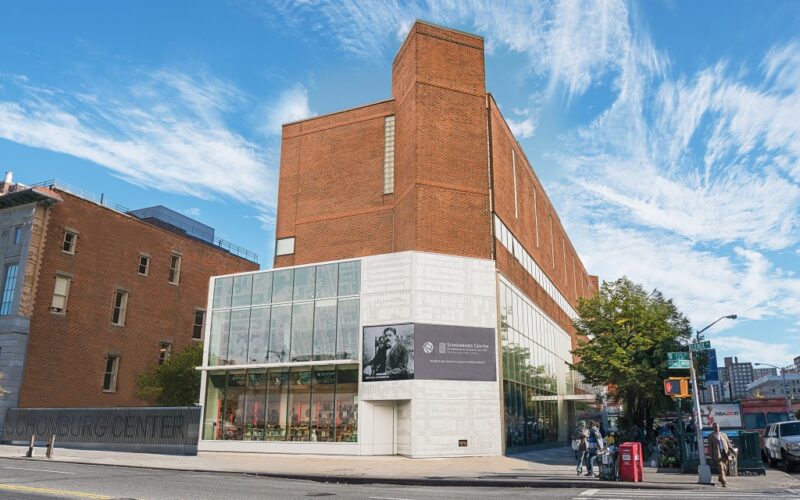
When Harlem’s renowned Schomburg Center for Research in Black Culture asked me to recommend five of my favorites for its list of 100 books by Black authors, my first reaction was, “I’d be honored.”
My second reaction was, “Only five?”
Because how could I leave off such luminaries as James Baldwin, Lorraine Hansberry, Maya Angelou or August Wilson?
How could books by Richard Wright, Ralph Ellison or Claude Brown not make my cut?
They could have asked me for 20 titles, and I would have faced the same challenge. Why? Because they asked for books that shaped me or inspired the work I do.
At the top of my list? “Coming of Age in Mississippi” by Anne Moody, which also made the Schomburg list.
Why? The Schomburg blurb explains it better than I can.
“The unforgettable memoir of a woman at the front lines of the Civil Rights Movement, a harrowing account of Black life in the rural South, and a powerful affirmation of one’s ability to effect change.”
It’s my go-to book whenever someone — especially a young person — asks me for a reading recommendation.
No. 2 on my list of five was “The Autobiography of Malcolm X,” by Malcolm X and Alex Haley.

“In this classic memoir,” as described by the Schomburg team, “Malcolm X, the Muslim leader, firebrand, and activist, tells the remarkable story of his life and the growth of the Nation of Islam movement.”
The list “100 Black Voices: Schomburg Centennial Reading List” was released last week just in time for Black History Month, and was curated by the center’s reference division. It features recommendations from some of the leading voices in Black history, literature, scholarship and art, as well as the Schomburg Center’s extended library community.
“Not only were we able to engage brilliant minds about their favorite books, but we also received thoughtful and unexpected choices to encourage our patrons to read, discover and explore,” said Maira Liriano, the Schomburg Center’s associate chief librarian of the research and reference division.
“The list is a continuation of our legacy of literacy in encouraging the exploration and access to Black literature, and highlights the many riches in our vast research collections.”
Their selection process was much harder than mine. More than 70 “literary and cultural luminaries” submitted 400 titles, which they narrowed down to 100.
Authors who received the most recommendations were Toni Morrison, Maya Angelou and James Baldwin, all important authors with ties to the Schomburg Center.
The book list not only honors the Center’s 100th anniversary, but its release also comes nearly 100 years after historian Carter G. Woodson, the historian, author and journalist, initiated Negro History Week, which would evolve into Black History Month.
The idea behind the book list is to generate discussion. But, more importantly, the motive is to get people to read.
Toward that end, the100 titles on the list are now available at The New York Public Library’s circulating and research branches, officials said.
The libraries are also offering instant e-book and audiobook access to a selection of the most highly recommended titles — no waiting— as well as book giveaways at select locations.
As for me, I just finished reading “Truly,” by Lionel Richie, and am now on “Misunderstood,” by NBA Hall of Famer Allen Iverson. Next on my list is “Mother Emanuel,” by Kevin Sack, unless I decide to stick with the Black authors theme.
There are plenty to choose from.
I have a good list.