



Feb. 5 was just another frigid Thursday night for most New Yorkers. But for the two of us, it was a night to remember.
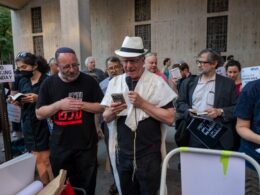
We had the honor of co-chairing a founding assembly of The Bronx First — a new citizens’ power organization in our borough. More than 1,500 of our fellow Bronx residents filled the chairs and bleachers of the Rose Hill Gym at Fordham University. Another 370 supporters and allies from East Brooklyn Congregations, Queens Power, and Manhattan Together, along with observers from Maryland, Maine, and New Jersey, braved the cold and traffic to join us.
We became the newest member of the network of organizations built and sustained by Metro Industrial Areas Foundation in New York.
We weren’t just meeting on a cold night in the Bronx. We were meeting on a cold night in our nation — during a period when so many of us are being targeted, detained, deported, and harmed by an administration that has declared war on the very concept of a diverse and dynamic city. We proudly epitomized what some now believe is everything that is wrong with our city and our country
One of us is the proud daughter of Puerto Rican parents who worked incredibly hard so that I could attend Cardinal Spellman High School, then college, and law school. I became the head of one of the boroughs’ largest non-profits, BronxWorks, serving 65,000 people each year.
The other of us arrived in this country from Gambia in 1988 as an ambitious young student. I shared a mattress with my cousin before becoming a successful businessman, and a founder and leader in a network of 11 mosques in the Bronx that attracts 10,000 worshippers every week.
We both grew up and witnessed both the best and the worst of the old Bronx. The worst included the years of arson, abandonment, extraordinary violence, and despair. A parade of public officials came and went, but those conditions slowly improved mostly because of the organizing and community development that local Bronx groups pioneered.
The best, though, was that even in those difficult days, as an imam recently said, you could start at the bottom but rise slowly, from low-paid entry level work and a cramped apartment to a better job and roomier housing. And your kids could rise too.
Both the best and the worst of the old Bronx are gone. Rampant arson is a thing of the past. And street violence is less intense, although the murder of a Muslim Uber driver and a young student still fill our communities with grief and remind us that there is much more work to be done. But the best — the possibility of improvement and social mobility — is also gone.
Today, rising rents crush families. Home ownership is as rare as hitting the lottery. And deterioration and mismanagement in both NYCHA and privately owned buildings are worsening by the day.
But we didn’t gather at Fordham to whine or wring our hands. We heard from East Brooklyn Pastor David K. Brawley, Manhattan Rabbi Joel Mosbacher, and Queens nonprofit leader Ben Thomases, who described the progress that Metro IAF had already made in affordable housing, mental health, and public safety.
In Soninke, Tem, Twi, Bangla, Urdu, Spanish, French, Italian and English, we dedicated ourselves to one another with confidence that our solidarity and creativity will prevail.
On Feb. 5, we charted a new course that finally puts the Bronx — its families, congregations and communities — first. Now we have the power of 50 institutions and thousands of leaders to make that goal a reality.
Torres and Dukuray are co-chairs of The Bronx First, the newest Metro IAF affiliate.