



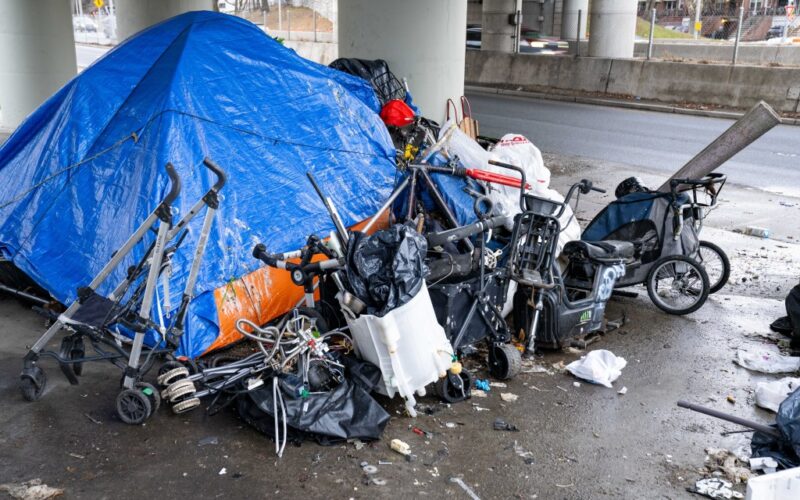
When on day five of his mayoralty Zohran Mamdani acknowledged the inefficacy of homeless sweeps and avowed to end them, street homeless adults, advocates, and attorneys rejoiced. This administration’s commitment not to institute sweeps gave people experiencing street homelessness some modest relief that police officers, social service outreach workers, and sanitation workers would no longer sweep their makeshift homes and life’s possessions away.
But the Arctic cold snap blew in. And so did the calls to reinstitute Adams-era policies to remove homeless encampments to entice the people who live in them to move inside. Those calls intensified as the temperature precipitously dropped and several people died because of the cold, despite none of the 20 who died lived in an encampment.
Last week, Mamdani announced a plan to reinstitute these sweeps. This is the wrong move.
Mamdani claims that these sweeps would be different than his predecessor’s. He put the Department of Social Services in charge rather than NYPD. And that there would be seven days of daily outreach before the sweeps began. None of this makes a difference to our clients.
Sleeping outside is a choice of last resort. NYLAG’s street homeless clients are regularly robbed, assaulted, and harassed by police officers. Many experience malnourishment, chronic pain from sleeping on the ground, and suffer from exposure. If they did not suffer from a mental illness prior, the trauma of sleeping outside and being constantly on alert causes our clients severe anxiety.
However, for many of our clients, those risks are far preferable to staying in a congregate shelter, where as many as 100 men share a dorm. Our clients face so many barriers to entering and remaining in single adult shelters. For instance, the intake procedure to enter DHS shelter can take up to two days and clients are told if they leave, they will need to start the process over again.
Once they get in a shelter, the rules — from restrictive curfews, limited supply of food while barring outside food, and banning animal companions — are too prohibitive. Other times, congregate shelters are either intensely policed or crime ridden, not wheelchair accessible, and not accommodating of gender identity.
Shelters do not provide the mental health assessments and supportive services necessary to transition to permanent housing. Some of our clients cannot even face the prospect of congregate shelter, as it causes them to relive the trauma of their experiences in jails or the military.
The data proves our clients’ experiences. In a 2023 city comptroller audit, out of 2,308 people caught in Mayor Adams’ homeless sweeps the previous year, only 90 people stayed in shelter for more than a single day.
For years outreach workers have come by day-after-day offering nothing but the same congregate shelter option, so many of our clients have stopped interacting with them. And worse comes a sweep, where our clients are not just suddenly uprooted, but lose their practical items, like clothes and paperwork, and cherished personal mementos. To our clients, a sweep is a show of brute force, rather than an invitation to come inside.
There is no difference to our clients between a DSS-led sweep and a NYPD-led sweep. Even if Mamdani believes that a single week of outreach before a sweep is adequate warning, any outreach effort that ultimately tosses away our clients’ possessions and treats our clients without dignity will never foster any trust amongst our clients.
Mamdani’s approach during freezing weather was the start of building back trust with homeless communities. Let’s not backtrack now. Don’t restart the sweeps.
Berkman is director of the Shelter and Economic Stability Project at New York Legal Assistance Group.