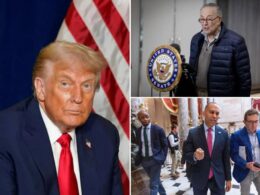




WASHINGTON — Secretary of State Marco Rubio and CIA Director John Ratcliffe are briefing eight senior members of Congress Tuesday afternoon on possible US attacks on Iran — shortly after President Trump claimed to network news anchors over lunch that Tehran “desperately wants a deal.”
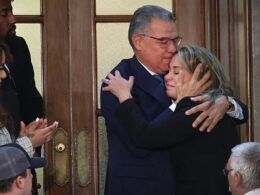
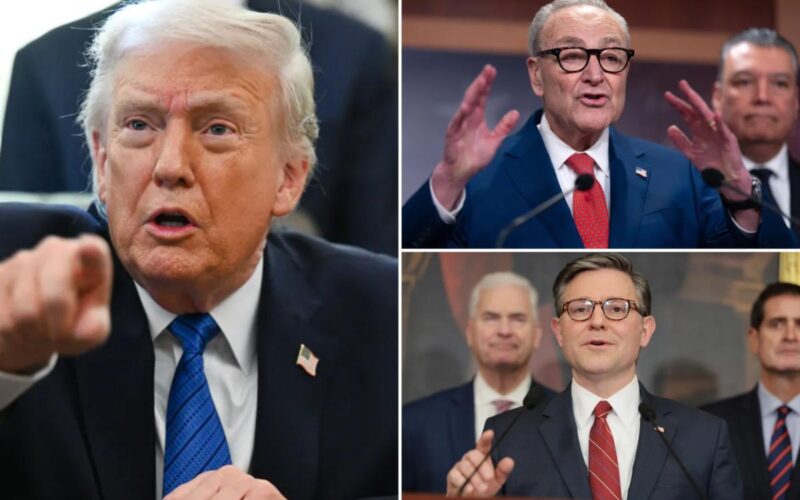
Rubio and Ratcliffe spoke with top lawmakers, including House Speaker Mike Johnson (R-La.), Senate Majority Leader Chuck Schumer (D-NY) and House Minority Leader Hakeem Jeffries (D-NY).
Trump, who will deliver his annual State of the Union speech Tuesday night, continued to keep the world guessing — amid widespread reporting this week that Gen. Dan Caine, chairman of the joint chiefs of staff, warned him about the risks of being drawn into a sustained conflict, which Trump denied.
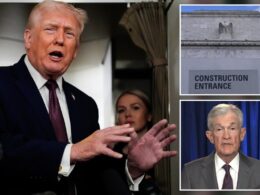
“Important negotiations Thursday in Geneva. Iran desperately wants a deal. But Iran just can’t say the sacred phrase ‘we won’t build nuclear weapons’,” Trump said at the traditional pre-State of the Union lunch, Fox News anchor Bret Baier reported.
The timeframe for a possible attack has stretched as Trump dispatches his special envoy Steve Witkoff and son-in-law Jared Kushner to negotiate with Iranian officials — after the pair defied skeptics to broker a Gaza peace deal last October.
Witkoff said Saturday on Fox News that Iran was “probably a week away from having industrial-grade bomb-making material” — drawing speculation that the window for negotiations may be effectively over.
Trump threatened on Jan. 2 to bomb Iran if authorities killed anti-regime protesters, which they proceeded to do to the tune of thousands of deaths. He later paused an anticipated strike when Tehran claimed to scrap 800 planned executions, and subsequent talks have focused on Iran’s nuclear program.
Schumer said ahead of the briefing that “the administration has to make its case to the American people [about] something as important as this.”
White House press secretary Karoline Leavitt said Tuesday morning: “Iran chants ‘death to America.’ So you tell me if that’s a threat.”
Others expected to join the briefing include Senate intelligence committee chairman Tom Cotton (R-Ark.) and vice chairman Mark Warner (D-Va.) and House intelligence committee chairman Rick Crawford (R-Ark.) and vice chairman Jim Himes (D-Conn.).
The president has publicly endorsed regime change in Iran, but it’s unclear if potential US strikes would seek to accomplish that — either by assassinating the country’s leaders or more broadly targeting the country’s theocratic government.
Polling shows that only a minority of Americans favor an attack on Iran — with three recent surveys gauging support at less than one in three voters.
An Economist/YouGov poll conducted Feb 20-23 found 49% of Americans oppose attacking Iran, with 24% unsure and 27% in favor.
A University of Maryland survey conducted Feb. 5-9 also found that 49% opposition, with 30% unsure and 21% in favor.
A Quinnipiac University poll released Jan. 14, after the massacre of protesters, found 70% opposed US intervention, compared to 12% who weren’t sure and 18% who were in favor.
Trump has ordered two US aircraft carrier groups into position for possible strikes.
The president ran for office three times vowing to avoid entangling the US in protracted conflicts in the Middle East and thus far in his second term has focused on precision military operations.
Trump on Jan. 3 ordered a daring raid on Caracas that captured Venezuela’s longtime leader, Nicolas Maduro, to face US drug charges — without the loss of a single American life — and endorsed as his successor vice president Delcy Rodriquez, who has been deferential to Trump’s subsequent demands, including to free political prisoners and facilitate the return of US oil companies.
Last June, Trump authorized a single and massive barrage of airstrikes on three Iranian nuclear facilities — bringing to an end a 12-day war that began with surprise Israeli strikes on the country’s military and nuclear infrastructure.
Congress has not given Trump a formal authorization for use of force against Iran, limiting any military strikes to 90 days under the War Powers Resolution of 1973, though Trump last month said that law was “fake and unconstitutional” and past presidents have flouted it with impunity, including Barack Obama, who blew past that timeframe intervening in Libya’s civil war in 2011.