




Recently, a Washington, D.C., federal grand jury refused to indict six Democratic members of Congress who had reminded the military and intelligence community that they are “obligated to refuse illegal orders.” I was immediately reminded of the statement made to the Daily News in 1985 by Sol Wachtler, then chief judge of the Court of Appeals of the State of New York: A prosecutor can get a grand jury “to indict a ham sandwich.”
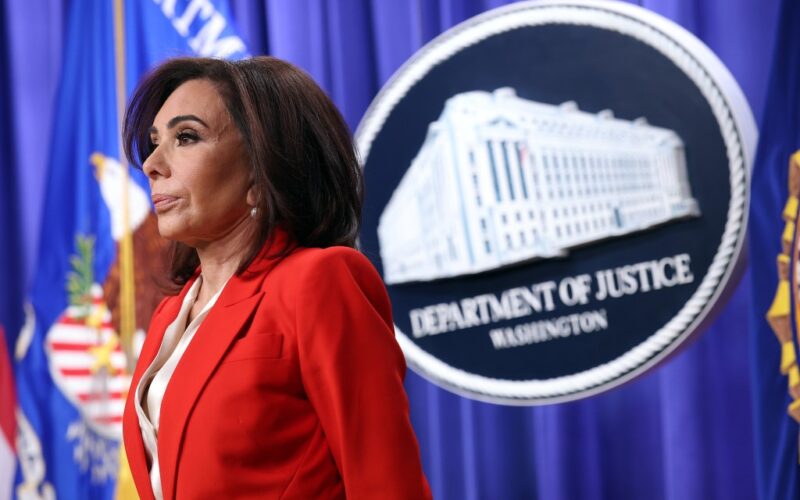
According to sources, U.S. Attorney for the District of Columbia Jeanine Pirro announced that no further efforts would be expended to indict the honorable six, apparently agreeing either that the case is not as strong as a ham sandwich or that she is not a good enough prosecutor to indict said sandwich.
While it is easy to infer from the foregoing that the failing D.C. prosecutors are incapable of indicting even a ham sandwich, this most recent failure, among others (e.g., James Comey and Letitia James), provides an excellent opportunity for the public to better understand the grand jury process.
The Fifth Amendment of our Constitution forbids the prosecution of a person “for a capital, or otherwise infamous crime,” absent a grand jury indictment.” Although the concept of the grand jury originated in ancient Greece, it was imported from England to the colonies as part of the English common law.
Founding Father James Madison included this important bulwark against governmental overreaching in his introductory draft of the Bill of Rights, and it was then incorporated into the United States Constitution and many of the individual state constitutions.
Here’s how it works: Grand jurors, culled randomly from voter registration rolls or driver registration records, are tasked with determining whether there is probable cause to believe that an alleged crime was committed. To consider whether probable cause exists, a minimum of 16 of 23 federal grand jurors must be present for the proceedings, and a minimum of 12 grand jurors constitutes a quorum for the voting of an indictment, or “true bill.”
Often, grand jurors are obliged to sit for months at a time, often at great personal expense, demonstrating admirable and selfless fortitude in service of this important public service. The criminal justice system would be unable to constitutionally function without them. To ensure the sanctity of the grand jury, its proceedings and the identities of the grand jurors and witnesses are unavailable to the public. Leaks are rare.
The evidence presented to the grand jury must demonstrate probable cause to believe that a crime was committed, and grand jurors are required to vow that they will be free from bias and will neither indict nor free anyone due to fear or favor.
The relatively looser and lesser standards for issuing indictments, as opposed to convictions after trial, along with the general rarity of failures to obtain indictments, permit the reasonable inference that the cases presented by the D.C. prosecutors against the six legislators perceived as Trump enemies had far less heft than a venerable ham sandwich.
To even bring such flimsy cases evidences the DOJ’s corrupt taking up of the Trump cudgel of retaliatory prosecutions. Shades of Richard Nixon, but far worse.
This retired state court judge is grateful that an independent body of individuals of every stripe stands between an accused and the DOJ, especially when such cases appear to be retaliatory, in stark repudiation of the rule of law.
Jaffe is a retired justice of the Supreme Court of the State of New York and a volunteer for Lawyers Defending American Democracy.