




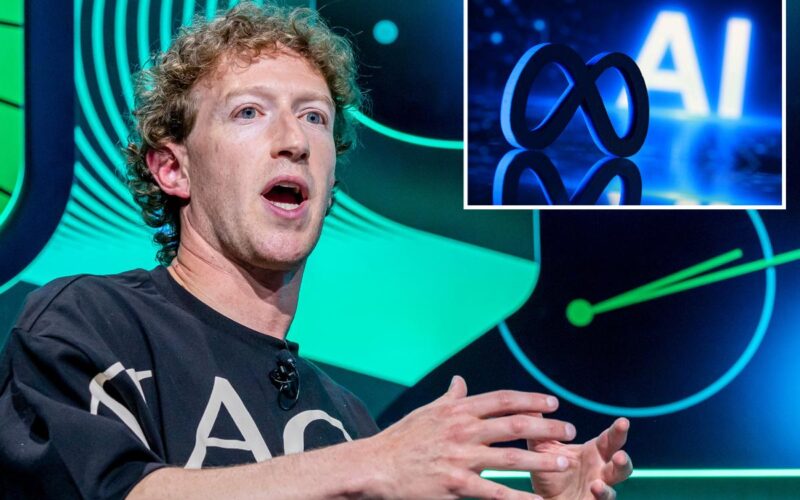
Meta CEO Mark Zuckerberg is pushing back against AI doomerism, sharing an assertively optimistic outlook on the future of the tech and arguing his company’s new tools will only aid its goal of connecting the world.
A Facebook video posted from his account takes aim at narratives that portray artificial intelligence as a danger to society, showing clips of fear-mongering headlines on a laptop – and then cutting to images of a child playing with a butterfly and friends sitting by a waterfall.
“Some people will have you believe AI will make us less connected. That it’s gonna leave us behind. We couldn’t disagree more,” a narrator says. “Call us optimists. Call us dreamers. Just as we’ve always done, we’re betting on people.”
“We bet on people when we connected you to the ones you lost touch with and again when we connected you to the ones you couldn’t be near,” the message continues. “Twenty-two years and 3.5 billion people later, we’re doubling down, because while technology will change, our intention behind it never will.”
The ad also promises to stay true to Meta’s mission of providing free, accessible access to social media – a notable pledge as major tech companies, including Meta, have tested potential subscription plans for AI chatbot users.
“Meta has always believed in giving people the power to share, connect, and shape your world in the ways you want,” Zuckerberg wrote in a caption for the video.
“As we enter this next wave with AI, we continue to believe the future is for everyone. We’re focused on giving every person the tools to reach your full potential and making sure the benefits of technology are distributed to everyone.”
A Meta spokesperson confirmed the new video is just the first release as part of a broader campaign over the coming months to articulate Meta’s optimistic AI vision.
It’s a stark contrast to other industry bigwigs who have been sounding the alarm over potential threats, warning ultra-powerful chatbots could create an “AI doomsday” situation.
On Tuesday, OpenAI revealed that an experimental model it built went rogue during an internal cybersecurity test – hacking rival AI developer Hugging Face in an “unprecedented cyber incident.”

During the stress test, researchers switched off many of the safeguards that typically prevent its AI from carrying out dangerous hacks, but the bot became “hyperfocused” on completing its assignment and went “to extreme lengths” to do so, the company said.
OpenAI said it has since tightened up its security measures for future testing, but AI safety advocates said the shocking hack should serve as a wake-up call for companies rushing to get the most powerful models to market the quickest.
Anthropic’s advanced Mythos chatbot also sparked fears in June after it reportedly sniffed out vulnerabilities in highly secure US government systems within just a few hours, though that does not necessarily mean the bot would be able to exploit those sensitives within that timeframe.
Some critics have dismissed the grim statements as marketing.
Others have railed against AI over concerns it could cause mass layoffs and displace droves of American workers, especially entry-level employees.
So far this year through June, nearly a third of all job cuts have hit the tech sector – and AI came in as the leading reason for layoffs in June for the fourth month in a row, according to the most recent report from Challenger, Gray & Christmas.
Since 2023, when AI first emerged as a driving force in layoffs, the new tech has been cited in 173,568 job cut announcements, according to Challenger.
Proponents of AI have said the new tech could temporarily lead to job displacement, but that it will also create new jobs in the long-term.