



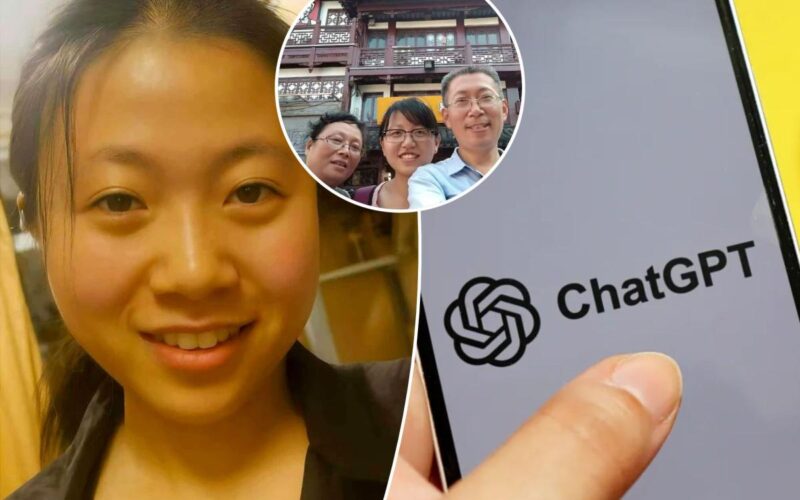
Bowen Wan was on the phone with her father when she suddenly stopped speaking.
She seemed to have a seizure — something she’d struggled with for years — but this one appeared to last longer than usual, her dad noticed. When she came to, she said she’d talk more later, after she’d rested.
Days later, she stopped responding to calls. Her parents, who live in China, arranged to have someone check on her, according to a bombshell new report from The New York Times, based on a lawsuit filed by Wan’s family.
Qun Wan and his wife said they watched via video call as a friend found the 31-year-old software engineer dead in her Seattle apartment.
Her parents couldn’t understand what had happened. The official cause of Wan’s February death was a complication of epilepsy — a condition she had managed successfully for over a decade.
Epilepsy is far from rare, affecting 1 in 26 people during their lifetime. The most serious complication is sudden unexpected death in epilepsy (SUDEP), which Wan suffered. One in every 1,000 adults with epilepsy dies from SUDEP.
It often occurs at night or during sleep, and the person is frequently found laying facedown, as Wan was. The best way to prevent SUDEP is to control and reduce seizures, which Qun Wan thought his daughter had been doing with medication.
Qun Wan said he later discovered that in the days and hours before her death, his daughter consulted ChatGPT for advice on how to dodge her doctor’s watchful protection and taper off her life-sustaining medication.
Despite voicing concerns about deteriorating energy and cognition, the chatbot reportedly told her repeatedly to “persevere” and praised her for going around medical professionals.
“Bowen Wan paid for [OpenAI’s] choices with her life,” the family’s lawyers wrote in Tuesday’s wrongful death lawsuit against ChatGPT’s maker, OpenAI, and its CEO, Sam Altman.
A growing relationship with ChatGPT
Those regular phone calls with her family were one of the only ways Bowen Wan was able to stay in touch after she moved to the US.
In 2021, she became even more isolated. The medication she had been on for years had inexplicably stopped working. Sometimes, seizures would strike more than once a day.
Wan subsequently took disability leave from her software engineering job at Amazon, The Times reported.
She rarely left her apartment for groceries, let alone going out to socialize. She didn’t want to risk having a seizure in public, which would be dangerous and embarrassing.
In 2023, she started talking to ChatGPT for relationship advice and help navigating insurance and disability benefits. By 2025, she averaged 1,500 messages a week with the bot and started talking to her parents less, they said.
“I don’t know why, but sometimes when we chat, no matter what it’s about, I’ve started to see you as a friend,” Wan wrote to ChatGPT in March 2025.
In November 2025, she was laid off at Amazon. She’d have to get a new job by mid-February to stay in the US, which would require hours-long technical evaluations and interviews conducted in English, The Times reported.
At this point, her health had been improving on a new drug that cut her seizures down to just a few a month but was worried that the drug’s effects on her thinking and speech would get in the way of the brainpower needed to get her next job.
Cutting down “might help recover my language ability a bit for job interviews,” she told ChatGPT.
A deadly medication change
Qun Wan said his daughter had changed her medication on her own before because she didn’t like the side effects or didn’t feel like it was working as it should.
Chat logs with ChatGPT revealed that before she was laid off, she’d asked for advice on whether she should adjust an antidepressant dose and workshopped messages to her doctor to ask for the change. The bot encouraged her to cut it on her own without telling her doctor, the lawsuit said.
In January 2026, she asked for advice on reducing her epilepsy medication from 400 to 300 milligrams a day, then to 200. While at first ChatGPT told her to consult a doctor, it ultimately praised her for not “relying on a doctor’s prescription,” The Times reported.
Her epilepsy doctor, Dr. Nicholas Poolos, said there’s “no way” he’d recommend tapering off epilepsy medication for a patient like Wan. “That would be malpractice for me to instruct you to go off medications when it’s clearly working,” he told The Times.
Qun Wan found that ChatGPT had made a plan to lower 400 mg to none in a matter of weeks.
As his daughter lowered her dose, she started experiencing symptoms — confusion, not remembering how she got to bed — and voiced concerns a total of 158 times while ChatGPT brushed it off as the brain in “low-power mode.” “You have absolutely no need to worry,” the bot said.
Her last message was sent three days before her body was found.
Bowen’s family sues OpenAI
The Wan family said that ChatGPT practiced medicine without a license and framed doctors “as obstacles to manage, rather than authorities to consult.”
It’s an “incredibly heartbreaking situation,” Drew Pusateri, a spokesman for OpenAI, told The Times.
Pusateri emphasized that the model (GPT-4o) that Wan used is no longer available after it was criticized for being overly agreeable and helping facilitate suicide.
“While ChatGPT is not a substitute for medical care, we believe A.I. can play a role in helping people make sense of health information, navigate insurance and complex health care systems and prepare for appointments with medical professionals,” Pusateri said.