




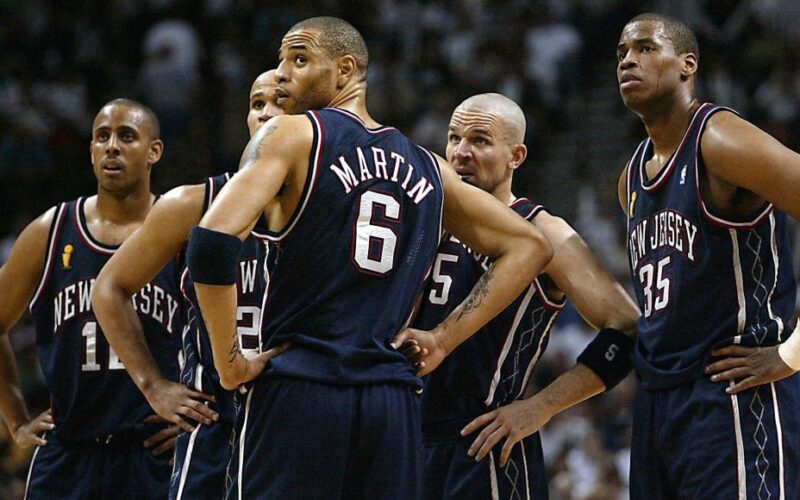
A lot can happen in 25 years. For the Nets, almost all of it has, except a championship.
Jason Kidd turned a struggling New Jersey team into an Eastern Conference powerhouse in the early 2000s, steering them to back-to-back NBA Finals berths in 2002 and 2003. Since the move to Brooklyn in 2012, the franchise has mixed playoff runs with star-driven experiments, from the Paul Pierce and Kevin Garnett trade to the Kevin Durant and Kyrie Irving era, plus a recent rebuilding push with the Flatbush Five.
There aren’t any NBA titles in the trophy case yet, but there’s been memorable postseason pushes, including trips to the Eastern Conference semifinals in 2014 and 2021. And as the calendar flips to a new year, it feels like the right time to look back at the players who defined those eras and left the strongest mark.
Here are my picks for the best Nets of the past 25 years, in no particular order.
Jason Kidd
Kidd changed everything for the Nets the moment he got there. He took a team going nowhere and elevated it into a Finals contender, setting the tone with his competitiveness, feel for the game and ability to control whatever was happening on the floor. He gave the franchise an identity it hadn’t had in years and pushed the group to heights it hasn’t reached since. His impact on that era still shapes how people talk about Nets basketball today.
Kevin Durant
Durant brought a level of pure talent the Nets had never seen, and at his peak in Brooklyn, he was as unstoppable as any scorer in the league. Even through injuries and the chaos around him, he delivered stretches of basketball that reminded everyone why he’s viewed as an all-time great. His performance in the 2021 playoffs became part of franchise lore, and his time in Brooklyn, while wildly complicated, still stands as one of the most electric eras the Nets have had.
Vince Carter
Carter gave the Nets a superstar presence right when they needed one. He arrived with sky-high expectations and somehow exceeded them, carrying the offense night after night and delivering the kind of shot-making and late-game moments that defined that era. He played through injuries. He took on whatever workload the team required and kept the franchise competitive during a period of major transition. His blend of toughness, scoring and freak athleticism made him one of the most memorable Nets ever.
Brook Lopez
Lopez became the steady force the Nets leaned on for nearly a decade. He grew into one of the most skilled offensive bigs in the league and gave the franchise a reliable anchor through coaching changes, roster shakeups and the move to Brooklyn. His touch, patience and ability to create his own shot kept the Nets afloat during some difficult stretches, and his consistency made him a cornerstone.
Richard Jefferson
Jefferson emerged as the perfect complement during the Nets’ most successful run, blending athleticism, defense and timely scoring with a competitiveness that helped define those Finals teams. He never shied away from big assignments or big moments, and his game grew every season he was in New Jersey.
Kenyon Martin
Martin set the tone for those early-2000s Nets teams with his edge, energy and willingness to take on whatever the moment demanded. He played with a physicality that gave the group its personality, and his presence around the rim on both ends helped fuel those runs to the Finals.
Deron Williams
Williams arrived in New Jersey as the kind of lead guard the franchise hadn’t had since the Kidd era, and at his best he controlled games with a mix of strength, pace and shot-making that few defenders could keep up with. He helped guide the Nets through the final years in New Jersey and into Brooklyn, carrying a heavy offensive load while setting the standard for the team’s early years in the borough.
Joe Johnson
Johnson became the Nets’ steadying force during some of the franchise’s most competitive Brooklyn years. He brought a calmness to late-game situations, repeatedly bailing the team out with big shots and a pace that never sped up, no matter the moment. His clutch resume alone would’ve left a mark, but his overall consistency made him one of the era’s defining players.
James Harden
Harden’s run in Brooklyn was brief, brilliant and messy all at once. At his peak he gave the Nets exactly what they were missing, organizing the offense, lifting the tempo and carrying the group through stretches when others were hurt. For a moment, it looked like the trio around him might rewrite the franchise’s ceiling. But the frustrations, injuries and off-court noise eventually caught up, and the partnership unraveled quicker than anyone expected. Even so, his impact during that window, when healthy and locked in, was impossible to ignore.
D’Angelo Russell
Russell became the face of the Nets’ revival during his first stint with the franchise, stepping into a larger role after leaving Los Angeles and turning it into an All-Star season that helped pull the franchise out of its lowest point. He brought a confidence the team badly needed, hitting big shots, leaning into the spotlight and giving Brooklyn an identity.
Jarrett Allen
Allen grew into the kind of dependable center every young team hopes to develop. He protected the rim, ran the floor, finished everything around the basket and quietly improved a little each season. His presence steadied the defense and gave the Nets a backbone during the early stages of their rebuild.
Spencer Dinwiddie
Dinwiddie became one of the defining players of the Nets’ rebuild, stepping into bigger roles whenever the team needed someone to carry the offense. He embraced tough shots, late-clock moments and the responsibility of running the show when injuries piled up. His confidence gave the Nets a spark during seasons that could’ve slipped away.
Caris LeVert
LeVert blossomed into one of the Nets’ most dynamic young players, someone who could shift a game with his creativity and fearlessness. He thrived in big moments, especially during stretches when the team leaned on him to generate offense late in games. His development became a bright spot during the rebuild.
Mikal Bridges
Bridges stepped into Brooklyn and immediately became the face of the franchise, embracing a bigger role without hesitation. His offense jumped from the moment he arrived in Brooklyn, and he brought durability, professionalism and a two-way steadiness that helped stabilize the team after a chaotic stretch.
Nic Claxton
Claxton has developed into one of the Nets’ steadiest anchors, growing from a raw project into a versatile defender who can guard all over the floor. He’s also become one of the league’s better passing bigs this season, keeping the offense flowing with quick decisions and smart reads. Now the longest-tenured Net on the roster, he’s carved out an important role on a team that’s changed constantly around him.
Joe Harris
Harris turned himself into one of the Nets’ most reliable pieces, giving the team elite shooting and a steady presence through multiple eras. His movement, spacing and unselfish style helped unlock the offense, and he remained a trusted starter no matter how the roster shifted around him.
Keith Van Horn
Van Horn played a key role in pushing the Nets toward respectability in the early 2000s, giving them a versatile forward who could score from all three levels and carry stretches of the offense. He helped bridge the gap into the Kidd era and set the stage for the team’s rise, providing reliability at a time when the franchise badly needed it.
Kyrie Irving
Irving’s run in Brooklyn was equal parts brilliant and frustrating. When he played, he showed why he’s one of the most skilled guards in the league, scoring in ways few players can. But the off-court issues and long stretches he wasn’t available made it hard for the Nets to ever find real stability. Even so, the talent he brought and the moments he delivered still make him a major figure in the team’s recent history.
Stephon Marbury
Marbury didn’t spend a long time with the Nets, but while he was there, he was one of the most electric guards in the league. He carried the offense at a time when the team didn’t have much around him, and even though wins didn’t always follow, he brought star power and production during a difficult stretch.
Cam Thomas
Thomas has turned into one of the Nets’ most dangerous scorers, able to heat up faster than almost anyone his age. His confidence and shot making keep him in the spotlight, but they also make him divisive for some fans who question his playmaking and defense. Still, his ability to put up points in bunches earns him a spot on this list.
Paul Pierce
Pierce spent only one season in Brooklyn, but he made it count. He brought a veteran edge to a roster loaded with big personalities and delivered in moments that still stand out, including his clutch play in the 2014 playoffs.
Kerry Kittles
Kittles was a key piece of the Nets’ rise in the early 2000s, giving the team steady shooting, smart cutting and reliable defense on the perimeter. He fit perfectly next to Kidd, running the floor, spacing the court and taking on tough matchups without needing the spotlight.
Devin Harris
Harris brought speed and scoring the Nets badly needed during a transitional stretch, stepping in as a lead guard who could pressure defenses and create his own offense. He took on a major role right away and delivered some of the most memorable performances of that era, helping keep the franchise competitive through constant roster changes.
Michael Porter Jr.
Porter hasn’t been in Brooklyn long, but he’s already playing at a pace the franchise hasn’t seen in years. His scoring bursts and efficiency have made him the center of the offense almost overnight. It’s early, but he’s had such an immediate impact that leaving him off a list like this wouldn’t make any sense.
Cam Johnson
Johnson gave the Nets steady scoring, elite shooting and a calm presence during a stretch when the roster was constantly changing. He brought professionalism every night and, along with Bridges, was one of the most reliable pieces of the post-Durant era.