



Conde Nast’s lease to anchor One World Trade Center, signed in 2011, affirmed that Downtown was at last brushing off the emotional carnage of 9/11 that lingered long after the physical rubble was removed.
American Express’ announced decision to move to Two World Trade Center is equally momentous. It marked a psychological coup for Downtown, which enjoyed its strongest leasing performance in 2025 since before the pandemic and even bested mighty Midtown. Larry Silverstein will build the tower for Amex, which assumed his lease from the PA and will own and occupy it.
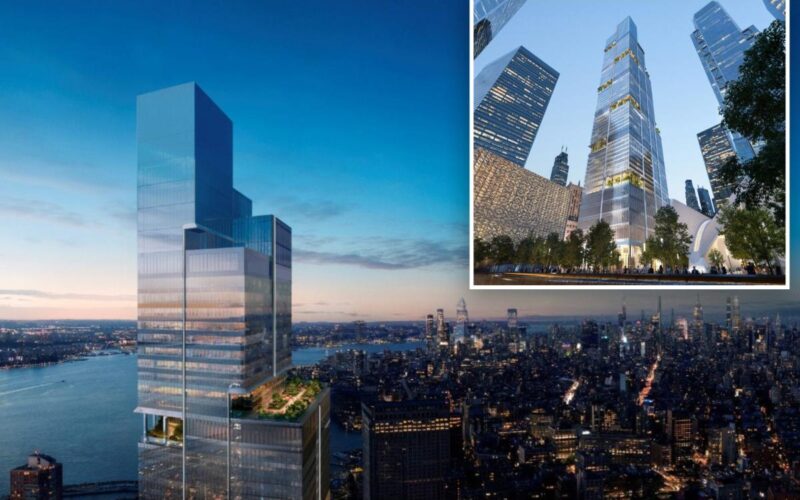
The project to be finished in 2031 gives Downtown its own supertall to rival the ones uptown, more than 1,200 feet high and wearing the imprimatur of great architect Norman Foster. “It’s more than a morale boost, it’s an adrenaline shock,” exulted a downtown broker who didn’t want to be identified. “Everybody here was waiting for this for a long time.”
As long as the site remained empty, it suggested that New York had not yet fully recovered from the terrorists’ work. The corner of Church and Fulton streets remained the painful hole in architect Daniel Libeskind’s master site plan.
The complex’s unfinished state brought back miserable memories of the struggle to replace the original World Trade Center. Elected officials and bureaucrats, the Port Authority, leaseholder Silverstein and rival architects bitterly and publicly squabbled. Most of the media hated Silverstein and howled against reconstruction, especially the New York Times. It’s worth noting that the Times, which gave space to potholes after the snowstorm, has yet to publish a word about the Amex deal which is merely of epochal historical and economic importance.
Of course Silverstein mostly prevailed. He built towers three and four as well as Seven World Trade Center across the street — all fine works of architecture. He also got the “Freedom Tower” off the ground before handing it off to developer Douglas Durst and the PA.
Only Tower Two got away from him. But Silverstein never gave up hope of building it in his lifetime. At age 94, his dream came true last week after what sources said was fully a three-year effort to get Amex, the PA, and Silverstein on the same page.
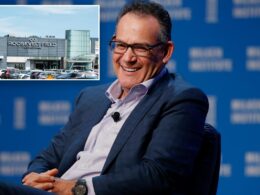
So let’s give credit to the prime movers. Stephen J. Squeri, Amex chairman and CEO since 2018, lent his muscle and negotiating prowess to one of the most complex land-use deals ever.

Cushman & Wakefield crucially advised Amex on development aspects and the ground-lease transaction to replace Silverstein. The team included Peyton Horn, Dale Schlather, Lou D’Avanzo and Kyle Ernest.
A CBRE team acted for Silverstein including Ken Meyerson, Evan Haskell, Caroline Merck, and Mary Ann Tighe. Appropriately, it was superbroker Tighe who clinched the Conde Nast deal 15 long years ago.
Fried Frank real estate chairman Jonathan Mechanic advised Amex on the legal front. It wasn’t his first time around the World Trade Center block — he worked with two other companies in earlier negotiations to anchor the project for Silverstein, although neither led to an agreement for Two World Trade.
But last week’s announcement made up for earlier disappointments.
“It was so exciting to be involved in this landmark transaction to complete the World Trade Center with a marquee building like the American Express headquarters designed by Norman Foster,” Mechanic said.
“I guess you could say the third time’s the charm,” he laughed.