




Dear Eric: I have had a best friend, Beth. I’ve known her since we were 23 years old. We have not always lived in the same city nor seen each other regularly, but when we do, it’s as if no time or distance has passed. We connect immediately.
My problem is that Beth does not always return texts or calls in a timely fashion. I mean weeks will go by or sometimes she won’t reply at all.
She is a married, childless medical professional who works part time. It seems that she could easily make the time. I feel very ignored and neglected. I also feel pretty childish that I feel this way. Is this normal modern etiquette or do I just accept that my best friend is just kinda flaky?
– Ignored by my Bestie
Dear Bestie: Although there are many ways of handling texts and cellphone calls, I hesitate to say that this is the modern etiquette. However, our phones and other devices can often give us the impression that we’re all experiencing time and communication in the same way. And that isn’t true.
Sometimes I’ll get professional emails that include a signature line that reads “your work hours may not be my work hours; please don’t feel obligated to respond outside of your work hours.” I like this because it acknowledges that people manage their time differently.
Along the same lines, it will help you to have a conversation with Beth about expectations and hopes around communication. Try not to frame it as a demand. She’s not wrong for taking a long time to get back to you, per se. Maybe her expectations around texting are laxer, or she finds replying overwhelming. So, come at it from a place of curiosity. Does texting or calling work for her, or is there a better way of staying in contact? Does she prefer to have a set time, perhaps, or even to receive a calendar invite? In this conversation, you can also talk about what works for you, and what makes you feel valued. Armed with this information, you’ll both be able to communicate better.
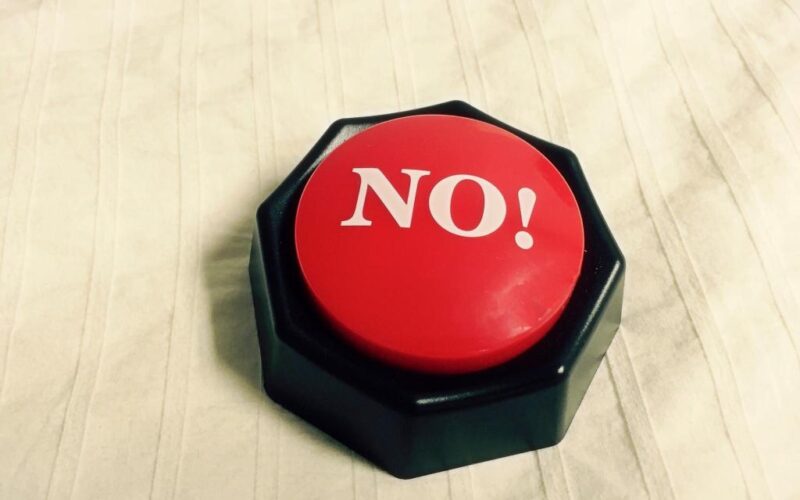
Dear Eric: I’ve been married for 37 years to a man who is everything most people dream of in a spouse except one. He automatically says “no” or disagrees with 98 percent of everything I say or suggest.
I’ve learned not to ask questions that I know he will respond to in the negative. I’ve also asked him many times over the years to work on saying “yes” more.
Last night when he disagreed on plans I had for hosting a party, I threatened to withhold sex and then he agreed to say yes but he still grumbled a little and said he didn’t like one part of my plan.
I used to brush it off as him being the youngest child in a big family who everyone doted on. He’s also a true leader in everything he does, and I respect and admire him immensely. But this has been bothering me more lately and making me not like him.
Are there other things I can say or do to make him quit snapping out negative responses? Or should I continue to just accept it and work on not getting resentful?
– No More No
Dear No More No: First off, you don’t have to just accept it. Though the method you describe worked, in general, much as it did for Ancient Greece’s Lysistrata, it’s not a perfect tool for negotiation (as that title character in Aristophanes’ play would attest). What you’re looking for is respect and an equal footing in your partnership. That’s something that you deserve.
Every relationship, marriages included, is reliant on communication. Communication patterns and strategies vary person to person and relationship to relationship. What I see in your husband’s repeated “no” response is a refusal to communicate. This leaves you with little-to-no recourse. It makes sense that you’ve tried to puzzle this out on your own, attributing it to his upbringing and career. That may be a part of it, but none of us gets a free pass for bad behavior simply because of where we’re from or what we’ve been through, good or bad.
When a couple is having trouble communicating, it’s time to bring in a third party to help translate and build new ways of speaking. That third party is often a marriage therapist. Talking to one might help you and your husband a lot.
Now, what if he says “no” to this as well? Remind him that this issue is causing a problem in your marriage, and it’s causing a problem for you. You believe that the problem is fixable and you’d like to try. Is he saying no to having a better, happier marriage?
(Send questions to R. Eric Thomas at eric@askingeric.com or P.O. Box 22474, Philadelphia, PA 19110. Follow him on Instagram and sign up for his weekly newsletter at rericthomas.com.)
©2026 Tribune Content Agency, LLC.