


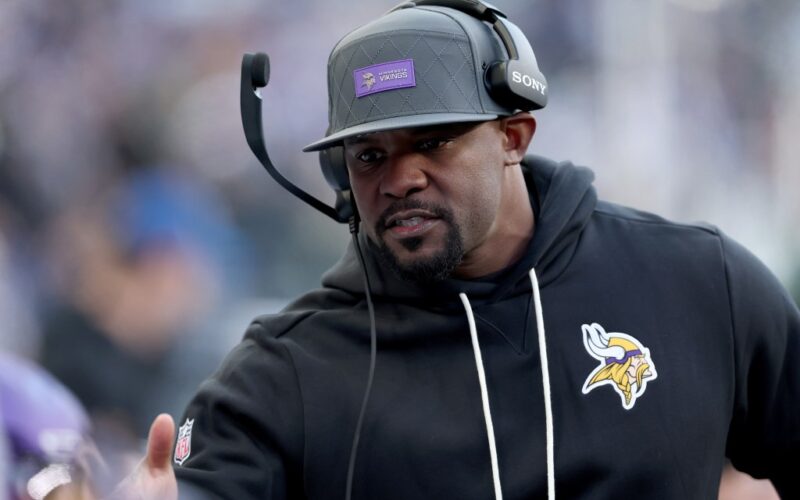
All of the claims in Brian Flores’ discrimination lawsuit against the NFL and multiple teams, including the Giants, can now proceed in open court, the SDNY district court ruled Friday.
This reverses a previous decision by the 2nd Circuit Court of Appeals to send some claims made by Flores and fellow coaches Steve Wilks and Ray Horton to the NFL’s arbitration process, in which NFL Commissioner Roger Goodell was the arbitrator.
“The court’s decision recognizes that an arbitration forum in which the defendant’s own chief executive gets to decide the case would strip employees of their rights under the law,” attorneys Douglas H. Wigdor and David E. Gottlieb, who represent the coaches, said in a statement.
“It is long overdue for the NFL to recognize this and finally provide a fair, neutral and transparent forum for these issues to be addressed.”
Flores, who is Black, sued the NFL, Giants, Denver Broncos and Houston Texans in early 2022, claiming the league was “rife with racism” as he interviewed for head coaching jobs after he was fired by the Miami Dolphins.
The Brooklyn-born Flores alleged those teams spoke to him only to satisfy the NFL’s “Rooney Rule,” which requires teams to interview at least two minority candidates before filling certain positions.
During that cycle, the Giants hired Brian Daboll as head coach. They denied the accusation made by Flores, who has been the Minnesota Vikings’ defensive coordinator since 2023.
Wilks, whose allegations are against the Arizona Cardinals, and Horton, whose claims are against the Tennessee Titans, joined Flores’ lawsuit in April 2022.
Earlier this month, Goodell voiced support for the Rooney Rule but said the NFL must continue to evaluate everything. Those comments came after only one of the NFL’s 10 head coach openings went to a minority coach — the Titans’ Robert Saleh – this offseason.
“I think we have become a more diverse league across every platform, including coaching, but we still have more work to do,” Goodell said at a press conference ahead of the Super Bowl.
“There’s got to be more steps. We’re reevaluating everything we’re doing, including our accelerator program and including every aspect of our policies in our programs to meet the challenges of today and tomorrow rather than yesterday. We need to be looking at that and say, ‘OK, why did we have [those] results this year?’”