



Deadbeat California lawmakers still haven’t paid off a $20 billion federal loan for unemployment claims during the pandemic — and struggling businesses are picking up the ballooning tab instead.
Employers are on the hook for an extra $42 in payroll taxes per employee next year to pay down the massive debt, and that tab will rise every year until the debt is cleared, according to KCRA. That’s because California lawmakers decided to spend the state’s money elsewhere, and under federal rules, employers have to pony up.
“This is called the greatest hidden tax,” Rob Lapsley, the President of the California Businesses Roundtable, told KCRA’s California Politics 360.
“When you look at the potential penalties that could be imposed by the federal government, from the Trump administration, if we don’t get a handle on this, we could be well up over $400 per employee,” Lapsley said. “That’s our fear.”
Most other states paid their Covid debts using federal stimulus money, but California officials used the haul for infrastructure, homelessness and other priorities — and it’s now the only state that hasn’t paid back the money, per KCRA.
Business groups urged Gov. Gavin Newsom and the legislature this year to aid businesses through tax rebates, but officials ultimately took no action.
“Functionally, this means California employers are facing a decade or more of tax increases, with total payments likely to far surpass the [unemployment insurance]-related tax increases following the Great Recession,” a coalition of business groups wrote in a February statement.
Republican lawmakers have blasted Newsom and lawmakers for foisting the expense on businesses.
“Governor Newsom likes to claim he does not support broad tax increases, but by refusing to pay off California’s [unemployment insurance] debt when a surplus was available, the Governor and other Democrats chose to let those tax increases go into effect,” wrote California Senate Republicans in an analysis released in October.
Newsom allocated $750 million in the fiscal 2024 budget towards the loan, but the funding was ultimately nixed.
Since 1980, California has not raised enough revenue to fund unemployment benefits in all recessions. California pays relatively lower unemployment benefits compared to wages than most other states.
Last December, a report published by the Legislative Analyst’s Office noted that California entered the pandemic with $3 billion in the unemployment insurance trust fund, but a historic surge in unemployment led to unprecedented state costs of $24 billion in total payments in 2020 — more than double the former peak during the Great Recession.
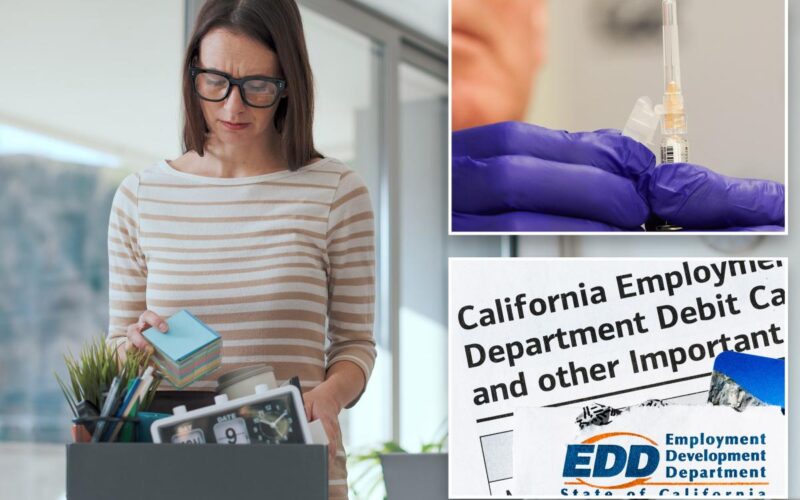
California’s Employment Development Department, which manages unemployment claims, was also wracked with fraud during Covid. In 2021, the agency admitted to paying out as much as $31 billion in bogus unemployment claims, with prosecutors calling it potentially the biggest taxpayer scam in California history.
As of June 2022, the agency had recovered $1 billion of the pilfered funds, according to a press release from Newsom’s office.
“California’s broken unemployment insurance system is a decades-old problem, one that the state has grappled with since the 1980s,” said Nick Miller, a spokesperson for Assembly Speaker Robert Rivas. “If business and employee groups can deliver a compromise that protects working families, the legislature will carefully consider any future proposal from the Governor.”
State Senate Pro Tem Monique Limón issued a statement to KCRA calling the unemployment insurance system “a persistent challenge.”
“The Senate understands the need to work with the governor and all stakeholders on necessary reforms that make the system more stable for our small businesses while maintaining important worker protections,” Limón said.
Newsom’s office did not immediately respond to a request for comment.