


By DÁNICA COTO
HAVANA (AP) — A senior Cuban diplomat told The Associated Press on Monday that his government does not have a dialogue with the United States but is open to one if certain criteria are met, as tensions remain high between the countries.
Deputy Foreign Minister Carlos Fernández de Cossío spoke days after U.S. President Donald Trump said his administration is starting to talk with Cuban leaders after he threatened tariffs on any country providing oil to the island.
“We’re not talking specifically about negotiation yet,” Cossío said. “That’s another issue.”
“We are open to dialogue,” he added. “If we can have a dialogue, maybe that can lead to negotiation.”
Cossío said Cuba is ready to have “informal dialogue” with the U.S. “with the aim of ensuring that we can have a respectable, serious coexistence in spite of the differences between our two countries.”
But Cossío stressed that certain things are off the table for Cuba, including the country’s constitution, economy and system of government, which is socialist.
“But there are many, many other issues which we can discuss,” he said.
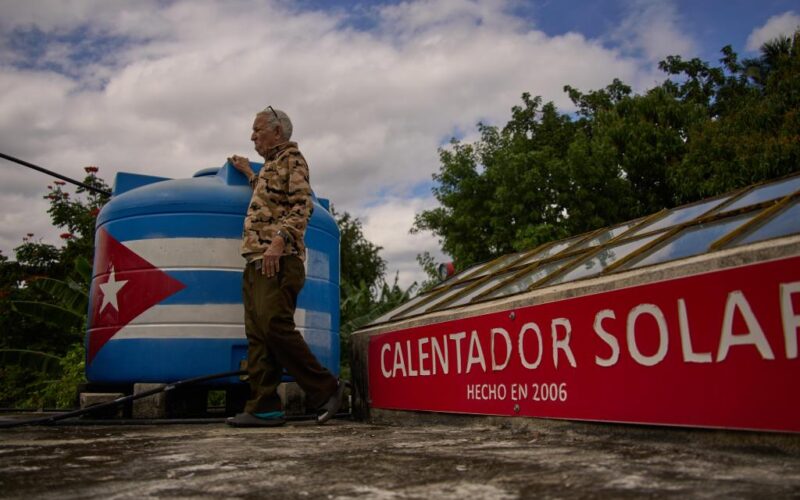
Cuba is struggling with an acute economic crisis, ongoing blackouts, a disruption in oil shipments from Venezuela and U.S. sanctions that Cuban officials say cost the country more than $7.5 billion between March 2024 and February 2025.
Cuba had relied heavily on oil shipments from Venezuela, but those were disrupted when the U.S. attacked the South American country on Jan. 3 and arrested its president.
When asked how long Cuba can sustain the current conditions, Cossío said he could not reveal “any avenue” the island has to ensure the supply of petroleum or cope with what he described as “ a very difficult situation.”
“Cuba, of course, is preparing itself with creativity, with stoicism and with austerity,” he added. “What can Cuba do? Just watch us.”
When Trump signed an executive order late last week to impose tariffs, he called Cuba a “failing nation” and said “it looks like it’s something that’s just not going to be able to survive.”
Meanwhile, Trump has said he asked Mexico to suspend oil shipments to Cuba.
On Sunday, Mexican President Claudia Sheinbaum announced she would send food and other humanitarian aid to Cuba, adding that her government was try to “diplomatically solve everything related to the oil shipments” to the island.
Meanwhile, the U.S. ambassador to Cuba, Mike Hammer, has been traveling across the island, posting videos on social media about his meetings with Cubans. Some have hugged him and invited him into their home, with one man noting he couldn’t offer the diplomat coffee because he was without power.
Not everyone is welcoming the ambassador. In a video posted elsewhere on social media, a group of angry Cubans confronted Hammer recently in the province of Camagüey.
“Down with the blockade!” they yelled. “Murderer!” “Trump’s puppet!”
In response, the U.S. Bureau of Western Hemisphere Affairs demanded that Cuba “stop its repressive acts of sending individuals to interfere with the diplomatic work” of Hammer and other embassy members.
“Our diplomats will continue to meet with the Cuban people despite the regime’s failed intimidation tactics,” the bureau wrote on X on Sunday.
In the brief interview, Cossío stressed that Cuba is not a threat to the United States.
“Cuba is a peaceful country,” he said. “We only wish to relate with the United States in the way we related with the rest of the world. The United States is the exception today.”
Associated Press reporter Andrea Rodríguez in Havana contributed to this report.