


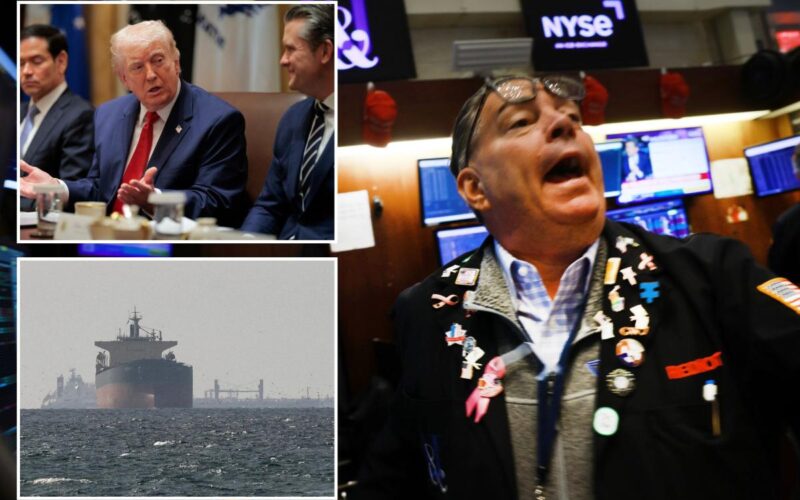
Wall Street surged on Tuesday, lifted by speculation about a potential de-escalation in the Middle East conflict that has sent oil prices soaring and fueled fears of global inflation in recent weeks.
All three major indexes posted their best day since May after President Trump told aides he was willing to end the military campaign against Iran, even if the Strait of Hormuz remained largely closed.
The Dow Jones Industrial Average climbed 1,125 points or 2.5% at 46,341.51 points. The S&P 500 jumped nearly 3%, while The Nasdaq surged 3.8% to 21,590 points
Last week, the Dow and the Nasdaq ended 10% below their record-high closes, confirming they were both in corrections. They finished the month and quarter in the red.
Defense Secretary Pete Hegseth said the next few days in the war against Iran would be decisive and warned Tehran that the conflict would intensify if it did not make a deal.
The month-long war has left the S&P 500 and the Dow on track for their deepest quarterly declines since early 2022 as investors worry that a wave of higher fuel costs could hurt demand for goods and services, while forcing the Federal Reserve to raise interest rates to contain inflation.
“What you’re seeing in capital markets today is speculation around an earlier off-ramp, or a cessation of hostilities,” said Bill Northey, senior investment director at US Bank Wealth Management, in Billings, Montana.
“Details are light, but the capital markets are looking for any indication that there is an opportunity for a more normal flow of energy through the Strait of Hormuz.”
The stock market’s most valuable companies made big gains, with Nvidia and Alphabet up over 5%, Meta Platforms rising 6% and Amazon gaining over 4%.
Follow The Post’s coverage of the United States’ airstrikes on Iran:
CoreWeave jumped 10% after securing an $8.5 billion loan to expand AI infrastructure. Marvell Technology surged 13% after Nvidia invested $2 billion in the firm.
Many technology stocks have taken a beating in 2026 due to worries that Microsoft, Alphabet, Amazon and other heavyweights may be taking too long to show results from their massive spending in AI.
US job openings fell more than expected in February and hiring dropped to the lowest level in nearly six years, government data showed.
The oil spike stemming from the Iran war has revived inflation worries, and money market traders think the Fed is more likely to raise interest rates by year-end than lower them, according to CME Group’s FedWatch Tool.
Unilever agreed to separate its food unit and merge it with McCormick in a cash-and-stock deal, valuing the spice maker at about $44.8 billion. McCormick shares fell 5.8%.
Constellation Energy dropped almost 8% after forecasting 2026 profit below Wall Street expectations.