



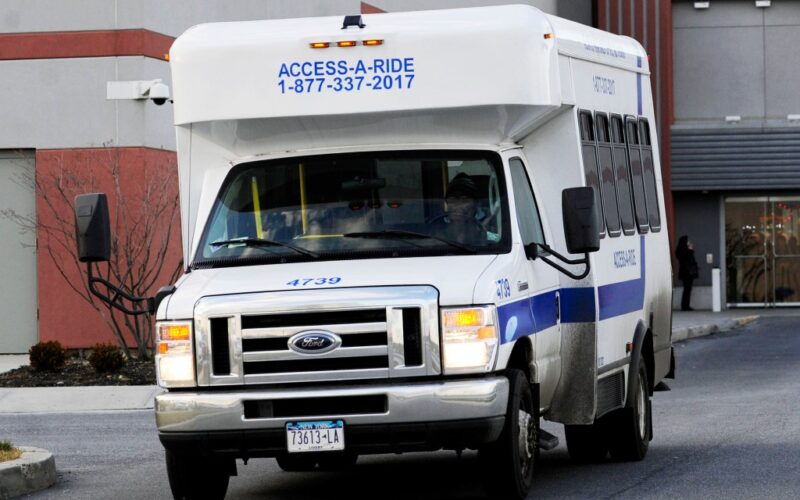
What if you could no longer ride NYC buses or subways and every car trip had to be scheduled at least a day in advance, with no spontaneity or flexibility allowed? Could you possibly take advantage of all the opportunities New York has to offer? Could you hold a steady job? This is the daily reality for the tens of thousands of people that must rely on MTA’s Paratransit Access-A-Ride service (AAR).
As an administrator in the field of education who happens to be blind, I spend a lot of time advocating for our city’s students with disabilities. The statistics are grim: unemployment among the legally blind has hovered around 70% since the mid-1990s, and the broader disabled community faces similarly disproportionate rates. So, I must respectfully ask our city leaders an honest question: Would you be able to sustain gainful employment if a disability suddenly stripped you of the ability to travel freely?
I am glad that the MTA has a legal commitment and the capital funding to install more elevators in the subway. However, that is not going to eliminate the need for paratransit for some people who do not have the ability or lack the physical stamina to navigate mass transit. A modern, usable, equitable paratransit system is part of inclusive transit and that must be funded as well.
People with disabilities need real choices and meaningful access to be contributing members of the workforce. The freedom to travel freely will allow those of us contending with a disability to live our lives with the same autonomy and dignity as every other citizen in our city. I am not asking for a benevolent handout, rather equal rights and access under the law.
For the uninitiated, more than 35 years ago the Americans with Disabilities Act (ADA) established that every local municipality with a transit system must provide a level of door-to-door paratransit service that is comparable to the fixed route transportation system of that municipality. But alas, what federal law defines as “comparable” falls far short of the spontaneity and flexibility needed to sustain employment and fully participate in New York City life.
Under current rules, a vehicle arriving up to 30 minutes late is still deemed on time. Every trip must be booked one or two days in advance (before 5 p.m.). Riders are then locked into the pickup times assigned, with no ability to adjust plans the day of. How can AAR be considered comparable when paratransit customers are denied the same real-time flexibility and spontaneity that every straphanger takes for granted?
AAR must evolve into a system that allows real-time scheduling and same-day adjustments if we are serious about leveling the playing field. Insufferable antiquated federal standards reflect low expectations that do not meet the modern day needs of working New Yorkers.
For years AAR was the red-headed stepchild of this city; thank God that is no longer the case as recent leadership has valiantly invested in improving paratransit service, but that comes at a cost. We need our state leaders and city partners to show their support by making proper funding a priority; how can you operate a 21st century paratransit system that relies on legislation, infrastructure, and funding models rooted in the last century?
A good paratransit system is a great investment in equity for our city. Giving New Yorkers with disabilities safe and reliable transportation options to attend school, work, medical appointments, or simply enjoy dinner and a show. These everyday opportunities pay great dividends back to our municipality.
Legislative and city leaders need to partner with the disabled community and the MTA by properly funding paratransit to improve the quality of life for our most vulnerable New Yorkers who cannot safely access buses or subways. Are our governor and newly elected mayor truly ready to invest in an equitable paratransit system that will improve access to opportunity for many in our city?
Mayor Mamdani, I am a New Yorker who is calling upon you to act; to address the various inequities with the draconian rules that govern paratransit. If freedom is the right to choose, then equity is the path to freedom. Give our city’s citizens with disabilities the freedom to move about — the ability to choose how and when we travel just like any other person in this city.
Pedulla is a supervisor for Educational Vision Services at New York City Public Schools as well as a former member of the Advisory Committee for Transit Accessibility. These opinions are his and do not represent these organizations.