




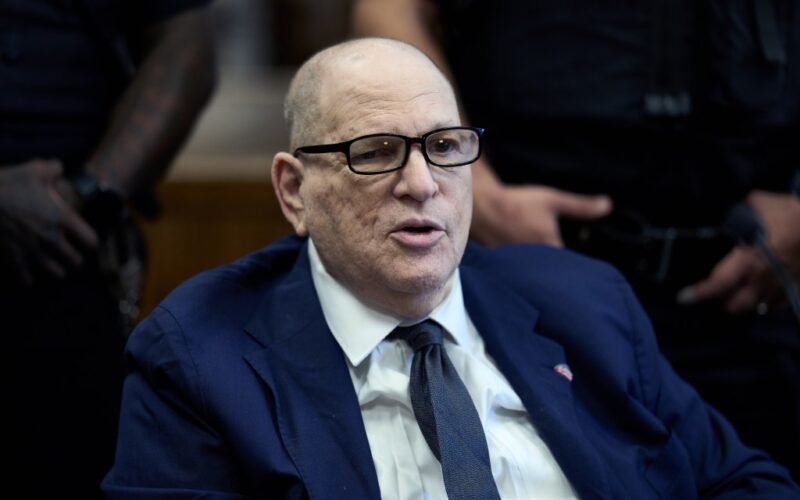
Harvey Weinstein is considering a plea deal to avoid a third trial in Manhattan on charges he raped aspiring actress Jessica Mann.
Amid ongoing discussions in Manhattan Supreme Court Thursday over how soon the Mann retrial would begin, Weinstein’s lawyer,, Arthur Aidala, said the fallen media mogul might be willing to accept a plea.
“I would like to pursue plea negotiations, however as is custom… I would never have plea negotiations in open court,” Aidala told Judge Curtis Farber, who joined Weinstein’s defense team in a side room to oversee negotiations soon after.
Aidala said later that Weinstein needed more time to reach a decision.
Those discussions follow a judge’s ruling that he wouldn’t toss Weinstein’s sexual assault conviction involving another woman over allegations of jury misconduct..
If Weinstein chooses to take a plea deal, the 73-year-old Miramax founder’s media mogul’s decision would come after a years-long legal saga, and after a flood of allegations of sexual misconduct in 2017 that supercharged the #MeToo movement. It would mark the first time Weinstein has admitted to sexual misconduct.
The plea would only involve the charge of third-degree rape related to Mann’s allegations against him, a class E felony punishable by up to four years in prison. Mann testified that Weinstein raped her in 2013 while acknowledging she’d maintained a years-long relationship that included consensual sexual encounters.
Weinstein still faces up to 25 years behind bars when he’s sentenced for sexually assaulting former production assistant Miriam Haley.
The case against Weinstein reached a crescendo in 2020, when a Manhattan jury found him guilty of sexually assaulting Haley and raping Mann. He was sentenced to 16 years behind bars after his conviction at a 2022 trial in Los Angeles on separate rape and sexual assault charges.
In April 2024, though, a bombshell decision by New York’s Court of Appeals upended the Manhattan case, overturning his conviction and finding the trial judge had wrongly allowed testimony from women about sex crimes for which Weinstein was not charged.
Manhattan D.A. Alvin Bragg decided to try the case again, adding allegations from a new accuser, Kaja Sokola, and that retrial ended with the jury issuing a split verdict — convicting Weinstein of criminal sexual act against Haley and acquitting him of the same charge regarding Sokola.
But deliberations imploded before they could reach a decision on Mann, and Farber declared a mistrial.
That led to Weinstein’s defense team to level allegations of “gross juror misconduct,” and start their own investigation. Two jurors signed affidavits that they were bullied into convicting on the Haley charges, with one juror saying if he was allowed to vote by secret ballot, he would have voted not guilty across the board.
“I regret the verdict,” that juror said. “Without the intimidation from other jurors, I believe that the jury would have hung on the Miriam Haley charge.”
Aidala moved that the conviction be overturned in October, and called for a hearing so the jurors could give testimony, but prosecutors opposed the move, saying it violated the state’s “no-impeachment rule” that’s designed to prevent post-trial harassment aimed at making jurors take back their decisions.
Farber on Thursday sided with prosecutors, saying that the exceptions to that rule, improper outside influence, or racial or ethnic bias, didn’t factor into the jury’s decision.
“The two post trial affidavits fail to demonstrate any improper outside influence or racial bias. Rather, they are grounded in statements describing the tenor and content of deliberations and the jurors’ post verdict “’belated misgivings or second thoughts,’” he wrote.
With Wire Services.