




In 2004, I arrived at Wende Correctional Facility to serve a sentence of 65 years to life for murder, assault, and criminal possession of a weapon. I was only 17 at the time of my arrest, but the court saw that as an aggravating factor, calling me “a very dangerous person who needs to be removed from society for a long period of time.”
I entered prison unsure if or how I would be able to mature and rehabilitate myself. I’m hardly alone. Too many must come to grips with the reality that you will likely spend formative years of your life in prison for crimes committed as a youth.
There is a path forward to a potential stable and successful future through education. As a child, my education was interrupted often as I shuffled between nine homes — including foster homes — and attended eight different schools. I did not graduate high school.
This is why prison college programs are essential.
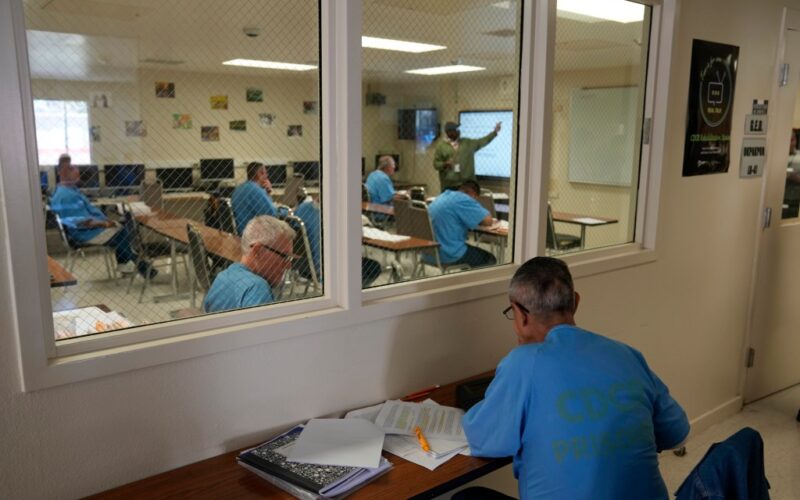
New York has made strides in increasing access to prison higher education opportunities. But more needs to be done, and there is clear empirical evidence for why the governor and state Legislature should expand funding for these programs in this year’s budget.
Recidivism rates among incarcerated New Yorkers enrolled in college programs are lower than those who are not. Similarly, participants are less likely to engage in violence or be involved in incidents that lead to discipline.
What’s more, a 2019 study showed a strong correlation between receiving a higher education while in prison and greater access to employment opportunities and better pay upon release. Ultimately, these programs are connected to an estimated decrease in state prison spending, thanks to lower re-incarceration costs.
Simply put, New York has a Department of Corrections, not a Department of Punishment. Rehabilitation must be a cornerstone of what the prison system provides, and education is foundational to that.
Maturing into adulthood in prison was a dark time for me. Someone once told me that hope manifests itself as light in the midst of darkness. My hope manifested through education.
I obtained my GED while in county jail. At Wende, I took a paid postsecondary correspondence paralegal course through Blackstone University, ultimately graduating with honors. It wasn’t until a decade later, at Shawangunk Correctional Facility, that I accessed a meaningful in-facility education through SUNY Ulster and Mount Saint Mary College.
Through this program, I honed valuable skills to articulate complex ideas clearly and persuasively and to dissect intricate issues. I have used these skills to better understand how I could have committed such a terrible act as a teenager. Through such critical introspection, I have appreciated the forces outside my control that contributed to my wrongdoing and accepted my own accountability for the profound harm I caused.
I’m thankful that those who enter the system now are more likely to have access to in-facility programs than I was. In all, 36 of the 41 prisons statewide offer higher education programming, with the majority offered through the State University of New York system.
That’s a long way from the 1990s, when programs were hollowed out by the elimination of federal and state funding. But “better” isn’t good enough when the benefits are so clear.
A state with the motto “ever upward” simply cannot allow opportunity gaps to persist. Upward mobility, under the guiding hand of equality, makes it possible for all people to achieve economic growth and a better way of life.
Martinez, a college graduate and advocate for higher education in prison, is currently incarcerated at Shawangunk Correctional Facility.