


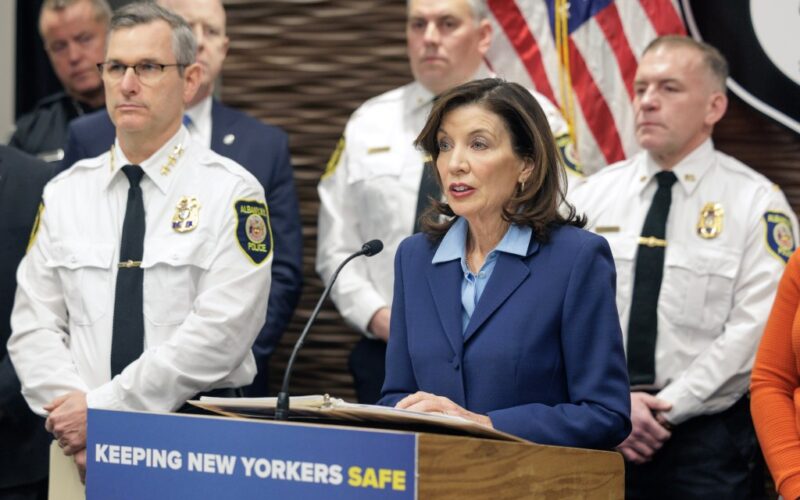
Gov. Hochul must sign a bill now on her desk to provide press access to police radio calls. The bill before Hochul, the Keep Police Radio Public Act, would require police forces statewide to provide emergency services providers and credential journalists access to radio communications, a necessary mandate after the NYPD began abruptly and quietly encrypting its radio communication channels in 2023.
The department and some city officials and lawmakers have raised hackles about this effort on the grounds that malefactors can use access to these radio communications to interfere with police operations, but that is a red herring.
We understand the theoretical concern, but the NYPD has never been able to provide concrete evidence of any specific incident where public access to its radio channels harmed its operations. In any case, this bill now threads that needle by limiting access to these newly encrypted communications. Sensitive communications like stakeouts, undercover operations and investigatory matters are exempt. This is for routine calls involving cops.
While no one can point to specific instances where public access prevented the police from, say, making a rest or investigating a crime, we certainly can point to times when access to these communications helped the public and their representatives — us in the press — learn about matters of deep public note that we would not necessarily have found out about otherwise.
The most notable example is the horrific chokehold death of Eric Garner by a NYPD officer. The Daily News was alerted to the Garner situation on July 17, 2014 by a journalist listening to police chatter and responding to the Staten Island site right away. This led him to find Ramsey Orta, the bystander who had filmed the entire encounter, which The News spread to the world and ultimately galvanized public opinion towards police reform.
This is, we must say, the more plausible reason for the encryption in the first place, and probably the cause for the police department’s pushback against the possibility of being mandated to open up its channels to the press. It’s not about a concern over safety, it is a concern over scrutiny, which the department knows that open radio channels enable. To that, we say police only operate effectively with the full trust of the public, and that means being open to a good degree of transparency as a default. We hope that the governor understands this and expeditiously signs this bill in law.
Once she does, the Department of State, which is tasked with developing the process by which emergency services organizations and journalists can be credentialed to receive access under the law, should act quickly to develop these regulations and to not have this process be onerous or constrictive enough that legitimate journalists are left out. These days, there are plenty of people who call themselves journalists while not following any of the tenets or objectives of the trade.
We trust that the state can find the right balance and give all professional working journalists the access that we need to hold our police accountable, not to prevent them from doing their jobs but to help them do their jobs better and with greater oversight to carry out their steep responsibilities.
Assemblyman Zohran Mamdani was absent from Albany on the day of the June 5 vote campaigning in the mayoral primary, but he certainly would have been a yes with the majority. He should urge Hochul to sign the bill.