




One woman’s permanent makeup is another’s arch nemesis.
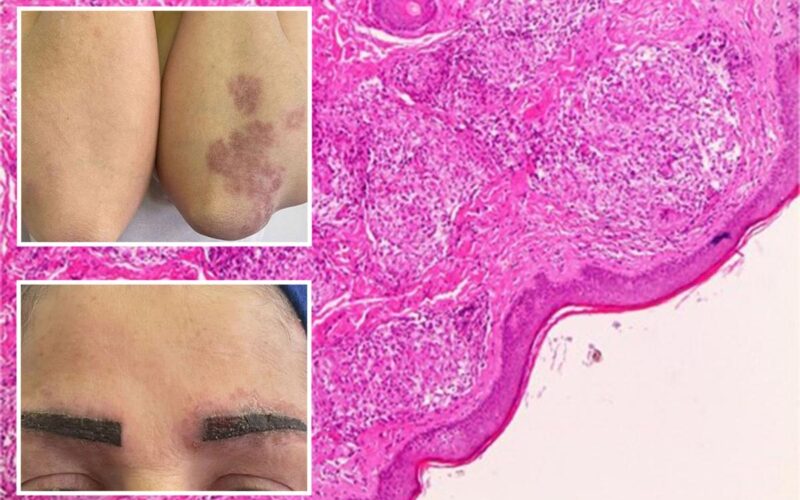
Approximately 15 months after getting her eyebrows tattooed, an unidentified 46-year-old woman sought dermatological care for patches of purplish lesions that appeared around her eyebrows and later on non-tattooed areas, including her elbow and upper back.
According to a medical report published by Oxford, a biopsy revealed inflamed granulomas, or non-cancerous clusters of white blood cells.
It’s one of the tell-tale signs of sarcoidosis, a disease that frequently presents in the lungs or lymph nodes, but can — roughly a quarter of the time — cause flare-ups on the skin.
It can also affect joints, parts of the nervous system and, in rare and serious cases, the heart.
While a direct biological cause for sarcoidosis is unclear, it’s often related to an immune response triggered by the presence of foreign stimuli, like tattoo ink.
According to doctors at Oregon Health and Science University, sarcoidosis is pretty rare in the US, with fewer than 200,000 cases reported each year.
There are certain risk factors that can make a person more prone to contracting the disease, some of which may be genetic.
After an initial topical treatment showed few signs of improvement for the 46-year-old woman, doctors ordered a corticosteroid therapy known as prednisolone. It was a success.
“Noticeable clinical improvement was observed within one week” in all the affected areas, the report said.
The woman took less of the prednisolone each week until the visible flare-ups were gone.

Similar reactions to eyebrow tattooing have been observed in other patients, most notably in 2011 when a report described a sarcoidosis outbreak in Switzerland that affected 12 patients who had been tattooed by the same artist.
And it’s not just permanent makeup that’s raising eyebrows. While studies are still emerging about the long-term effects of tattoo ink on human biology, there’s known potential for tattoos of any kind to trigger adverse immune responses.
A lot of it has to do with what’s in tattoo inks, some of which harbor trace amounts of heavy metals like nickel, chromium, cobalt and lead, per Science Alert.
In high amounts, these heavy metals can be toxic. They’re also known allergens, even in smaller doses.
To become permanent, tattoos actually require an immune response to trap ink particles inside skin cells.
When ink is injected beneath the surface of the skin, the body treats the pigment particles like foreign intruders, unleashing immune cells to remove them. The pigment particles that are too big to be disposed of remain as a tattoo.
In healthy patients, the process is considered totally safe, though some people might be more prone to adverse reactions.
What makes the case of the 46-year-old unique is the migration of the bruise-like sarcoidal blotches to parts of her body that were distant from her eyebrows.
It’s for this reason that, in their report, the doctors advocate for patients to receive a full workup if they present with visible sarcoidosis at a tattoo site, just in case the disease has spread internally, especially around the lungs.
The evaluation should include chest imaging and lab tests.
“Early recognition of disseminated disease is crucial to initiate appropriate therapy and prevent chronic complications,” they wrote.