



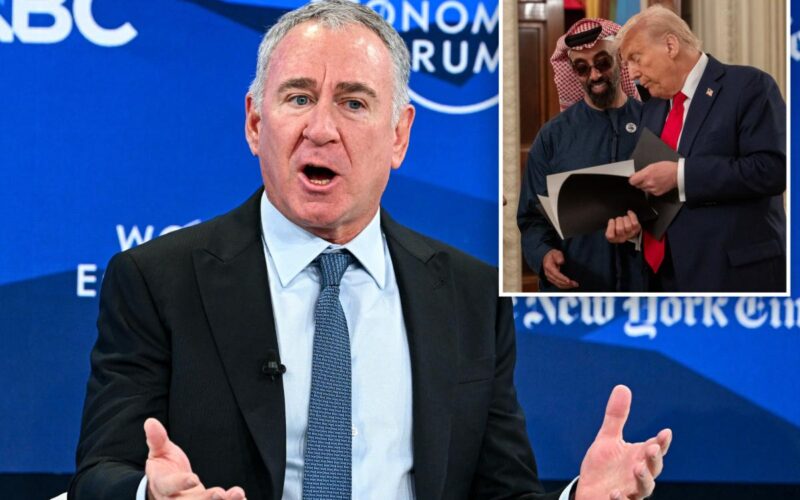
Ken Griffin accused the Trump administration of showing “favoritism” in its dealings with US businesses, saying CEO friends find it “distasteful” and biz leaders don’t want to have to “suck up to one administration after another.”
The flamethrowing comments from the GOP donor and billionaire founder of hedge fund Citadel marked his latest sharp criticism of President Trump.
“When the US government starts to engage in corporate America in a way that tastes of favoritism, I know for most CEOs that I’m friends with, they find it incredibly distasteful,” Griffin told The Wall Street Journal during a Tuesday conference in West Palm Beach, Fla.
“Most CEOs just don’t want to find themselves in the business of having to, in some sense, suck up to one administration after another to succeed in running their business,” he added.
Griffin lamented what he viewed as excessive federal government intervention in the private sector — a trend he also saw in the Obama and Biden administrations.
The hedge fund mogul, who boasts a net worth valued by the Bloomberg Billionaires Index at $48.3 billion, criticized Trump over a Wall Street Journal report indicating that aides to an Abu Dhabi royal purchased a 49% stake in the Trump family’s cryptocurrency venture for half a billion dollars.
“This administration has definitely made missteps in choosing decisions or courses that have been very, very enriching to the families of those in the administration,” Griffin said.
“That calls into question, is the public interest being served?”
The exec said that American CEOs were hesitant to speak out on political and the major issues of the day for fear of social media activists and their ability to mobilize boycotts online.
“The power of social media to persuade millions or tens of millions of consumers to make a product choice is really terrifying to corporate executives, and I think it’s put them in a very, just, intrinsically withdrawn position,” Griffin said.
“Is it really good that the people that create the jobs that we all need in our lives, do we really want to have their voices completely extinguished?”
Griffin did not cite specific examples. The Post has sought comment from him.
“Business leaders and CEOs across the country are proud to have one of the greatest businessmen in the world in the White House, and often reach out to President Trump because they know he is a pro-business ally. But while President Trump is always willing to hear out the business community, the only factor guiding his decision-making is the best interest of the American people,” White House spokesman Kush Desai told The Post when asked for comment about Griffin’s remarks.
Griffin is one of the Republican Party’s biggest financial backers, pouring more than $100 million into conservative candidates and causes during the 2024 election cycle, according to public disclosures.
Despite his backing of the GOP, he pointedly withheld support from Trump’s re-election campaign, though he later donated $1 million to the president’s inaugural committee.
The Citadel founder has historically favored down-ballot GOP races and congressional leadership PACs instead of supporting Trump personally, positioning himself as a kingmaker within the party even as he’s emerged as the former president’s most outspoken critic on Wall Street.
Griffin has sharply criticized tariff carve-outs for politically connected companies, singling out Apple’s situation in a September interview with CNBC.
After the tech giant announced massive US investment plans, Griffin said the company should “100% not” receive tariff exemptions simply because it was large or well connected, warning that favoring “the big and the connected” undermines free-market principles and strays from what he called “the American story.”
Griffin also objected to an arrangement allowing Nvidia and AMD to sell certain chips to China in exchange for giving the US government a 15% cut of their China revenue, arguing that government-brokered deals of that kind blur the line between regulation and favoritism.
The exec said the spectacle of companies lobbying for special treatment was “nauseating,” warning that once the government starts picking winners and losers, the result is a system where businesses feel compelled to ingratiate themselves with the White House to survive.