




New York may call itself the media capital of the world, but when it comes to local elections — the campaigns that shape our daily life — important contests come and go with hardly a single story written. As local media vanishes, so does a critical check on power, leaving voters in key down-ballot races adrift, and New York’s democracy weaker for it.
Without robust local media, voters are left to be informed by nationalized outrage cycles, social media noise, hyper-partisan portals, or outside super PAC spending. The result: accountability evaporates, public trust erodes, and politics is shaped more by national anger than local reality.
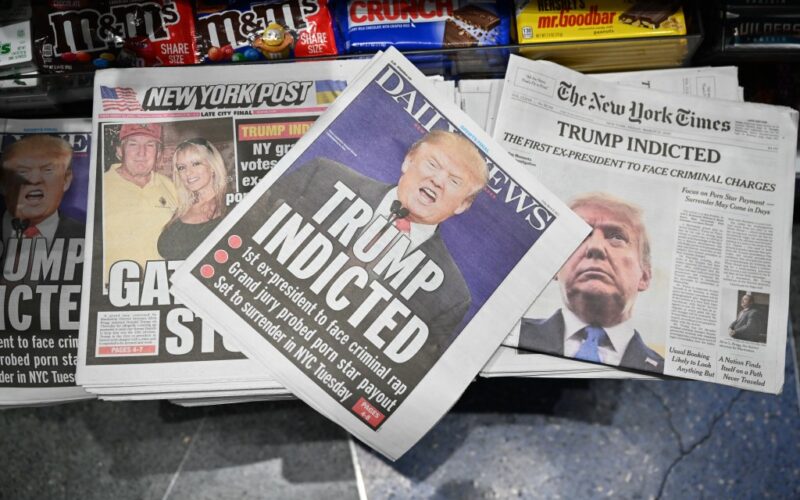
I’ve worked in New York politics long enough to remember a different landscape entirely. The New York Times and Wall Street Journal had stand-alone New York sections. The Daily News, New York Post, and Newsday were muscular, competitive tabloids. And the Village Voice produced investigative legends like Wayne Barrett and Jack Newfield, who forced powerful officials to answer to the people they served.
Today, outlets have disappeared, budgets have slashed, and newsrooms hollowed out. While there still are hard-working, committed reporters doing incredible work, reporters who once had a beat are now asked to produce several stories a day, often across unrelated subject areas. No matter how committed or talented they are, it’s not a sustainable model for deep, consistent reporting.
The News, which for decades was the nation’s largest-circulation newspaper, has sharply reduced its City Hall and Albany coverage and no longer maintains dedicated outer-borough bureaus. The New York Post has shifted its focus toward advancing a right-wing agenda rather than strictly reporting the news. New York Newsday and the Village Voice have vanished altogether.
And more than a year ago, The New York Times ended its endorsements in local elections. That loss matters. The endorsement process didn’t just help voters, it forced campaigns to be better. In preparation for the endorsement process, candidates developed detailed policy proposals, sharpened their ideas, and were forced to explain how they would govern. Without those interviews, voters lose one of their few independent guides, and campaigns have less incentive to develop real policy.
The impact was clear this election cycle. Take Manhattan District Attorney Alvin Bragg’s reelection, which I advised. For four years, he faced relentless national attacks, and during this campaign, a billionaire spent more than $1.5 million on tasteless, AI-generated attack ads. Yet the race got virtually no coverage. While winning overwhelmingly, voters would have benefitted from independent reporting on his actual record — reducing gun violence by 66%, investing in mental health strategies, and holding powerful actors accountable.
The same dynamic played out in City Council races. Competitive contests with real stakes for public safety, zoning, housing, neighborhood services and long-term city priorities received only sporadic attention, if they were covered at all. Most hyper-local issues never surfaced publicly. And the result was predictable. Only one incumbent lost, and that seat had flipped just two years prior. Democracy stagnates when no one covers it.
Still, there are reasons for hope.
Last session, Gov. Hochul signed the Local Journalism Sustainability Act, championed by state Sen. Brad Hoylman-Sigal. It offers refundable tax credits to help outlets retain and hire journalists. Over three years, $90 million will flow into newsrooms across New York State. It’s one of the nation’s first serious attempts to treat journalism as the public infrastructure it truly is.
New nonprofit outlets like The City and Hell Gate have also stepped in to cover the stories legacy newsrooms miss. Supporting these publications shouldn’t be seen as charity, but as an investment in a functioning democracy.
And other cities show what renewal can look like. In Seattle, endorsements from the alternative weekly The Stranger have become one of the most influential forces in local politics, proving that even in an era dominated by global platforms, local power can still be built from a scrappy newsroom with deep community roots.
But isolated success stories aren’t enough. The decline of local media is a civic emergency. Elections cannot be genuinely free when voters are uninformed, and a democracy as sprawling and complex as New York’s cannot run on rumor, national narratives, or campaign mailers and digital ads alone.
Reviving local journalism is not a luxury; it’s an urgent necessity. If we want competitive elections, accountable institutions, and communities that feel seen and heard, we must rebuild the local press that makes democracy real. New York once led the nation in journalism. It can again, but only if we choose to invest in the truth.
Fife is a veteran political consultant.