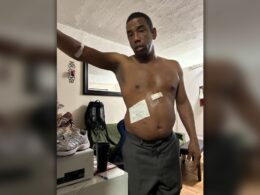





Almost two years ago, I visited lifelong Staten Islander Brian Moffett at a specialized care facility in Manhattan. Brian had been diagnosed with amyotrophic lateral sclerosis (ALS), a disease that quickly robs people of their ability to move, speak, swallow and eventually breathe.
By the time we met, ALS had taken nearly all of Brian’s mobility. He was in constant pain and fully aware of what lay ahead, a slow and painful death as his body shut down without hope of recovery.
What Brian wanted — what he deserved — was an option to end his life on his own terms, if and ultimately when the suffering became too unbearable, through the use of medical aid in dying. This was possible in Oregon, where his son lives, and over the bridge in New Jersey, but not in his home: New York.
A month after my visit, Brian died. He did not have the peaceful passing he wanted, and that motivated me to do everything I could to get this bill over the finish line.
I know this bill is not easy for everyone to support, raising profound questions tied to religious convictions, moral beliefs, and the natural discomfort we all feel when confronting death. As a practicing Catholic, I understand those concerns deeply.
However, my faith also compels me to reflect on the life Brian lived: helping clean up at Ground Zero, cooking meals for his neighbors after Hurricane Sandy, volunteering for countless Staten Island causes. In life, Brian gave everything to his community. In death, our laws denied him the compassion and dignity he deserved.
This is not an isolated story. Across New York, people with terminal illnesses are living their final months in agony. They do not want to die; they want to live. But when life becomes nothing but unrelenting pain, some people want the choice to control how their story ends.
This is why I cosponsored the Medical Aid in Dying Act with Sen. Brad Hoylman-Sigal. After more than a decade of advocacy, this bill has finally passed both houses of the Legislature and now sits on Gov. Hochul’s desk. It is too late to help Brian, but we can honor his legacy by providing this compassionate end-of-life choice to other terminally ill New Yorkers, if they want it.
The MAiD Act allows mentally capable adults with incurable, irreversible terminal illness, with a prognosis of six months or less, to request a prescription that will allow them to end their lives peacefully. This bill has strict guardrails: multiple doctors must confirm the diagnosis and capacity, and the request must be voluntary.
The legislation also includes strong protections to ensure the law is never misused; anyone who tries to coerce or pressure a patient would be breaking it. In states where MAiD is already legal, the system has proven to work responsibly.
I have listened closely to my Staten Island and Brooklyn constituents and I know how deeply personal this issue is. Most people I speak with, regardless of political affiliation, see that this bill is about dignity, not pressure, and they know there are strong safeguards for those who may want to utilize it. Polling reflects this, too: a majority of New Yorkers support medical aid in dying regardless of religious background, including many of Catholic faith like myself.
The simple truth is that if you do not support this option, you never have to use it. What we cannot do is let personal objections prevent other terminally ill New Yorkers from choosing a different path for themselves.
I know that the governor understands the importance of dignity at the end of life. We respectfully encourage her to carry that compassion forward by signing the Medical Aid in Dying Act. In doing so, she can honor the wishes of the majority, protect individual choice, and ensure that New Yorkers have peaceful options at the end of their journey.
Scarcella-Spanton, a Staten Island native, is in her second term representing parts of Staten Island and Brooklyn in the state Senate.