




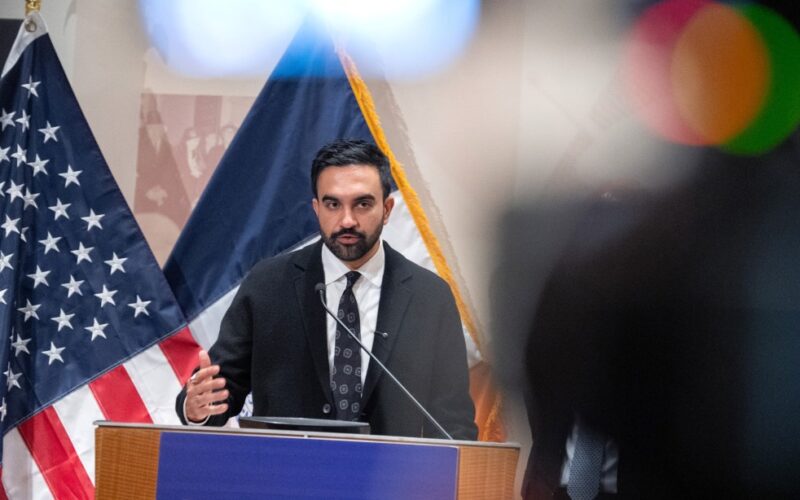
Zohran Mamdani’s unexpected rise was, above all else, due to New Yorkers’ deep concern that our city is headed towards becoming unaffordable. Whether our next mayor’s policies will help solve this for New Yorkers is not certain, but make no mistake: lack of affordability is an existential threat to our city and our country.
As someone who invests in values-aligned startups and helps entrepreneurs tackle big civic problems, I see every day how innovation can be a force for making life better for New Yorkers. Mamdani should collaborate with the tech sector to help address the root causes of what’s driving New Yorkers to the brink, from affordability, to safety and security, to access to vital city services.
Police Commissioner Jessica Tisch’s leadership at the NYPD and, previously, the Department of Sanitation, offer models for how tech can improve city government. New York has implemented the largest curbside composting program in the country and has started the process of containerizing trash. This was made possible by adopting technology into every process, upgrading from pen and paper to GPS and allowing for live tracking.
Similarly, the NYPD implemented a mobile app that gives officers real time information about emergencies, replacing a decades-old system that relied on radios and paper files. Choosing to retain Tisch as police commissioner is a positive early sign that Mamdani will welcome tech-enabled innovation to improve government services.
Housing can also be improved with tech. While much of the debate has rightly focused on zoning reform and public housing investments, there is immense room to use technology to make housing more accessible and efficient right now. Startups and nonprofits are building tools to digitize and streamline housing voucher applications, prepare eviction defense, and more.
Esusu, for example, helps renters build credit from on-time rental payments, which for millions of Americans are often their largest monthly expense yet typically not reported to credit bureaus.
Across every borough, we see the signs of government systems cracking under the weight of analog processes in a digital age. At H/L Ventures, we’ve backed companies solving real urban pain points — like Summer, helping New Yorkers with student loan assistance and college cost planning; Automotus, reducing traffic and double parking; inCitu, helping communities visualize new development; and Vivvi, helping companies offer early childhood education and care to working families.
These aren’t moonshots. They’re practical, proven, and scalable solutions that could serve New Yorkers better.
To be clear, embracing tech does not mean handing the keys to City Hall over to the private sector. It means building a smart, values-aligned collaboration between government, the tech sector, and civic institutions to deliver better outcomes for real people.
It means creating modern procurement pathways so that startups can work with the city without getting mired in red tape and waiting years for a pilot contract. And it means treating technology not as an industry silo, but as a cross-cutting enabler of more effective policy, job creation, and efficiency for our citizens.
One of the most promising opportunities lies in unlocking the immense value of city data to fuel real-time innovation. Tech:NYC, where I am a board member, has proposed RealTimeNYC, a citywide data access platform that would empower startups, researchers, and communities to build tech-driven solutions to urban problems using real-time, secure, and accessible data feeds.
Imagine if local developers could access data that show, in real time, where traffic bottlenecks are forming, which public trash bins are overflowing, or how air quality is fluctuating block by block. With this data, startups could pilot low-cost sensor networks to optimize trash collection, create apps that steer drivers away from congestion, or alert vulnerable residents during public health events.
The problems New Yorkers are most concerned about are real, immediate, and deeply personal. But they are not intractable. The path forward is not only about ideology — it’s about implementation. It’s about working with technologists, builders, and entrepreneurs who are already solving these problems in ways that are smarter, faster, and more equitable.
The livability of our city was the defining issue of this election. The Mamdani administration must make all efforts to solve it during his time in office. As I like to say, they must help provide a strong floor below which New Yorkers should not fall, but also offer no ceiling to what our businesses and innovations can aspire to achieve.
Libby is managing partner at H/L Ventures.