




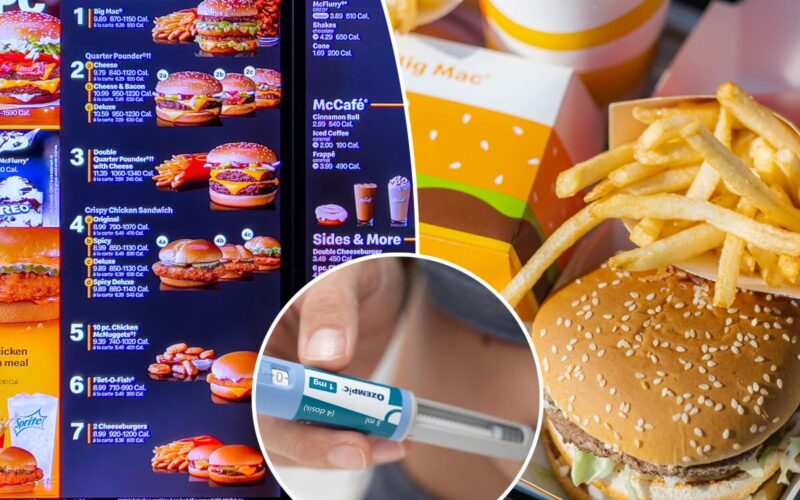
McDonald’s signaled this week it’s looking to better cater to customers on weight-loss drugs — and the name of the game is protein.
During a Wednesday earnings call, McDonald’s CEO Chris Kempczinski said the fast-food giant has been testing high-protein menu items for customers on so-called GLP-1 drugs.
He didn’t share details or comment on timing, but that didn’t stop experts from speculating.
Mike Haracz, a former corporate chef at the McDonald’s US office, told The Post that customers will notice “less carbs and more protein, fat call outs from a marketing standpoint as that will encourage purchase intent from GLP-1 users.”
New options could include grilled chicken strips or nuggets; cauliflower tortillas instead of wheat or corn; and smaller burgers with a lettuce wrap, like those sold at Shake Shack, according to Amy Goodson, a registered dietitian in the Dallas-Fort Worth area who spoke with The Post.
Doctors advise weight-loss drug patients to eat lots of protein while taking the medication to avoid muscle loss, which can occur alongside fat loss.
McDonald’s already offers several protein-packed options on its menu, including Snack Wraps, Sausage Biscuit sandwiches and chicken McCrispy Strips, Vice President Jill McDonald said during the call.
There are options to up the protein ratio even further.
A Sausage McMuffin with Egg has 27 grams of protein, a Double Cheeseburger has 32 grams, according to a graphic posted by a McDonald’s franchisee on X. Ordering an extra egg or patty can deliver an additional 7 or 8 grams of protein per sandwich.
“Many customers don’t realize they can order additional protein to almost any sandwich or order things à la carte,” the franchisee wrote.
Kempczinski said he only expects GLP-1 adoption to ramp up further, and “as adoption grows, we know that consumers’ behavior changes.”
“But we’re also seeing changes around maybe less snacking, changes in some of the beverages that they drink, less sugary drinks,” Kempczinski said. “And so all of those things are factoring into some of what we’re out there experimenting with and testing with.”
“And ultimately, as we learn more about that and get feedback from our customers, those things could make their way onto the menu.”
McDonald’s did not immediately respond to requests for further details.
The number of Americans taking drugs like Ozempic, Wegovy, Zepbound and Mounjaro for weight loss has more than doubled over the past year and a half – jumping to 12.4% of respondents, according to a Gallup survey late last year.
These popular drugs are known to help users lose weight by suppressing their appetite – posing a substantial threat to the fast-food and booze industries.
A 2023 study from Morgan Stanley found that patients using GLP-1 drugs visited fast food restaurants 77% less frequently and pizza joints 74% less over the previous year.
They also drank alcohol 62% less frequently – and 22% said they stopped drinking booze altogether.
“If anything, you would think that our business is perfectly set up for a high adoption of GLPs,” an anonymous McDonald’s franchisee told The Post, adding that the company likely isn’t worried about losing such customers.
“Our three [chicken] strips are about 30 grams of protein, and Double Quarter Pounder is over 50.”
McDonald’s is not the first fast-food chain to consider special menu items for weight-loss drug patients, though it is a significant move considering the Golden Arches is the world’s largest fast-food company.
In December, Chipotle debuted a new GLP-1 friendly menu with protein-packed options like a High Protein-High Fiber Bowl, Double High Protein Burrito and High Protein-Low Calorie Salad.
Among the items is a small 4 oz bowl of chicken or steak, designed as a meal add-on or snack – or possibly a main meal for those on Ozempic without much of an appetite.
That same month, Shake Shack introduced a “Good Fit Menu” with options for GLP-1 users, including three burgers wrapped in lettuce instead of buns.
Starbucks also jumped on the trend, adding Protein Cold Foams and Protein Lattes to its permanent menu last September.
Food giants have also been trying to appeal to more health-conscious consumers amid Health Secretary Robert F. Kennedy Jr.’s “Make America Healthy Again” movement.
Kraft Heinz and Walmart are among several companies that have pledged to remove artificial dyes from their food products.