




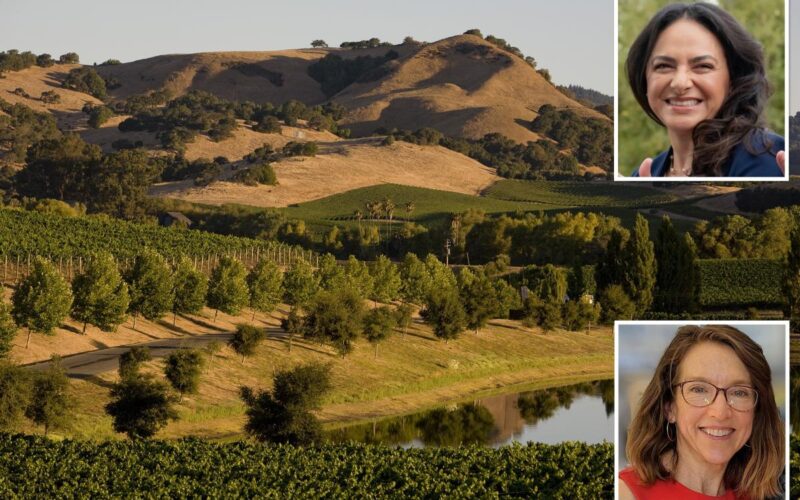
Napa County officials have launched a $6.4 million overhaul of the region’s master plan, aiming to redefine the future of Wine Country through 2050 while bridging a long-standing divide between local government and residents.
“We need people to tell us what they want that future of Napa to look like,” Supervisor Belia Ramos told the Napa Valley Register.
“The people who show up in those rooms are the people who always show up in those rooms. They’ve been showing up for years.”
The county’s “General Plan” update will address critical issues including vineyard and winery growth, watershed preservation, community health, and climate change.
The effort comes at a pivotal moment for Napa Valley, as officials seek broader public input after disappointing turnout at earlier community workshops tied to the Baseline Data Report — the first phase of the planning process.
“This is a big-ticket item and I’m not going to sugarcoat this,” Board Chair Amber Manfree said. “I went to every single (Baseline Data Report) public meeting except for one. I was really disappointed in the engagement that we got.”
“It would be better to do something else entirely. Because that didn’t work,” she added.
The county’s “health in all policies” approach is designed to incorporate equity, environmental justice, and public health into long-term planning while reaching a more diverse cross-section of residents.
The question, however, remains how to effectively engage the broader community.
Supervisor Anne Cottrell suggested meeting residents where they already gather — such as harvest festivals, wellness fairs, and other community events — and hosting discussions centered on specific topics like wildfire preparedness rather than abstract policy frameworks.
“I think we’ll get more engagement there than just saying, ‘Hey, come talk about the general plan,’ because I think that feels very abstract to folks,” Cottrell said.
The push for more targeted outreach follows past tensions. Several supervisors pointed to conflicts that surfaced in 2015 over the expansion of wineries, vineyards, and tourism. At the time, the county held a large growth forum and later formed a committee to address community concerns.
Those experiences have raised questions about whether the county’s 2008 general plan fully captured residents’ priorities.
“We didn’t quite hit the mark with our last general plan, and it took us years to try to correct that — and it was really contentious,” Manfree said. “One of my big goals here in this role is to avoid that going forward.”
The update also comes as Napa’s wine industry faces broader economic pressures.
Industry data shows some large-scale wineries are dealing with roughly $1.7 million in annual regulatory and compliance costs, with expenses in some cases consuming a significant share of production budgets.
At the same time, U.S. wine consumption has declined in recent years, reflecting shifting consumer preferences and posing additional challenges for long-term sustainability.
If county leaders achieve their goals, these issues could remain at the forefront of public discussion for years. The county’s contract with Environmental Science Associates is set to run through June 30, 2030.
Download The California Post App, follow us on social, and subscribe to our newsletters
California Post News: Facebook, Instagram, TikTok, X, YouTube, WhatsApp, LinkedIn
California Post Sports Facebook, Instagram, TikTok, YouTube, X
California Post Opinion
California Post Newsletters: Sign up here!
California Post App: Download here!
Home delivery: Sign up here!
Page Six Hollywood: Sign up here!