




New York City Public Advocate Jumaane Williams last week toured sites of buildings owned by those he tarred as the city’s worst landlords. His annual publicity stunt included a grandstanding visit to 80 Woodruff Ave. in Queens, among 80 buildings he called out, demonizing an owner which said it is struggling with rising property taxes, insurance costs and tenants who don’t pay rent, even when it makes upgrades.
Here are some buildings Williams missed, however. Tenants at 1305 Loring Ave. in Brooklyn, 1635 E. 174th St. in the Bronx, and 1835 Lexington Ave. in Manhattan were all without gas this month; multi-story buildings with elderly tenants such as 3031 W. 25th St. Brooklyn or 310 E. 115th St., had elevators that weren’t working. The same owners has long been plagued by heat, hot water and power outages.
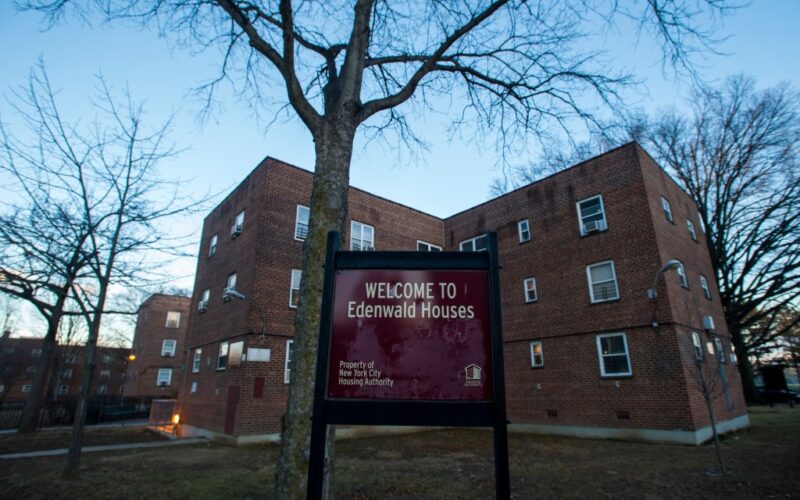
All these buildings are owned and managed not by the alleged greedy private slumlords Williams loves to target but by the city government he works for: The New York City Housing Authority.
Williams and Mayor Mamdani appear to feel that private housing ownership is inherently problematic and that “social housing” is the answer — in the form of the 200,000 new government-sponsored units the mayor has proposed. Mamdani plans to pile on private landlords in coming weeks, with his promised “rental ripoff’ tour of the five boroughs, de facto show trials for property owners.
Meanwhile, back in the real world. NYCHA, the city’s biggest landlord, is routinely the target of hundreds of complaints, including 400 regarding heat, hot water and elevator outages in one week this month alone. It’s a system of 177,000 units plagued by what the liberal Community Service Society calls “chronic neglect.” Its website includes a standing feature called Service Interruptions Overview.
It should be more than enough to prompt progressives to question their commitment to government-managed housing.
Since 2019, NYCHA has been the subject of a federal monitor, as the result of persistent problems with mold, lead paint, heat and elevators. As the Authority’s 2025 financial statement puts it understatedly, “NYCHA is not yet in full compliance with the requirements of the Agreement.”
Progressives assert that public housing’s problems are the result of declining federal government support for the system. But, since 2015, federal support for NYCHA has been increasing, 2014-24, from $934 million to $1.5 billion operating subsidy. Meanwhile, NYCHA, facing billions in repair needs, can’t even keep its annual operating budget in the black, running a $4.49 million loss.
One notable reason: tenants not paying rent, a problem both for public and private landlords in the city, where eviction is near-impossible thanks to extreme tenant protection laws and a COVID-era hangover. As the Authority puts it, operating losses are linked to “decreased tenant rent revenues, and increased employee entitlement costs.” The combination of non-paying tenants and a public employee workforce enjoying generous pension and health benefits is a recipe for red ink. The Authority increased its rent revenues in 2024, not because more tenants paid on time, but because of COVID bailout funds.
The current NYCHA management, led by Lisa Bova-Hiatt, is playing a bad hand reasonably well, emphasizing the need for new capital funding through the state’s Permanent Affordability Commitment Together (PACT) program, which channels private capital into the repair of projects — although only if tenants vote to approve. They have even moved to sell off land for private development, as in the Fulton and Elliott-Chelsea Houses, part of whose site will be developed for market rate housing in a high-end neighborhood.
These are welcome, if partial, steps toward ameliorating the chronic maintenance problems of city-owned housing. But the fact that they are necessary should underscore the folly of repeating the mistake of government housing, not doubling down on it. Keep in mind that originally, NYCHA housing was meant to be self-supporting, through the rent payments of tenants.
Imagine if the November boiler explosion and building collapse at the Mitchel Houses in the Bronx had happened at a privately-owned apartment complex. Mamdani and Williams would likely have denounced the owner and held an outraged press conference. Instead, it was just an extreme example of the overlooked maintenance problems that occur every day in the country’s largest public housing system.
Rather than advocating for more government housing and demonizing private landlords, City Hall should be working with owners to help ensure that tenants pay rent — the oxygen of building maintenance — and that rising property taxes do not put the squeeze on struggling owners in the outer boroughs. In other words, work with private low-income housing landlords, rather than against them
Denouncing landlords will not solve New York’s housing crisis. It won’t even help tenants.
Husock is a senior fellow at the American Enterprise Institute.