



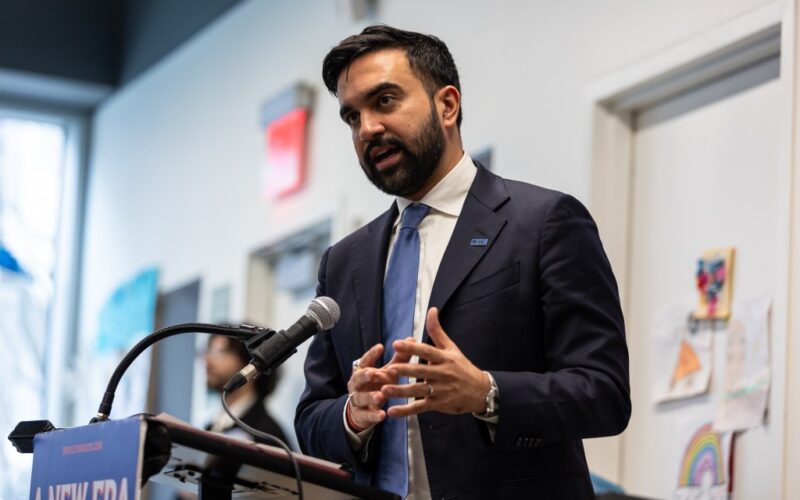
On Jan. 1, when Mayor-elect Zohran Mamdani takes office, something essential must happen: the city needs to come together.
It doesn’t matter whom you supported in the primaries or the general election. It doesn’t matter what misgivings you may still hold. Get over it! For our city to thrive, the next mayor must succeed — and we all have a role in making that possible.
New York is not just another city. It is the global urban center, unmatched in diversity, cultural influence, intellectual capital and the sheer density of world-class institutions. When New York works at its best, it sets the standard for what a modern city can be.
Mamdani inherits extraordinary strengths — and enormous challenges. The minute he’s sworn in, his to-do list will include multiple high visibility crises from housing shortages to the affordability of living in this great city.
But for me, as a pediatrician who spent decades trying to improve access to health care for the city’s most vulnerable children, then directing Columbia University’s National Center for Disaster Preparedness, I believe there are three particularly urgent priorities. (And, by the way, addressing each of them will require significant on-going collaboration with New York State).
First, we have a moral and civic imperative to ensure equity for all of New York City’s children.
Shockingly, more than half of the city’s children live near or below the poverty line. The fact is that poverty is not just a statistic — it is a barrier that affects access to high-quality education from preschool to high school and beyond. Children living in poverty often have trouble getting necessary health care and miss out on exposure to the extraordinary cultural resources most New Yorkers take for granted.
Every child in New York deserves a fair shot at the education and cultural enrichment that define this city. That will require investments in early childhood development, schools, after-school programs, mental health supports, and partnerships with museums, libraries, arts organizations and universities.
This is the foundation of the city’s future workforce, civic health and economic stability.
Second, New York City will need to reimagine its legendary public health system.
New York City’s Department of Health was the nation’s first and remains the largest and, in my opinion, the most effective health agency in the U.S.
But we are dealing with a new unprecedented challenge. In less than a year, Health and Human Services Secretary Robert F. Kennedy Jr., with the encouragement of President Trump, has fast tracked the functional demise of America’s federal public health system. The CDC has been transformed into an agency promoting anti-science crackpot theories and unfounded fears about life-saving vaccines. The result: states and cities can no longer depend on the feds to provide support or reliable guidance.
For New York, this is a significant challenge — but also an opportunity. We must assume responsibilities that the CDC once owned and make sure that our public health system is fully capable of monitoring emerging threats, addressing chronic disease, rebuilding vaccination confidence, integrating behavioral health, and improving the overall resilience of communities.
Third, strengthening the city’s disaster preparedness — before the next crisis strikes — is a high priority.
New York has never been immune to crisis. We know this better than any city in America. From 9/11 to Hurricane Sandy to pandemic failures, we’ve learned repeatedly — sometimes painfully — that preparedness is not optional.
Climate change has made extreme weather more frequent and more destructive. Aging infrastructure multiplies vulnerability. Terrorism and cyberattacks are never far from the minds of the city’s disaster planners. And the influx of asylum seekers — a humanitarian challenge the city has admirably shouldered largely alone — has stretched emergency systems thin.
Under Mamdani’s leadership, New York must continue to build a robust, modern disaster-preparedness infrastructure that integrates public health, emergency management, housing, hospitals, and social services.
Some New Yorkers — particularly those who are well off — have taken to grumbling that the city is becoming “unlivable,” and that they are considering decamping for Miami, Austin, or some suburban refuge. But I hope they decide to stay and continue to contribute to a city that must remain a global beacon of hope and opportunity.
And if the new mayor embraces the urgency of child equity, public health renewal and disaster preparedness — and if the city stands behind him — New York can emerge, under his leadership, stronger, fairer, and more resilient than ever.
Redlener, a pediatrician, is cofounder of Children’s Health Fund, founding director of the National Center for Disaster Preparedness at Columbia University and cofounder of the Ukraine Children’s Action Project.