




When a patient’s heart stops beating, a code to resuscitate goes out in the busy NewYork-Presbyterian emergency room where I work as a registered nurse. Nearby staff come running because mere seconds could mean life or death.
One of us starts chest compressions while another documents medications and orders with times as a doctor calls them out. Another puts the patient on a cardiac monitor and tracks vital signs. Another places an IV and draws blood, while another runs to grab IV fluids and equipment.
Each code takes a doctor, a respiratory therapist, a pharmacist, and at least four or five nurses. We work as a team doing whatever is needed as quickly as possible.
On my shift a couple of months ago, three patients coded at the same time. As we rushed to try to save the lives of these patients, more came in the door every minute. After responding to these codes, I went to my other patients, without a moment to pause and breathe, and apologized for their delayed care.
In the ER, we care for every patient who comes through our doors, regardless of how sick they are or their ability to pay. We treat patients with strokes, with overdoses, with gunshot wounds. In 2024, my ER was the busiest in the city.
Nurses in my unit are often responsible for 10, 12, or 15 patients at a time — that number doubles when one of us needs a break to eat or use the bathroom during our 12-hour shift. One night in December, my shift started with only three nurses caring for 75 patients in one area.
When nurses are stretched thin, rushing from patient to patient, we worry that we might miss a symptom or make an avoidable error. I do my best every day, but sometimes I go home at the end of my shift feeling guilty that I couldn’t provide the care that my patients deserved because I didn’t have the time or resources.
When patients face long waits, they sometimes lash out at nurses because we’re the ones they see at their bedside. A patient once threw a chair across the room because I couldn’t find him a stretcher. My colleagues have faced similar violence.
When we raise our concerns with hospital management, they tell us to do our best with what we have. But what we have is not enough nurses. If something goes wrong because we were responsible for more patients than one nurse can safely handle, it’s our nursing licenses on the line.
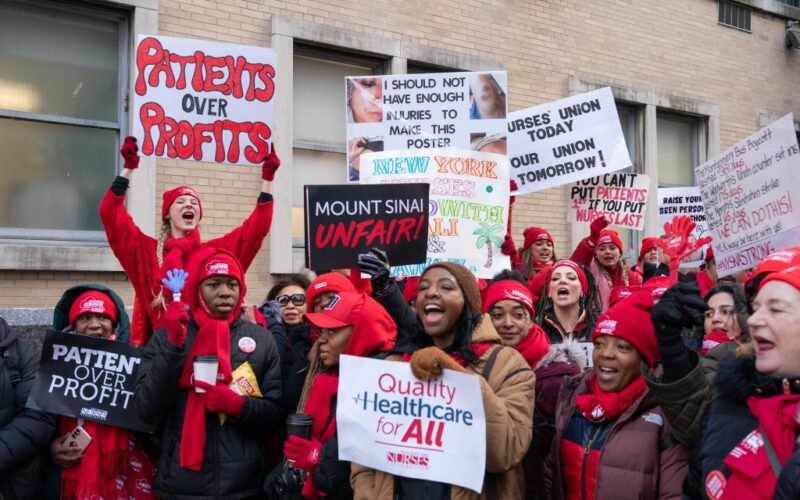
Nurses see every day how patient care suffers when there aren’t enough of us at the bedside. That’s why I’m among nearly 15,000 New York City nurses who are on strike, walking picket lines in the cold, fighting for safe staffing for our patients.
We’re calling NewYork-Presbyterian — along with the other hospitals where nurses are on strike — to hire more nurses and to agree to enforceable staffing standards so we can hold hospitals accountable when they fail to staff safely.
While NewYork-Presbyterian claims they can’t afford to meet our demands, they’re shelling out hundreds of millions of dollars on temporary replacement nurses and paid our outgoing CEO $26 million in 2024. Our wealthy hospital is choosing to spend money fighting against frontline nurses instead of investing in our patients.
Safe staffing saves lives. When there are enough nurses at the bedside, patient outcomes improve.
Striking nurses are ready to return to the bedsides of our patients.
We’re asking our hospitals to give us the nurses we need to do what we do best: care for our patients.
Torres is a New York State Nurses Association member and striking NewYork-Presbyterian nurse.