




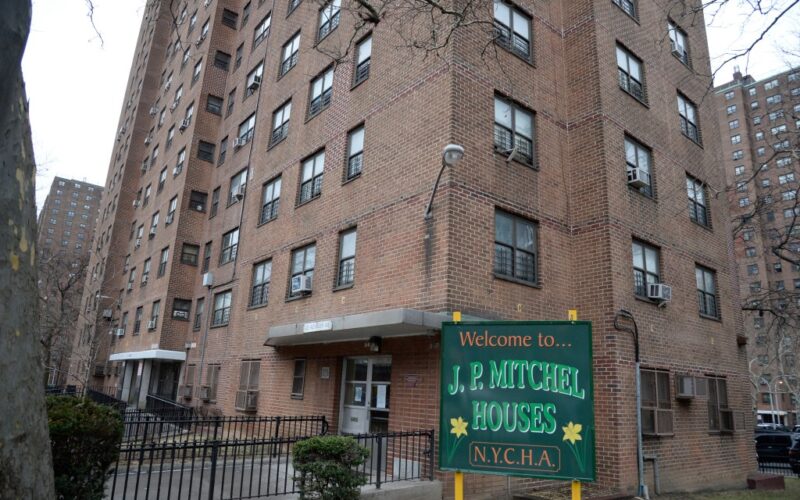
If you want to understand New York’s housing future, don’t just look at what’s getting built, look at what’s falling apart.
The partial collapse at Mitchel Houses in the Bronx earlier this year was a failure of policy more than a failure of construction. NYCHA’s staggering $78 billion capital backlog represents half of the nation’s entire public housing capital need. These dollars represent real consequences for NYCHA residents, like a broken elevator, a collapsed ceiling, or heat that won’t turn on when the temperatures drop.
For decades, NYCHA has been treated like an isolated bureaucracy or a problem to deal with. As Zohran Mamdani takes the reins at City Hall, yes, he’s inheriting a housing crisis, but he also has an opportunity to embrace NYCHA as the central pillar of our housing ecosystem and the single most important piece of housing infrastructure in the nation. Without NYCHA, every other affordable housing policy and safeguard — preservation, production, vouchers, tax credits — is moot.
If this administration wants to succeed on affordable housing, it must start by forging a better future for NYCHA.
For too long, we’ve asked NYCHA to operate in a silo: a city within a city, cut off from the planning, zoning, and financing tools that every other piece of housing policy depends on. The next administration must integrate NYCHA into the city’s broader housing and planning framework as a core partner. The “City of Yes” left NYCHA behind because it was too complicated. From here on out, every major rezoning should center the voices and needs of NYCHA residents.
We also need to modernize the rules that keep NYCHA frozen in place. Zoning flexibility for NYCHA campuses can open doors for infill, adaptive reuse, and community facilities — the kinds of modest but transformative changes that stabilize entire developments.
The same is true for capital investment. We know what works: the PACT program and the Preservation Trust. And we know the pace isn’t fast enough. The city needs to double the current conversion rate to 10,000 units a year because it’s the only way to prevent another catastrophe. That requires real coordination between NYCHA, HPD, HDC, and City Planning, with the same urgency and staffing that we give to new construction. NYCHA’s future depends on treating preservation as infrastructure, not a favor we extend when budgets allow.
Ten years ago, PACT renovations could go on with tenants in place. These days, that option is rare: most of the time, tenants need to move for a significant period of time. Buildings are too distressed, costs are too high, and relocation logistics are already similar to new construction.
A build-first model, creating off-site or adjacent housing before full reconstruction, will let tenants return to brand-new homes, designed for today’s climate and accessibility standards, combined with site planning that reflects current needs rather than the old “towers in the park” approach that separate so many NYCHA developments from the neighborhoods that surround them.
Of course, capital alone won’t fix decades of disinvestment. Producing trust takes more than community meetings. It requires the power to make decisions about your home. Tenants should continue to choose their PACT partners and vote on Trust conversions, but those decisions must be supported by data, technical assistance, and funding for resident partnerships.
The next administration should establish a citywide PACT Resident Governance Council to ensure PACT residents have the same formal voice and authority as Section 9 tenant leaders. When residents lead, projects move faster, with better outcomes.
Governance matters. NYCHA is the size of a major U.S. city but operates with a seven-member board — half the size of agencies with a fraction of its budget. Albany should expand the board and modernize its composition to reflect NYCHA’s scale and complexity. A stronger, more representative board could help bridge the gap between residents, policymakers, and the private sector.
And finally, we need new allies. Philanthropy has long supported schools, parks, and cultural institutions — imagine what it could do for public housing. A coordinated effort from foundations could fund resident education, innovation pilots, and planning tools, especially as Washington continues to gut funding for public housing.
Regenerating NYCHA is too big for government alone — it has to be a civic project that brings multiple partners to the table.
The real test of this administration’s housing policy will be whether it embraces a plan for public housing that is worthy of the people who call NYCHA home.
Katz leads the NYCHA Regeneration Initiative and was formerly the chief housing officer for the City of New York.